 Save
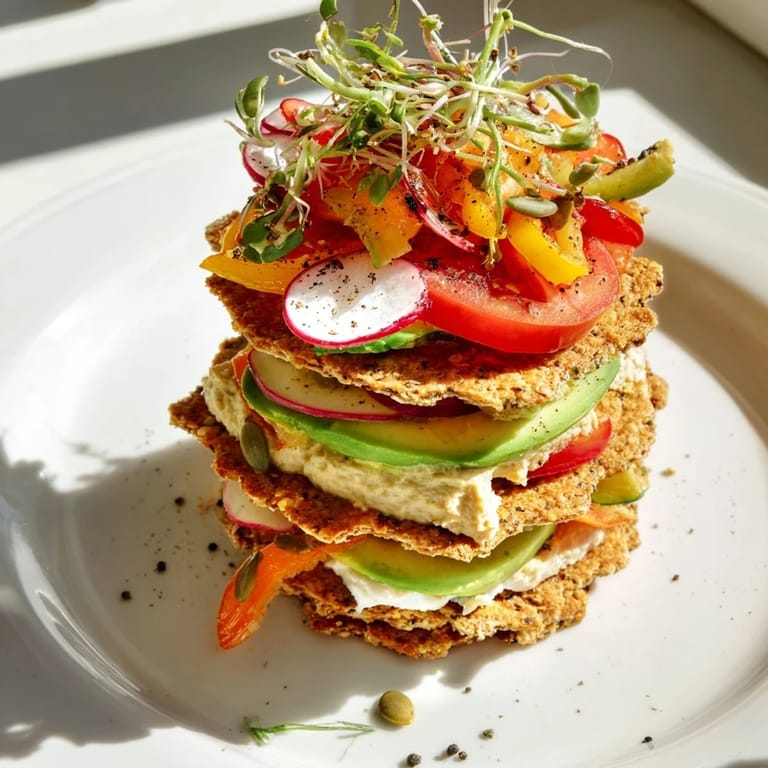
Save I still remember the afternoon I discovered that gluten-free entertaining didn't have to mean boring platters. My neighbor mentioned she couldn't eat gluten, and I found myself standing in my kitchen, staring at a box of crackers, wondering how to make something that felt special. That's when the tower idea came to me—stacking layers like edible architecture, each one a little surprise of flavor and texture. Now, whenever I need to impress, this is my secret weapon.
I'll never forget serving this at a potluck where half the table had gluten sensitivities. Watching people's faces light up as they realized they could enjoy something this impressive and crunchy and creamy all at once—that's when I knew this recipe was worth keeping close.
Ingredients
- Gluten-free crispbread crackers (12 count): These are your architecture—the sturdy base that holds everything upright. Choose ones with seeds or multigrain for extra flavor and visual interest; they're more forgiving than thin, delicate varieties.
- Gluten-free bread, sliced and toasted (8 slices): Lightly toasting makes them crisp without making them fragile. Cut them into rounds or rectangles that roughly match your crackers so everything stacks neatly.
- Whipped cream cheese (150 g): This is your adhesive and your richness. The whipped version spreads more easily than blocks and feels lighter.
- Hummus (100 g): Adds earthiness and holds moisture. It's also naturally vegan if you're adapting.
- Guacamole (100 g): The moment someone tastes this layer, they know you cared. Use a ripe avocado and dress it just before assembling so it doesn't brown.
- Cucumber, thinly sliced: The crunch is essential—slice just before serving so it stays crisp and fresh.
- Tomato, thinly sliced: Use something ripe and flavorful. Thin slices prevent the tower from getting too wet.
- Avocado, sliced: Slice this last and layer it in quickly to prevent browning.
- Microgreens or baby arugula (1/2 cup): This is where the magic happens—those little peppery leaves catch the light and make everything look restaurant-quality.
- Radish, thinly sliced (1/4 cup): The peppery snap of radish against creamy spreads is a revelation if you've never tried it this way.
- Roasted red peppers, sliced (1/4 cup): Sweet and silky, they add color and a subtle sweetness that balances the fresh vegetables.
- Toasted pumpkin seeds (2 tbsp): Toasting them yourself brings out a deeper, nuttier flavor than raw.
- Fresh chives, finely chopped (2 tbsp): A last-minute finish that adds both flavor and a professional touch.
- Freshly cracked black pepper and sea salt: Always season at the very end, right as you're serving.
Tired of Takeout? 🥡
Get 10 meals you can make faster than delivery arrives. Seriously.
One email. No spam. Unsubscribe anytime.
Instructions
- Gather and prepare everything:
- This is the moment that makes the difference. Lay out all your spreads in small bowls, arrange your sliced vegetables on a cutting board, and get your toasted bread cut and ready. This isn't just efficiency—it's the difference between calm assembly and frantic scrambling.
- Toast your bread gently:
- Low and slow is your friend here. You want just enough color to make it crisp but not so much that it becomes brittle. A light golden tone is perfect.
- Build your first layer:
- Start with a cracker as your base. Spread it with a thin layer of cream cheese or hummus—not too thick, or the tower becomes gloppy rather than elegant. You're aiming for coverage, not a coating.
- Add your first bread layer:
- Place a toasted bread round or rectangle on top, pressing very gently. Add a small dollop of guacamole and a few slices of cucumber and tomato. Feel the gentle weight building.
- Layer with intention:
- Now alternate—another cracker, another spread (mix it up: try hummus on the second layer), then bread again. Add different toppings each time: avocado here, radish there, roasted pepper somewhere unexpected. Think about color as much as flavor.
- Build toward the sky:
- Continue stacking until you have 3 to 4 layers. This is where it becomes a tower. Press gently with each layer—you're looking for stability, not compression. The structure should feel sturdy but not dense.
- Top with flourish:
- Finish with either a cracker or bread slice, topped with a generous dollop of cream cheese, a handful of microgreens, a scatter of pumpkin seeds, and a pinch of chives and black pepper. This is your signature moment.
- Transfer with care:
- Use a wide spatula and move slowly. You've built something beautiful; now treat it with respect. Slide it gently onto your serving plate.
- Serve right away:
- The moment you finish is when it's at its best—everything still has its personality, the bread still has its crispness, the vegetables still have their snap.
 Save
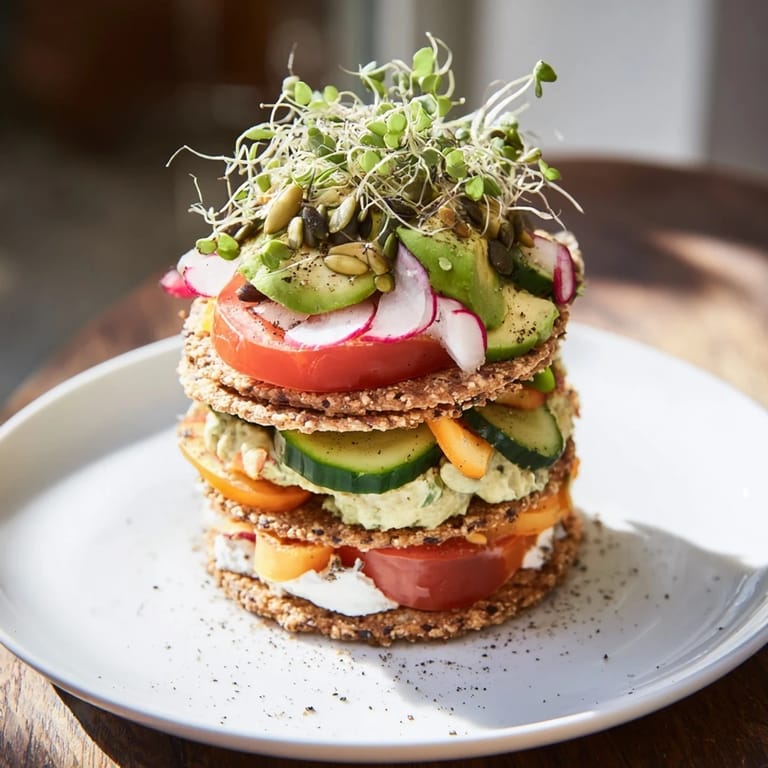
Save There's something about creating something tall and beautiful on a plate that makes people feel special. When my teenage daughter watched me stack the first tower, she asked if she could help build the next one. We ended up making six towers together, and suddenly what was meant to be my appetizer became our thing—a moment in the kitchen where we were making art together.
Building a Tower That Stays Strong
The secret to a tower that doesn't topple is understanding how each layer supports the next. Think of it like gentle Jenga—each piece needs to have a bit of surface contact with what's below, but you're never pressing hard enough to crush the delicate vegetables or squish the bread. The crackers and bread are your structural foundation, the spreads are your mortar, and the vegetables are your decoration that happens to taste incredible. Start your assembly on the exact plate where it will be served if possible, because moving it is when things go wrong.
Variations That Work
Once you understand the basic tower, you can riff endlessly. A vegan version simply swaps the cream cheese for a plant-based alternative or relies entirely on hummus and guacamole. I've made a smoked salmon version by layering thin slices between the bread and cream cheese, and it becomes something entirely different—still elegant, now with a briny sophistication. You can also scale this up to one show-stopping centerpiece tower that you carefully slice at the table, or down to mini towers that fit elegantly on appetizer plates. The principle stays the same: alternate sturdy layers with flavorful spreads and top with vegetables that bring color and life.
- For extra protein without using fish or meat, try marinating thin slices of tofu or adding crispy chickpeas to the layers
- Seasonal vegetables work beautifully—in summer, cherry tomatoes and fresh basil, in fall, roasted squash and sage
- The gluten-free crispbreads you choose affect the entire mood of the dish, so taste them first and choose ones you actually like eating
The Gluten-Free Advantage
Building this tower actually works better than you might expect when you're thinking gluten-free. The dedicated gluten-free crackers often have more texture and personality than standard ones—seeds, grains, interesting flavors. They stand up beautifully to layering and actually taste like something. When you commit to gluten-free, you're often choosing more interesting ingredients anyway, which makes the whole tower feel less like an adaptation and more like an intention.
Serving and Pairing
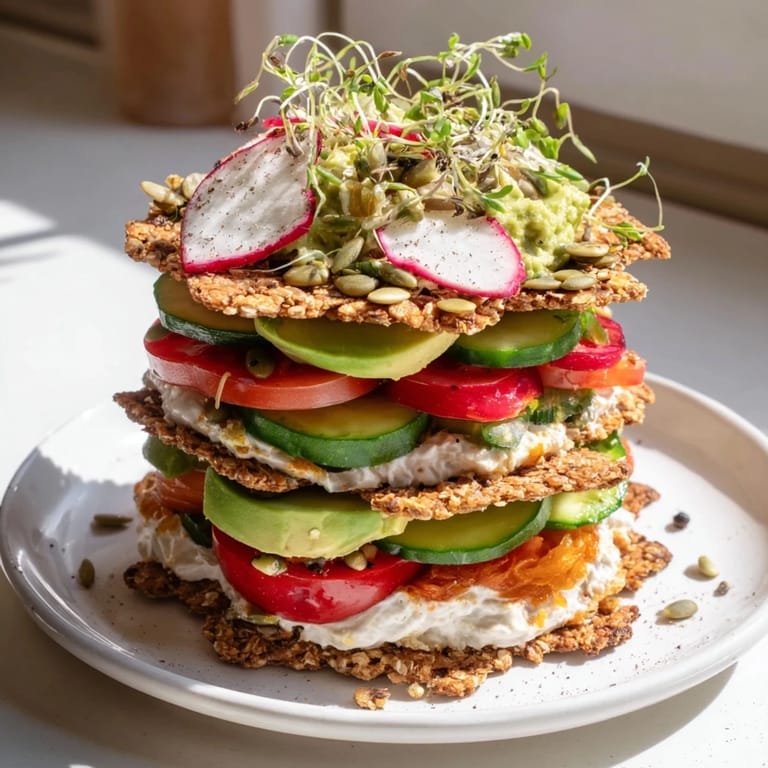
This tower is happiest when served on a beautiful plate with a small napkin nearby, because eating it is a bit of an adventure—layers shift slightly, sometimes a cracker will tilt, and that's part of the charm. Pair it with something crisp and light: a Sauvignon Blanc with its herbal notes plays beautifully with the fresh vegetables, or sparkling water with lemon if you're keeping it simple. The combination of textures means each bite is a little different, so you can eat slowly and notice everything.
- Serve immediately after building for the best contrast of temperatures and textures
- If you're making multiple towers for a party, set up an assembly line so everything is built fresh at the same time
- Have extra spreads on hand because people inevitably want another cracker slathered with guacamole
 Save
Save This recipe taught me that gluten-free cooking isn't about substitution or settling—it's about building something that stands on its own merits and tastes genuinely delicious. Every time I serve these towers, I'm reminded that the best entertaining happens when everyone at the table can eat the same thing and feel celebrated.
Kitchen Guide
- → What gluten-free breads work best for the layers?
Lightly toasted gluten-free bread sliced into rounds or rectangles works well to support layering and texture contrast.
- → Can the tower be prepared in advance?
Prepare spreads and toppings ahead, but assemble shortly before serving to maintain texture and avoid sogginess.
- → How do I keep the tower stable during assembly?
Press gently between layers and use a wide spatula to transfer carefully to serving plates to maintain structure.
- → What variations can enhance the flavor profile?
Adding smoked salmon, turkey, or grilled vegetables can provide extra protein and flavor complexity.
- → Are there vegan adaptations available?
Use plant-based cream cheese or omit it, increasing hummus and guacamole amounts for creamy layers.