 Save
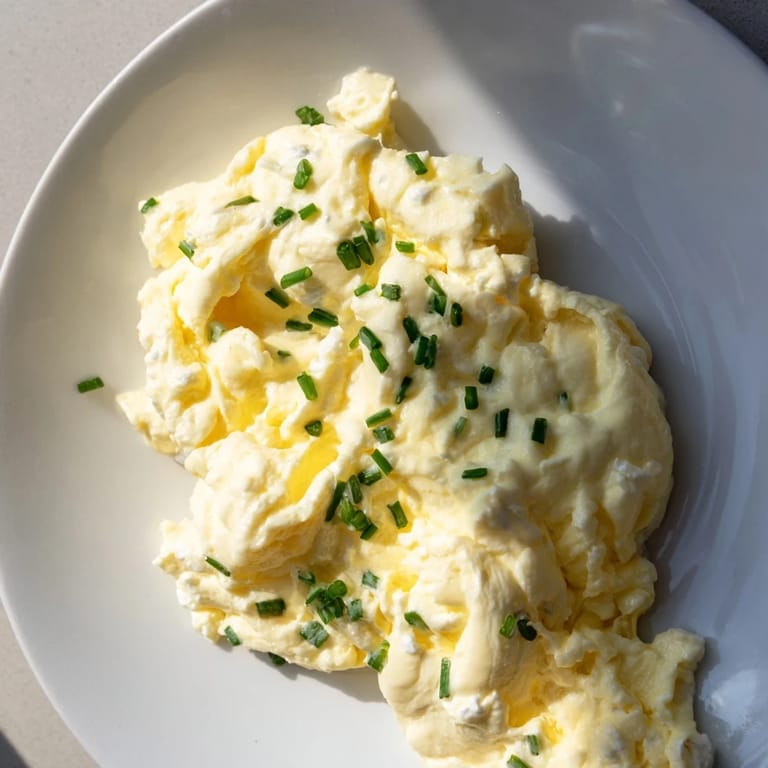
Save There's something almost magical about discovering that cottage cheese belongs in scrambled eggs. I'd been making the same fluffy eggs for years until a friend casually mentioned she stirred in a dollop of cottage cheese one morning, and the result was so impossibly creamy that I had to know her secret. Now it's become my go-to weekday breakfast, the kind of simple swap that makes you wonder why you didn't think of it sooner.
I remember serving this to my sister on a lazy Sunday morning, and she actually paused mid-bite and asked what I'd done differently. When I told her it was just cottage cheese, she laughed—said it tasted like restaurant eggs but infinitely better because there was no pretension to it, just honest food made with one simple ingredient swap.
Ingredients
- 4 large eggs: Room temperature eggs blend more smoothly with the cottage cheese, creating an even creamier base.
- 1/3 cup cottage cheese (preferably full fat): Full-fat versions contribute richness that low-fat versions can't; it's the secret to that luxurious texture.
- 1 tablespoon milk or cream: This loosens the mixture just enough so the eggs set into clouds rather than a dense mass.
- 1/4 teaspoon salt and 1/8 teaspoon black pepper: Season generously but taste as you go; cottage cheese can muffle flavors slightly.
- 1 tablespoon unsalted butter: Use medium heat with butter—high heat will break it down and make your eggs tough instead of tender.
- Chopped chives or parsley (optional): A bright garnish transforms this from simple breakfast to something that feels intentional on the plate.
Tired of Takeout? 🥡
Get 10 meals you can make faster than delivery arrives. Seriously.
One email. No spam. Unsubscribe anytime.
Instructions
- Combine everything in a bowl:
- Whisk the eggs, cottage cheese, milk, salt, and pepper until the mixture looks slightly frothy and the cottage cheese is broken into small curds. This whisking step matters—you're not just mixing, you're incorporating air that'll make the eggs fluffy.
- Heat the butter low and slow:
- Melt your butter in a nonstick skillet over medium-low heat until it stops foaming. Listen for that gentle sizzle, but if it smells at all nutty, the heat's too high and you need to pull the pan off the burner for a moment.
- Pour and wait:
- Add the egg mixture all at once and resist the urge to stir immediately. Let it sit for about 20 seconds so the bottom can just barely set, creating a delicate foundation.
- Stir with intention:
- Using a soft spatula, gently sweep from the edges toward the center of the pan, then fold it over itself. You're not scrambling aggressively; you're coaxing the mixture into soft, cloud-like curds.
- Know when to stop:
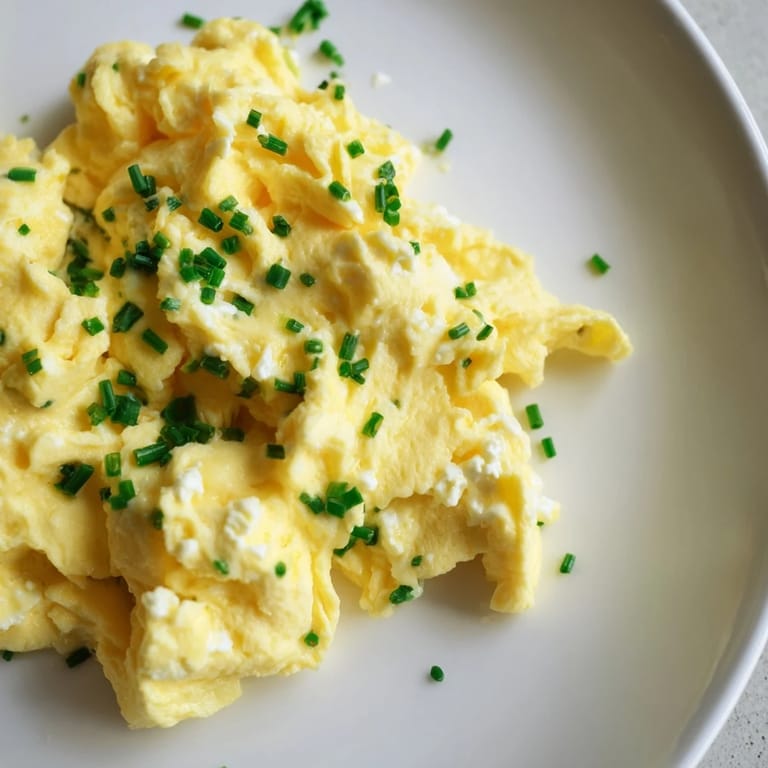
- This is the critical moment—the eggs will continue cooking for a few seconds after you remove the pan from heat. Pull them off the stove when they still look slightly wet and underdone; they'll set perfectly while you plate them.
 Save
Save There was a morning when I made these eggs for my partner right before a big presentation, and they said it was the calmest they'd felt all week. Something about creamy, protein-rich breakfast had shifted their entire mood. That's when I realized these weren't just eggs—they were a quiet act of care.
Why Cottage Cheese Changes Everything
Most scrambled eggs rely on cream or extra butter to stay moist, but that heaviness can sit in your stomach. Cottage cheese delivers creaminess through protein instead, so you get that luxurious mouthfeel without the guilt. The curds also trap moisture in a way that keeps the eggs tender even if you accidentally let them cook a few seconds too long.
Flavor Variations Worth Trying
Once you've mastered the basic technique, the beauty of this recipe is how endlessly adaptable it becomes. A handful of sautéed spinach folded in just before serving adds iron and earthiness; smoked salmon brings a sophisticated smokiness; a sprinkle of feta cheese creates a Mediterranean twist. I've even experimented with everything bagel seasoning for days when I want something a little more assertive.
Building a Complete Breakfast
These eggs are protein-dense enough to stand alone, but they sing alongside whole-grain toast and avocado, or nested in a whole wheat wrap. The beauty is that this recipe respects your time—you'll never spend more than 10 minutes cooking, so you can use those savings elsewhere. Here are three quick pairings that feel whole without feeling complicated:
- Serve with whole-grain toast brushed with olive oil and flaky sea salt for textural contrast.
- Add fresh avocado slices and a squeeze of lemon juice to brighten the richness of the eggs.
- Keep fresh fruit like berries or grapefruit nearby to add acidity and freshness to your plate.
 Save
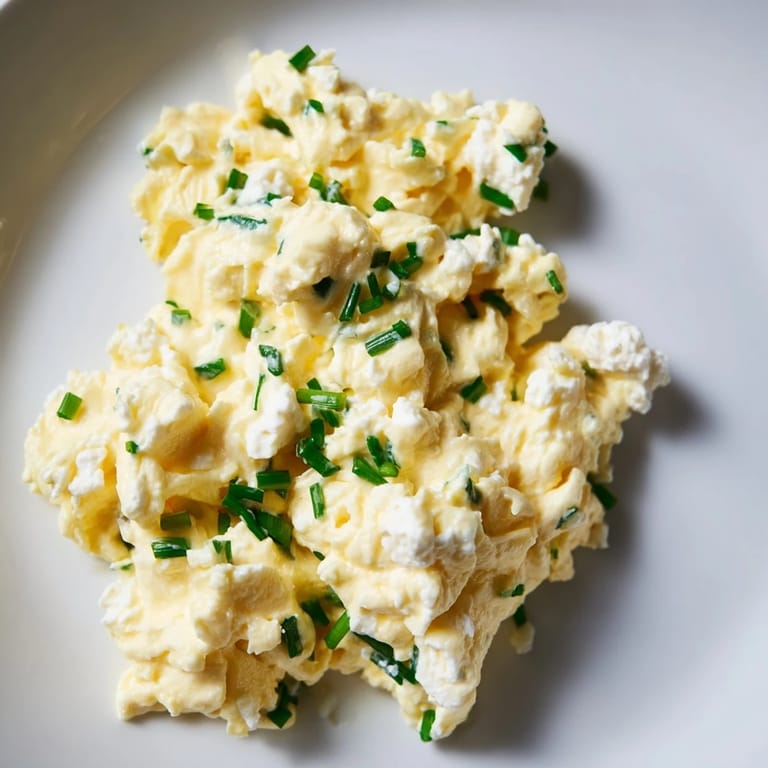
Save These scrambled eggs have become my answer to mornings that need grace—quick enough for busy days, nourishing enough to feel intentional, and adaptable enough to match whatever's in your fridge. Once you taste them, I think you'll understand why I keep coming back.
Kitchen Guide
- → How does cottage cheese affect the texture?
Cottage cheese adds moisture and creaminess, resulting in extra fluffy and tender eggs.
- → Can I use a different dairy instead of cottage cheese?
Yes, alternatives like ricotta or cream cheese can provide similar creaminess but may slightly alter flavor.
- → What cooking method yields the best fluffiness?
Cooking the eggs slowly over medium-low heat while gently stirring preserves moisture and creates soft textures.
- → Are there suggested garnishes?
Fresh chives or parsley add a mild herbal note and brighten the dish visually and flavor-wise.
- → How long does preparation take?
Preparation and cooking combined take about 10 minutes, making it a quick breakfast option.