 Save
Save I discovered the magic of a well-built vegetable platter during a spontaneous summer gathering when I realized my guests needed something that felt abundant and joyful without requiring me to stress over a hot stove. As I arranged those first rainbow carrots and cherry tomatoes, I watched people gravitate toward it all evening, and I understood then that sometimes the most memorable meals are the simplest ones—a canvas of color that invites everyone to eat together without pretense.
I still remember my neighbor's eyes lighting up when she saw this platter at a potluck—not because it was fancy, but because it felt like an invitation to slow down and really taste things. She spent twenty minutes by that board, trying combinations, talking to other guests, and somehow that simple arrangement became the heart of the gathering.
Ingredients
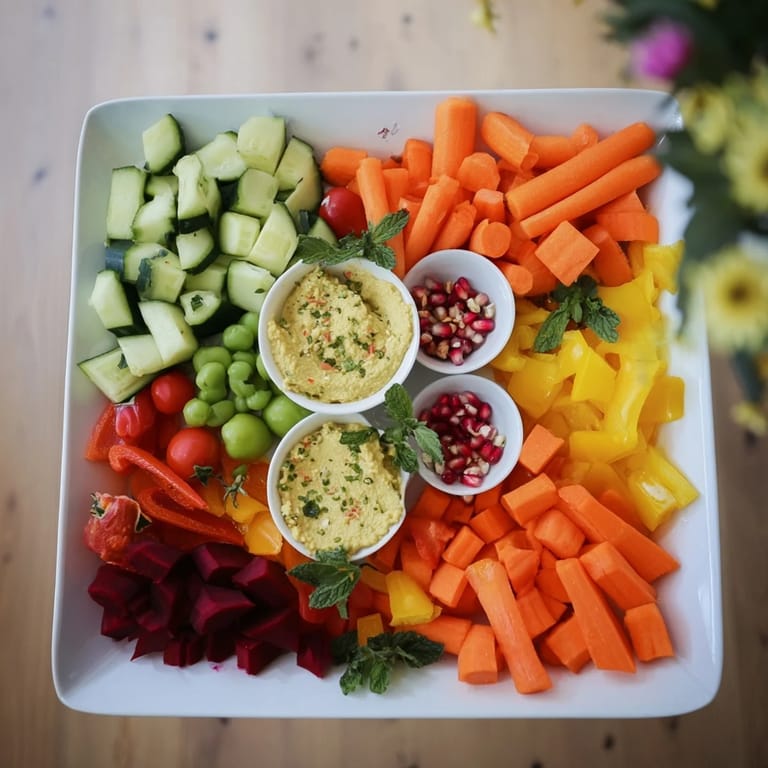
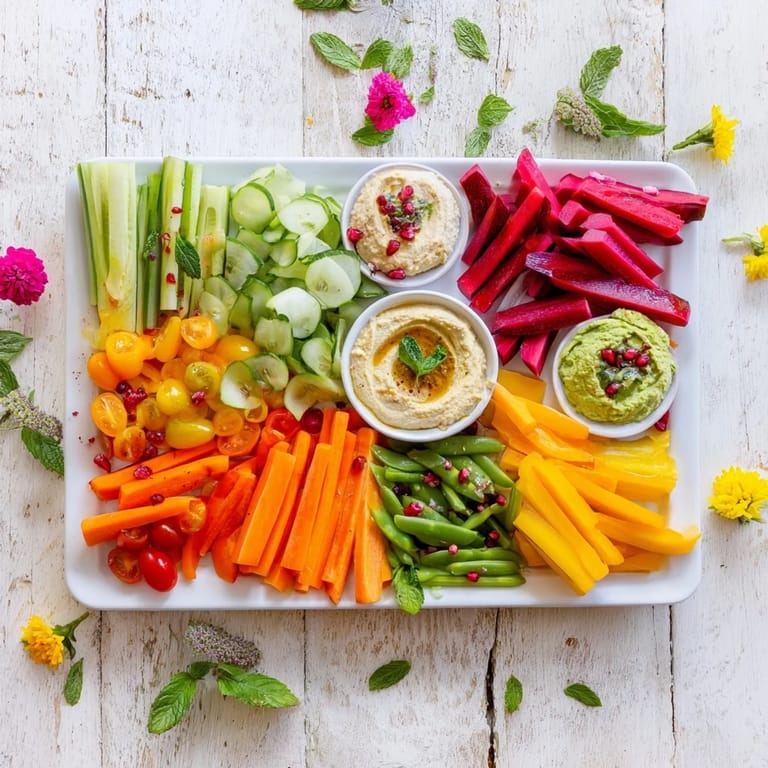
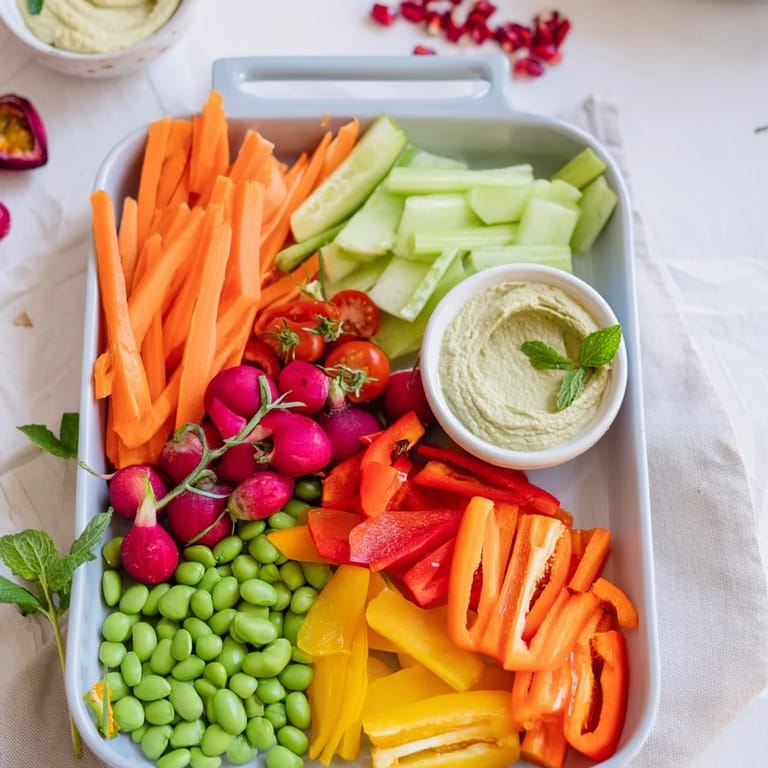
- Rainbow carrots: They taste nearly identical to orange ones, but the visual impact of purples and yellows mixed in changes everything about how people perceive the platter
- Baby cucumbers: These stay crisper longer than sliced regular cucumbers and feel more elegant in hand
- Cherry tomatoes in assorted colors: Buy a mix if you can find it; the flavor varies subtly between varieties and it's fun to notice the differences
- Radishes, thinly sliced: They bring a peppery snap that makes other vegetables taste brighter—don't skip them even if you think you don't like them
- Baby bell peppers, sliced: These are sweeter than full-size peppers and feel like a treat when you bite into them
- Snap peas: Leave them whole or halved; they're one of the few vegetables people can grab and eat immediately without dipping
- Mixed grapes and strawberries: The sweetness balances the earthy dips and keeps people reaching back for more
- Pineapple chunks and kiwi: These add brightness and a slight tartness that makes the whole platter feel fresher
- Classic hummus, beetroot hummus, guacamole, and cashew tzatziki: Four different dips means four different conversations and flavor experiences—this is the soul of the platter
- Pomegranate seeds and fresh herbs: These are your final flourishes; they catch the light and signal that this is something you cared about
Tired of Takeout? 🥡
Get 10 meals you can make faster than delivery arrives. Seriously.
One email. No spam. Unsubscribe anytime.
Instructions
- Wash and prepare everything with care:
- Rinse all your vegetables and fruits thoroughly, then let them dry completely on a clean kitchen towel. Moisture is the enemy of a beautiful platter—it makes everything look tired. As you dry them, slice according to the ingredient list, keeping everything bite-sized and elegant.
- Choose your stage:
- Find your largest platter or wooden board—this is your canvas. The bigger it is, the more generous and inviting the arrangement will feel.
- Position your dips strategically:
- Place small bowls of each dip at different points around the platter, spacing them evenly. I usually arrange them like compass points so people naturally move around the entire board instead of crowding one spot.
- Build your color sections:
- Start arranging vegetables and fruits in color-blocked sections around the dips. Group like colors together, but alternate between warm and cool tones as you move around the platter. Think of it like painting—let the eye flow naturally from one color family to the next.
- Fill every gap with intention:
- This is where the magic happens. Scatter pomegranate seeds, tuck fresh herbs, add crackers, and if you're using them, position edible flowers to catch light. There should be no empty space, but it shouldn't feel crowded—generous, not stuffed.
- Serve at the right moment:
- If you're serving immediately, perfect. If not, cover loosely with plastic wrap and refrigerate until guests arrive. The cold keeps everything crisp and inviting.
 Save
Save There's a quiet satisfaction in watching someone you care about discover a combination they didn't know they loved—like the person who realized radishes and guacamole were made for each other, or the friend who finally understood why pineapple belongs on a vegetable platter. These moments, these small discoveries, are why I keep making this.
How to Build It Like You Mean It
The secret to a platter that actually gets eaten is understanding that people eat with their eyes first. Start by mentally dividing your board into sections, then fill each section with a mix of colors, textures, and heights. Vary your cuts—some vegetables sliced thin, some chunky, some left whole. This variation keeps the eye interested and gives people choices in how they want to eat.
Making It Your Own
This platter is a template, not a rule. In winter, I add roasted beets and shaved fennel. In summer, I include fresh corn kernels and heirloom tomato slices. The framework stays the same—fresh vegetables, fruits, and dips—but the specific ingredients should reflect what looks beautiful at your market on the day you're making it. Seasonal thinking makes platters taste better and feel more connected to where you live.
Dips That Change Everything
The dips are as important as the vegetables. A boring platter with exciting dips is still memorable; a beautiful platter with boring dips is forgotten. Make or choose dips with personality—the beetroot hummus adds color and earthiness, the cashew tzatziki brings creamy tanginess, and the guacamole is there for people who want something rich. Each one tells a different story about what fresh food can taste like.
- Make sure your dips are at room temperature or slightly chilled, never straight from the fridge, so their flavors shine through
- If any dip looks tired after sitting out, give it a gentle stir and maybe a light drizzle of olive oil to refresh it
- Save any leftover dips for tomorrow's lunch—they're perfect with whole grain bread or crackers
 Save
Save A vegetable platter is really just an invitation—to eat fresh, to eat together, to slow down and notice the small pleasures of what's in season. When you arrange one with care, you're saying something generous without words.
Kitchen Guide
- → What vegetables are best for this platter?
Use colorful, fresh vegetables like rainbow carrots, baby cucumbers, cherry tomatoes, radishes, bell peppers, and snap peas for a vibrant display and varied textures.
- → How should the dips be arranged?
Place dips in small bowls spaced evenly on the platter to create focal points, making it easy to reach and visually balanced.
- → Can I substitute any fruits or vegetables?
Yes, seasonal produce and personal favorites can be swapped in to maintain freshness and variety while preserving visual appeal.
- → Are there any allergen considerations to keep in mind?
This platter contains nuts in the cashew tzatziki and sesame in hummus. Substitute or omit these dips if allergies are a concern.
- → How can I enhance the platter’s presentation?
Garnish with fresh herbs like mint, basil, parsley, edible flowers, and sprinkle pomegranate seeds to add color and freshness.
- → What serving tools are recommended?
Use a large serving board or platter, small bowls for dips, a sharp knife for slicing, a cutting board, and serving tongs for arranging and serving.