 Save
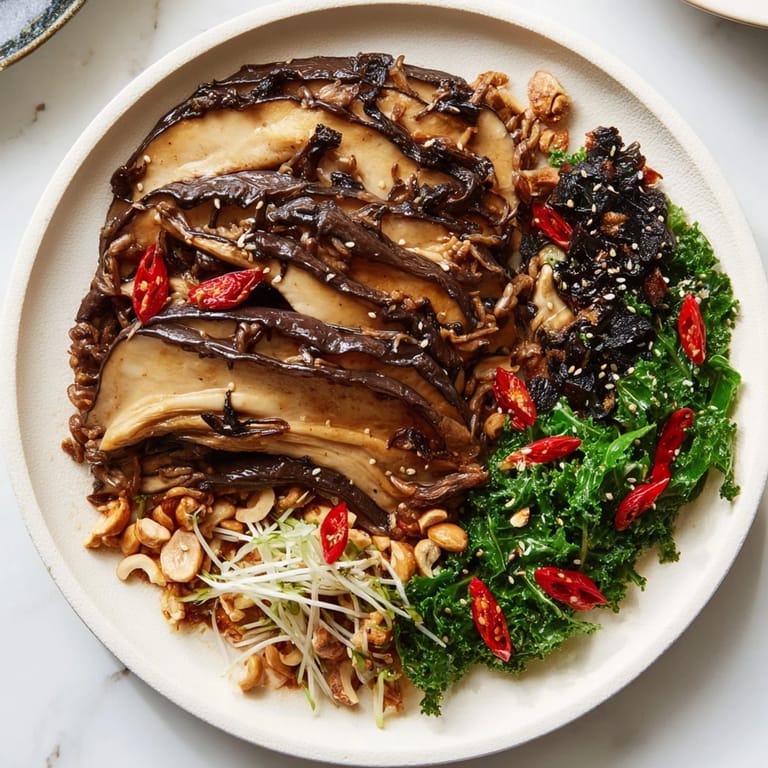
Save I'll never forget the evening I discovered this board at a small izakaya in Tokyo's Shibuya district. The chef arranged mushrooms in these perfect overlapping fans, each one glistening with sesame oil and soy, and I watched mesmerized as they disappeared piece by piece. That moment sparked an obsession with umami-rich boards, and after years of experimenting in my own kitchen, I've created this version that captures that same magic—deep, earthy, and impossibly sophisticated for something that comes together in under an hour.
I made this for my partner's parents on their anniversary visit, and watching his mother's face when she saw the mushroom fans arranged on the board—that quiet moment of delight before she even tasted anything—reminded me why I love cooking. She spent twenty minutes just photographing different angles before we finally convinced her to eat it.
Ingredients
- Shiitake mushrooms: These are the backbone of your board. Their meaty texture and deep umami flavor is what makes people close their eyes. Always slice them thick enough that they hold their shape when sautéed—thin slices turn into mush.
- King oyster mushrooms: Similar umami punch but with a more delicate texture. They caramelize beautifully and create that golden-brown color that makes the board visually pop.
- Enoki mushrooms: The delicate threads blanched quickly provide a tender, almost buttery contrast. Don't skip the blanching—it keeps them from tasting raw and helps them release their subtle sweetness.
- Sesame oil: This is your flavor anchor. Use the toasted variety for that distinctive nutty depth, and never cook it at high heat for long or you'll burn away the magic.
- Soy sauce or tamari: The umami amplifier. A good soy sauce here makes all the difference between a nice board and one that tastes like it came from a proper kitchen.
- Mirin: Optional but absolutely worth finding. It adds a subtle sweetness that rounds out the earthiness of the mushrooms.
- Roasted seaweed snacks: The ocean flavor that pulls everything together. Choose quality ones with minimal additives—they're the supporting actor that deserves respect.
- Nori sheets: Cut into strips for texture variety and that slight mineral quality that deepens umami.
- Black garlic: This ingredient seems intimidating but tastes like pure comfort—sweet, molasses-like, with zero bite. It's the secret weapon that makes people ask what that dark round thing is.
- Fermented black beans: Rinse them well to control saltiness. They provide a funky, aged flavor that transforms this from nice to unforgettable.
- Fried shallots: These provide the crunch that keeps your board textually interesting. They also add a sweet-savory note that grounds everything.
- Pickled daikon and ginger: Your brightness and palate cleanser. The acidity cuts through the richness and keeps you reaching for more.
Tired of Takeout? 🥡
Get 10 meals you can make faster than delivery arrives. Seriously.
One email. No spam. Unsubscribe anytime.
Instructions
- Toast your mushrooms until golden:
- Heat that sesame oil until it shimmers and smells incredible—you'll know it's ready when the aroma hits you. Add your sliced shiitake and king oyster mushrooms and let them sit without stirring for a minute. This creates caramelization, that brown crust that tastes like concentrated umami. After 4–5 minutes, when they're golden and releasing their liquid, add soy sauce and mirin. Toss gently, cook for one more minute, then spread them on a plate to cool. This pause is important—cold mushrooms slice more neatly and taste cleaner.
- Blanch the enoki for tenderness:
- Bring a pot of water to a rolling boil and give those delicate enoki threads just 30 seconds—literally count them out. They'll turn a bright pale green and lose that raw edge. Drain immediately and spread them on a kitchen towel to cool. This step feels tiny but it changes everything about their texture.
- Arrange your mushroom canvas:
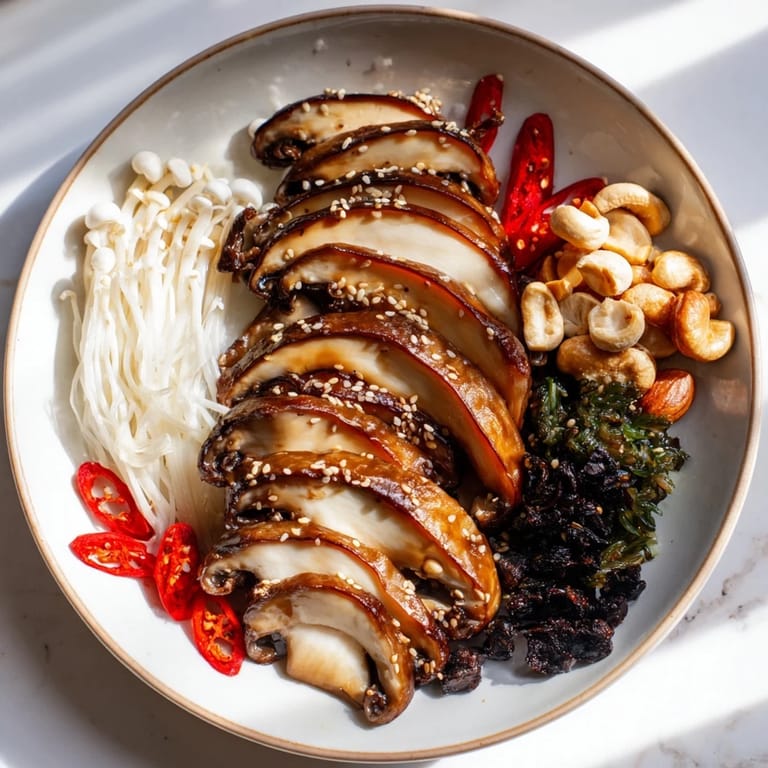
- This is where your board becomes art. Take your cooled mushrooms and arrange them in overlapping fan shapes, shingling them slightly so each piece peeks out. Start from one corner and work outward. Don't worry about perfection—slight chaos is more elegant than rigid precision. Let the different mushroom types create color variation.
- Create seaweed layers:
- Use whole seaweed snacks to create additional fans, interlocking them with the nori strips. The seaweed salad can be piled loosely in small mounds for visual interest. The ocean flavors from these elements are what make people taste the sea in every bite.
- Nestle in your umami players:
- Fill the gaps with piles of your pickled daikon, ginger, edamame, black garlic cloves, and fermented black beans. Think of these as jewels scattered across your board—each one should be visible and inviting. Don't mix them together; let each flavor stand alone so guests can choose their own flavor journey.
- Add crunch and color:
- Scatter your roasted cashews, fried shallots, fresh coriander leaves, chopped chives, and any red chili slices across the entire board. These aren't just garnish—they're essential textural elements that transform each bite. The fried shallots especially should be distributed so you hit them in almost every mouthful.
- Position your sauces:
- Pour ponzu and spicy sesame dressing into small bowls and find little nooks in the board to tuck them in. Position them so guests can easily reach them without disrupting your careful arrangement.
- Serve with intention:
- Bring this board to the table and pause for a moment. Let people admire it. Then encourage them to dip, mix, and create their own flavor combinations. This is interactive eating at its finest.
 Save
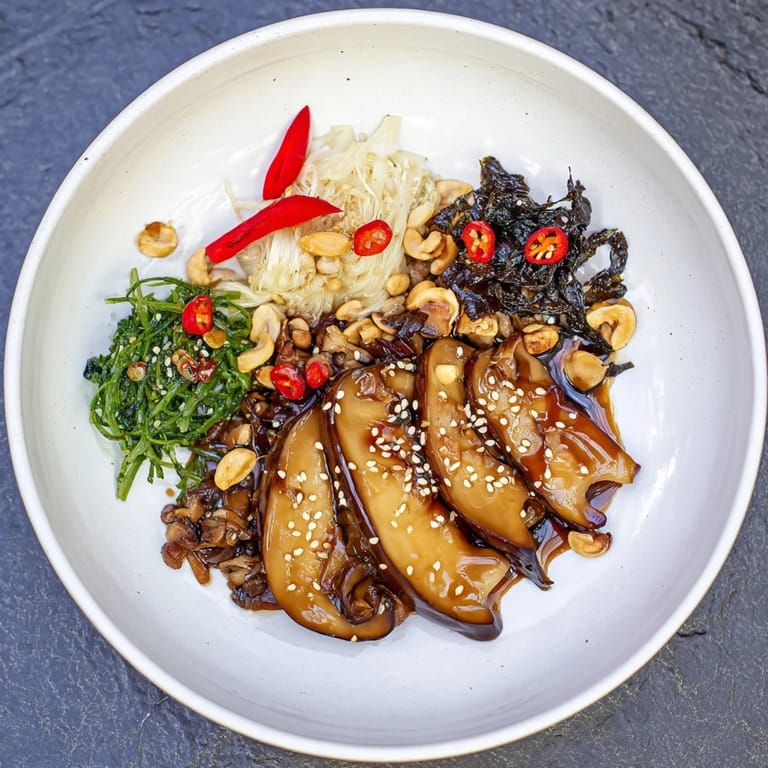
Save I served this to a friend who'd been stressed about getting healthy, and she sat down with this board and something shifted. She wasn't counting calories or worrying—she was just eating real food, tasting each element, and smiling between bites. Watching that happen made me realize this isn't just about the mushrooms or the umami. It's about creating a moment where people can slow down and taste.
Building Your Own Umami Symphony
The magic of this board is that it's customizable without losing its soul. Substitute mushroom varieties—portobello caps fanned out are stunning, maitake adds a frilly elegance. Add grilled tofu slices for protein or marinated tempeh if you want something with more presence. Layer in additional seaweeds like arame or wakame if you find them. The core principle is umami layering: aged ingredients (soy sauce, black garlic, fermented beans) plus fresh brightness (pickled ginger, coriander) plus textural contrast (fried shallots, nuts, tender enoki). Keep that balance and you're honoring the spirit of the dish.
The Sauce Strategy That Changes Everything
Don't underestimate these two sauces. The ponzu—citrusy and delicate—is your traditional choice, cutting through richness with brightness. The spicy sesame dressing adds heat and nutty depth. Some guests will use both, some will pick one and stay loyal. I've found that offering both creates this beautiful dynamic where people discover their own preferences. You can make both ahead of time, but I recommend preparing them fresh if you have the time—the flavors taste more alive.
Making It Vegan Without Losing Anything
A note here: this board is already mostly plant-based, but the devil is in the details. Check your seaweed snacks for fish byproducts. Verify your fermented black beans don't contain anchovy paste. Use tamari instead of soy sauce if you need gluten-free. Most importantly, use a high-quality vegetable-based soy sauce or tamari for your sautéed mushrooms. These small swaps don't diminish the recipe—they honor it in a different way. Some of my best boards have been made this way, and honestly, no one can tell the difference.
- Always check labels on pickled items—some seaweed salads sneak in fish or shellfish flavors
- Black garlic and fermented black beans are naturally vegan, so lean into those as your umami anchors
- Toast your sesame oil with confidence—it's plant-based magic
 Save
Save Every time I make this board, I remember that cooking isn't about perfection—it's about creating moments where people slow down and taste something real. This one does that beautifully.
Kitchen Guide
- → What types of mushrooms are used?
Shiitake, king oyster, and enoki mushrooms provide a rich earthy base for layered umami flavors.
- → Can this board be adapted for a vegan diet?
Yes, ensure all sauces and pickled ingredients are plant-based, and consider adding grilled tofu or tempeh for extra protein.
- → How are the mushrooms prepared?
Sauté shiitake and king oyster mushrooms in sesame oil with soy sauce and mirin. Enoki mushrooms are blanched briefly.
- → What garnishes add texture to the board?
Roasted cashews or peanuts, fried shallots, fresh coriander, chives, and optional red chili bring crunch and color.
- → What dipping sauces complement this board?
Ponzu and spicy sesame dressings offer tangy and savory notes that enhance the complex umami flavors.