 Save
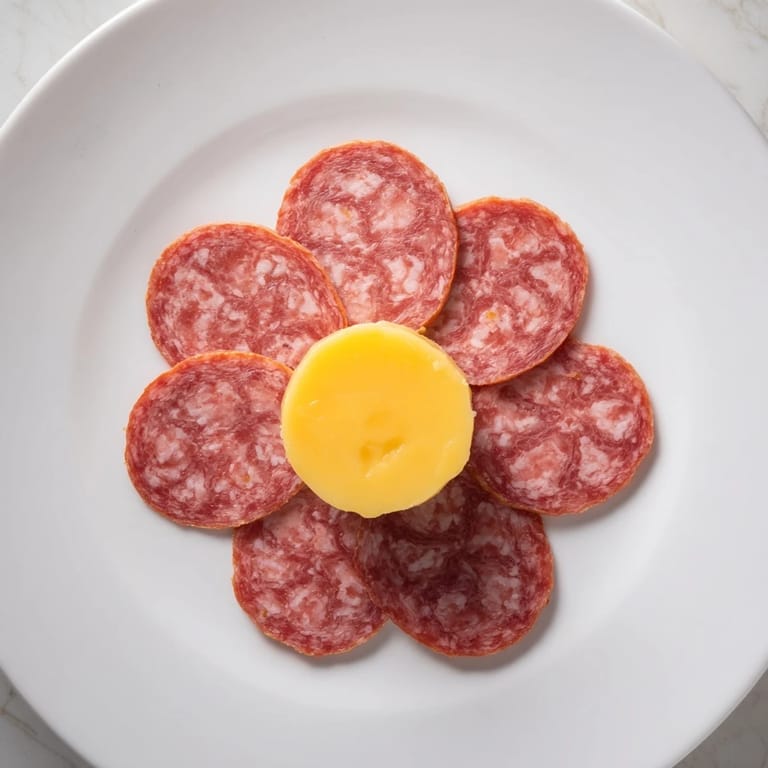
Save There's something about arranging food into shapes that transforms a simple plate into a small work of art. The Tudor Rose taught me this—a moment when my daughter asked if we could make something that looked like a flower, and I realized salami and cheese were already the perfect ingredients waiting in the fridge. It took barely ten minutes, yet somehow felt like the most elegant thing we'd assembled all week.
I'll never forget the dinner party where someone photographed the Tudor Rose before touching it, asking if it was too pretty to eat. That hesitation lasted about three seconds before the plate was empty. It became the dish people asked about for months afterward, which still makes me smile because it's just salami and cheese arranged thoughtfully.
Ingredients
- Salami slices: Five slices at about 6–8 cm diameter give you the perfect petal size—thick enough to hold their shape but delicate enough to feel elegant.
- Yellow cheese round: A 3–4 cm slice of Gouda or Cheddar becomes your rose's button; slightly firm cheese works best so it doesn't slide when you arrange the petals.
Tired of Takeout? 🥡
Get 10 meals you can make faster than delivery arrives. Seriously.
One email. No spam. Unsubscribe anytime.
Instructions
- Arrange your petals:
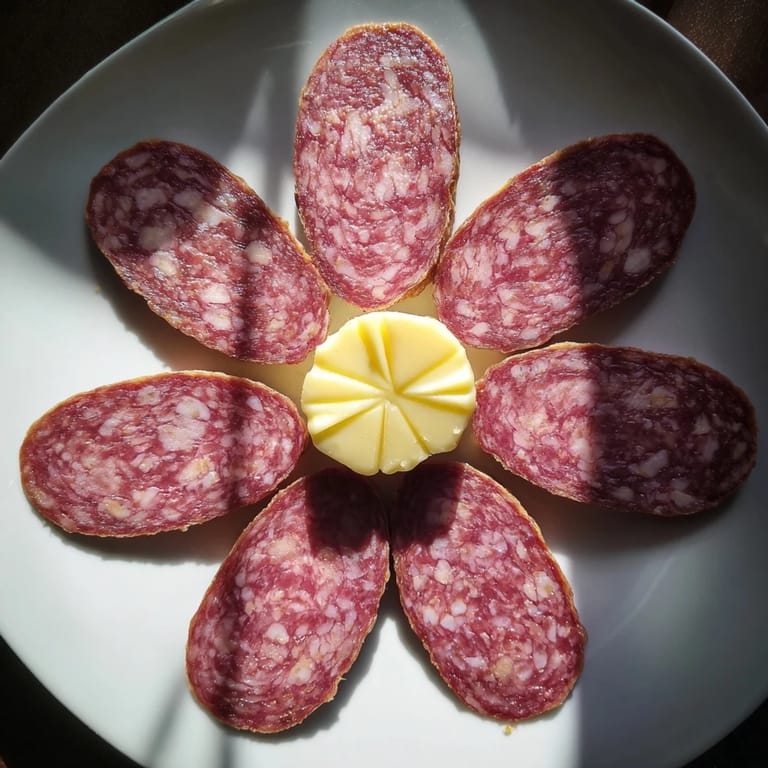
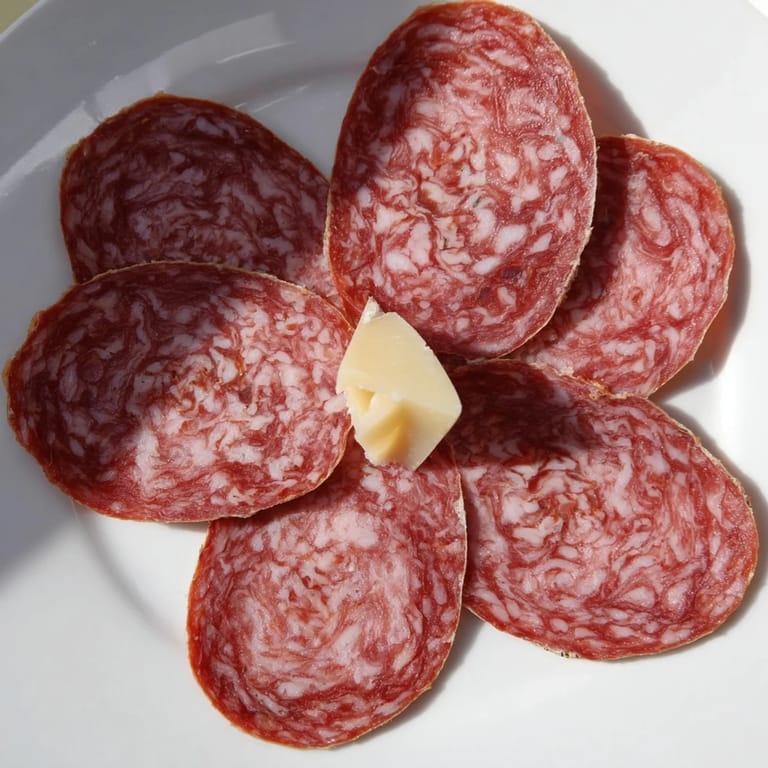
- Lay the five salami slices on your plate in a circle, letting each one slightly overlap its neighbor like petals naturally would. The overlapping edges create that authentic flower look and give you room to tuck the cheese right in the center.
- Place the button:
- Set your cheese round in the middle where all the salami edges meet. It acts as both the finishing touch and the anchor that holds everything together visually.
- Perfect the symmetry:
- Step back and adjust as needed—sometimes one petal wants to shift, and that's the magic moment where you can make it feel intentional and balanced.
- Serve with intention:
- Bring it to the table right away, while the arrangement is crisp and the colors are bright. It's meant to be admired before it becomes just another plate of appetizers.
 Save
Save The real magic of the Tudor Rose isn't just how it looks—it's how it makes people pause before eating. That moment of recognition, when someone sees the flower shape and smiles, turns a simple appetizer into a small gesture of care that somehow matters more than its ingredients suggest.
Elevating Your Presentation
Once you've mastered the basic arrangement, you'll start noticing how small details shift the entire impression. A white or pale plate makes the salami's deep red sing, while fresh basil leaves tucked between petals add both color and a whisper of flavor. I learned this by accident when I ran out of napkins and grabbed some herbs as a garnish—now it's part of the recipe.
Playing With Flavors and Variations
The beauty of this dish is that it's a template waiting for your own twist. Different cured meats bring different characters—prosciutto feels more delicate, while spicy chorizo petals would make something bolder. I've tried pairing the salami with sharp aged cheddar for a more pronounced flavor, and gentler Gouda when I wanted something softer and creamier. The cheese choice changes everything while keeping the visual concept intact.
Building a Memorable Charcuterie Experience
The Tudor Rose shines brightest when it's part of something larger—a scattered collection of cheeses, nuts, fresh fruit, and bread where it becomes the unexpected centerpiece that draws the eye first. I serve it on a board with rosemary sprigs standing nearby and a small pile of quality crackers, so the conversation around the table naturally circles back to this one small, perfect flower. It's the kind of thoughtful touch that doesn't require skill, just intention and maybe five minutes of your time.
- Crackers or fresh bread nearby let people build their own bites and extend the pleasure of eating it.
- Cold salami and cheese straight from the fridge hold their shape and color better than room-temperature ingredients.
- This appetizer is naturally gluten-free, making it perfect for mixed-diet gatherings where you want something everyone can enjoy.
 Save
Save This little rose proves that food doesn't need to be complicated to feel special. It's a quiet reminder that sometimes the most memorable dishes are the ones that prioritize beauty and intention over technical difficulty.
Kitchen Guide
- → What type of cheese works best for the central button?
Firm, mild cheeses like Gouda or Cheddar are ideal due to their shape and flavor. They hold well as a decorative center.
- → Can I use other meats instead of salami?
Yes, try other cured meats such as pepperoni or prosciutto to vary the flavor and appearance while maintaining the floral design.
- → How do I keep the salami petals symmetrical?
Arrange the slices slightly overlapping in a circle and adjust carefully to maintain balance and the flower shape.
- → Are there any suggestions for serving accompaniments?
Serve with crackers or fresh bread, and consider adding fresh herbs like basil or parsley for added color and freshness.
- → Is this suitable for gluten-free diets?
Yes, as long as gluten-free crackers or bread are paired. The main components, salami and cheese, are naturally gluten-free.