 Save
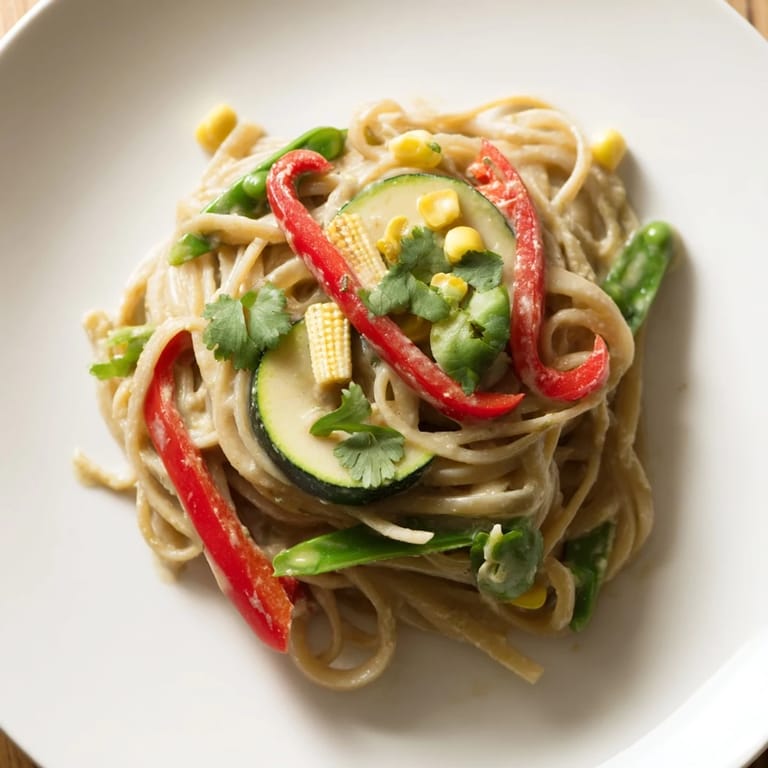
Save I discovered this dish on a Tuesday evening when my pantry held nothing but pasta, a can of coconut milk, and a jar of Thai green curry paste I'd been saving for something special. The kitchen filled with that unmistakable fragrance—toasted spices, fresh ginger, cilantro—and I realized I'd stumbled onto something that felt both comforting and unexpectedly adventurous. It's become the recipe I turn to when I want dinner that tastes like I've traveled somewhere, without leaving my apartment.
My friend Sarah showed up unannounced one evening, and instead of ordering takeout, I made this for her while she sat at the counter telling me about her week. By the time I plated it, she'd gone quiet—not in an awkward way, but in that focused way people get when something tastes too good to interrupt. She asked for the recipe before dessert, and I knew I'd found something worth making again and again.
Ingredients
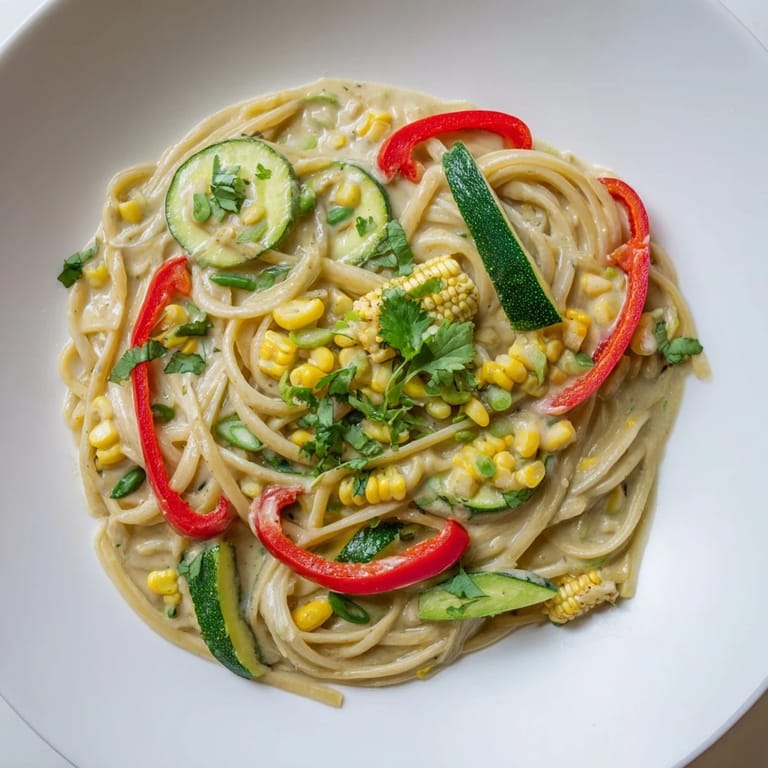
- Linguine or spaghetti (350 g): These long strands hold the curry sauce beautifully, though any pasta works—I've used penne when that's what I had, and it's equally good.
- Red bell pepper: Adds sweetness and a pop of color; if you only have green ones, they work too, just slightly more vegetal.
- Zucchini: Stays tender and absorbs the coconut-curry flavor without falling apart or getting mushy if you slice it thin.
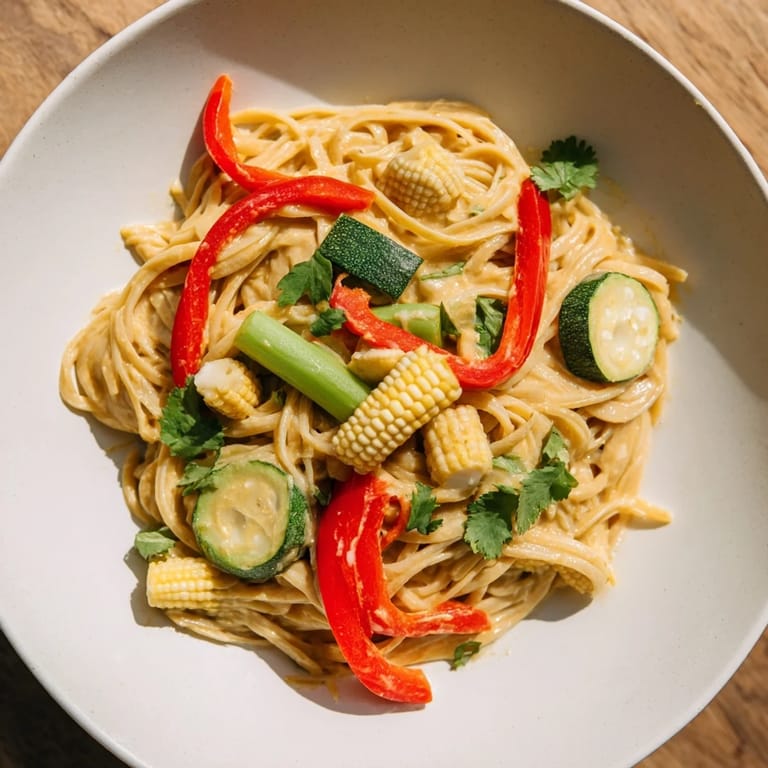
- Snap peas and baby corn: These keep their crunch, which is essential—the textural contrast makes every bite interesting.
- Spring onions and cilantro: The fresh finish that prevents this from tasting heavy, no matter how creamy the sauce gets.
- Thai green curry paste (3 tbsp): This is where the soul lives—taste yours first, as brands vary wildly in heat and depth.
- Coconut milk (400 ml): Use full-fat; light coconut milk makes the sauce taste thin and timid.
- Ginger, soy sauce, brown sugar, lime juice: Together they balance spice, salt, sweetness, and brightness so nothing dominates.
Tired of Takeout? 🥡
Get 10 meals you can make faster than delivery arrives. Seriously.
One email. No spam. Unsubscribe anytime.
Instructions
- Boil Your Pasta:
- Salt the water generously—it should taste like the sea—and cook your pasta until al dente, which means it has a slight resistance when you bite it. Save that starchy pasta water before draining; it's your secret weapon for getting the sauce to cling properly.
- Build the Curry Base:
- Heat oil in your skillet until it shimmers, then add the curry paste and ginger. Let them sizzle for a minute so the spices wake up and release their aromatics—this matters more than you'd think.
- Create the Sauce:
- Pour in the coconut milk slowly, stirring to avoid lumps, then add soy sauce and brown sugar. The mixture should smell incredible and look creamy; let it bubble gently while you prep your vegetables.
- Cook the Vegetables:
- Add them in order of how long they need—peppers and zucchini first, then snap peas and baby corn. You want them tender but still with a slight snap when you bite down, so don't walk away; check after five minutes.
- Bring It Together:
- Toss the cooked pasta into the curry sauce along with some of that reserved pasta water. The starch helps the sauce coat everything evenly, turning what could be a loose combination into something cohesive and luxurious.
- Finish with Brightness:
- Stir in the spring onions, lime juice, and cilantro at the very end. Taste it—this is your moment to adjust if you want more spice, salt, or acidity. Trust your palate.
 Save
Save The best version of this dish happened when my sister brought her partner to dinner and he tentatively asked if there was chicken in it, worried he wouldn't like vegetables. He ate two bowls and spent twenty minutes asking questions about the technique. It became the dish I make when I want to feed someone without making them feel like they're being fed something they should like.
Why This Works as a Fusion
Thai curry and Italian pasta sound like they shouldn't meet, but they do because they're both about sauce and texture. Pasta craves something to cling to, and Thai curry is built to coat everything it touches. Coconut milk does what cream does in Italian cooking—it smooths and enriches—but with an exotic note that makes the whole dish feel special. The spice and brightness of curry prevents it from ever feeling heavy or boring, which is what cream-based pasta can sometimes become.
Vegetables and Substitutions
I've made this with broccoli when that's what was in the fridge, and with carrots when I wanted something slightly sweeter. The vegetables aren't precious; they're there to add texture and sweetness and to stretch the sauce so it coats more pasta. If you like softer vegetables, add them earlier; if you like them crisp, add them later. The only rule is to keep them relatively uniform in size so they cook at the same pace and you're not fishing around your bowl for an undercooked piece of zucchini.
- Mushrooms work beautifully if you slice them thin and cook them longer to let them absorb flavor.
- Green beans are wonderful if you halve them so they stay manageable on a fork.
- Even frozen peas work in a pinch, though you'd add them at the very end so they stay bright and don't turn dull.
Protein and Variations
The recipe as written is vegetarian, but I've added shrimp, chicken, and tofu to different versions depending on who I'm cooking for. If you go the protein route, cook it in the oil before adding the curry paste—give it enough time to develop flavor and cook through. Tofu should be pressed first and either pan-fried until golden or crumbled directly into the sauce, where it softens and absorbs all that coconut-curry goodness. Whatever you choose, let it finish cooking in the sauce so it picks up the flavors instead of tasting like an afterthought.
- Cooked chicken thighs stay moist and take to this sauce better than lean breast meat.
- Shrimp only needs two to three minutes in the finished sauce so it doesn't toughen.
- Extra-firm tofu gives you the best texture if you press it and either cube or crumble it before adding to the pan.
 Save
Save This recipe has become my answer to what I call the "easy dinner that doesn't taste easy" question. It's the kind of dish that makes you feel capable in the kitchen without requiring anything you don't already have.
Kitchen Guide
- → What pasta works best for this dish?
Long pasta types like linguine or spaghetti hold the creamy sauce well and provide an ideal texture for this fusion dish.
- → Can this be made vegan?
Yes, use curry paste without shrimp or fish ingredients and substitute protein options with tofu or omit altogether.
- → How spicy is the curry sauce?
The heat level depends on the green curry paste used; adjust the amount or choose milder paste to suit preferences.
- → Can I add protein to this meal?
Cooked chicken, shrimp, or tofu can be added for extra protein, complementing the flavors nicely.
- → Are there any common allergens?
Contains soy from soy sauce and potentially nuts in garnishes; pasta may have gluten and coconut is present as well.