 Save
Save There's something about the smell of sautéed onions and garlic that tells your whole kitchen, "Something warm is coming." I discovered this soup on a gray afternoon when I'd forgotten to plan dinner, but my vegetable drawer was full of possibilities. It turned into something I now make without thinking, the kind of dish that feels both spontaneous and reliable, like an old friend who always knows what to say.
I made this for my neighbor when she had the flu, and she texted me three days later asking for the recipe because she'd already made it twice. That moment stuck with me—not because it was fancy, but because nourishment has a quiet power that fanciness never will. Now when winter hits, I find myself making it for friends going through rough patches, and it becomes less about feeding them and more about saying, "I'm thinking of you."
Ingredients
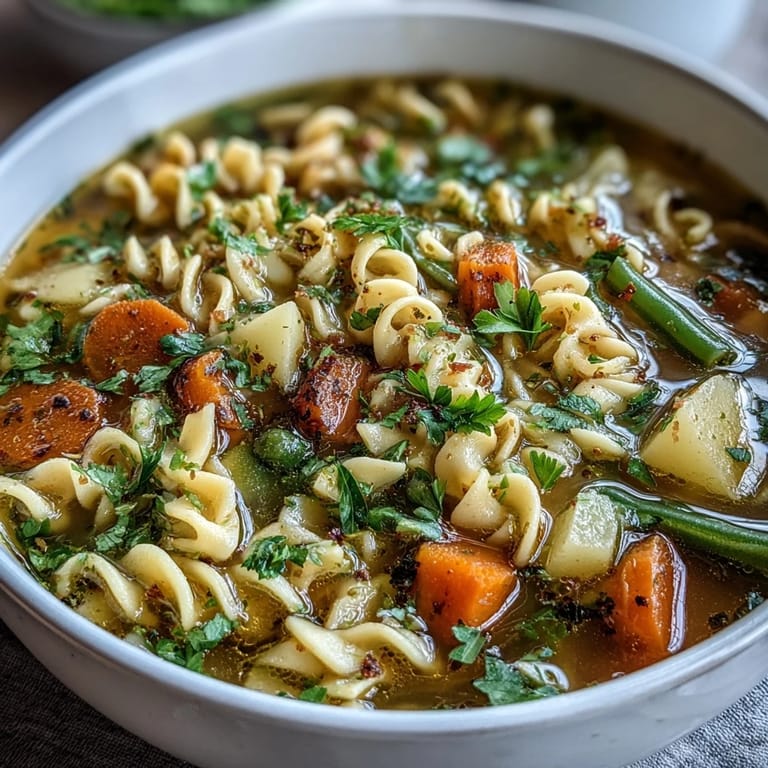
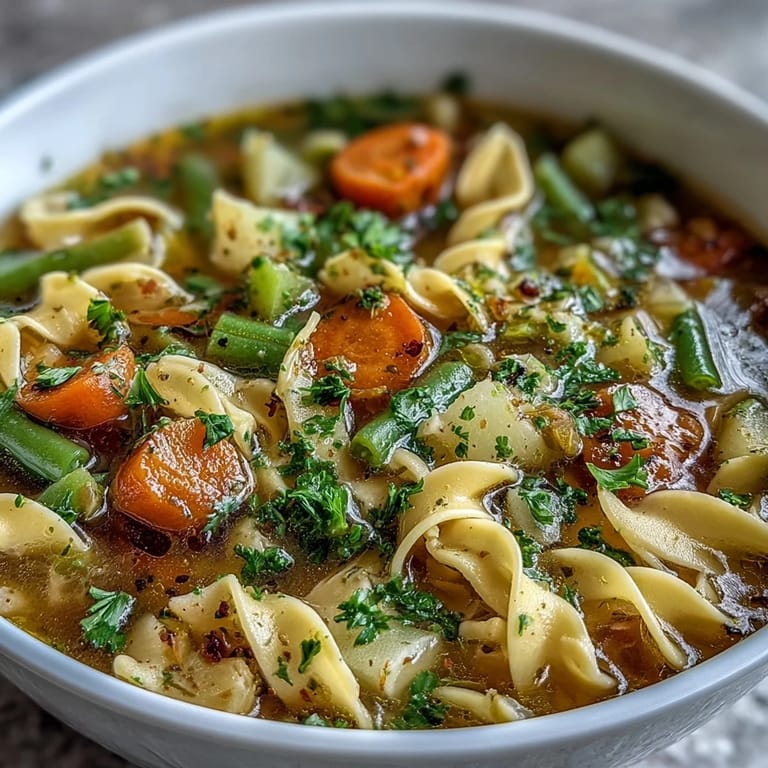
- Carrots: Their sweetness anchors the whole soup and gets even more mellow as they cook down into the broth.
- Celery: It's the quiet backbone that nobody talks about but everyone notices if it's missing.
- Onion: This is your flavor foundation, so don't rush the sauté—let it turn translucent and slightly golden.
- Potato: Adds body and makes the soup feel more substantial without any cream needed.
- Green beans: They stay tender but hold their shape, giving the soup actual texture beyond just broth.
- Garlic: Mince it fine so it dissolves into the broth rather than sitting in chewy chunks.
- Vegetable broth: This is where flavor lives, so use something you'd actually drink on its own.
- Bay leaf, thyme, and parsley: This trio is classic for a reason—they complement vegetables without overpowering them.
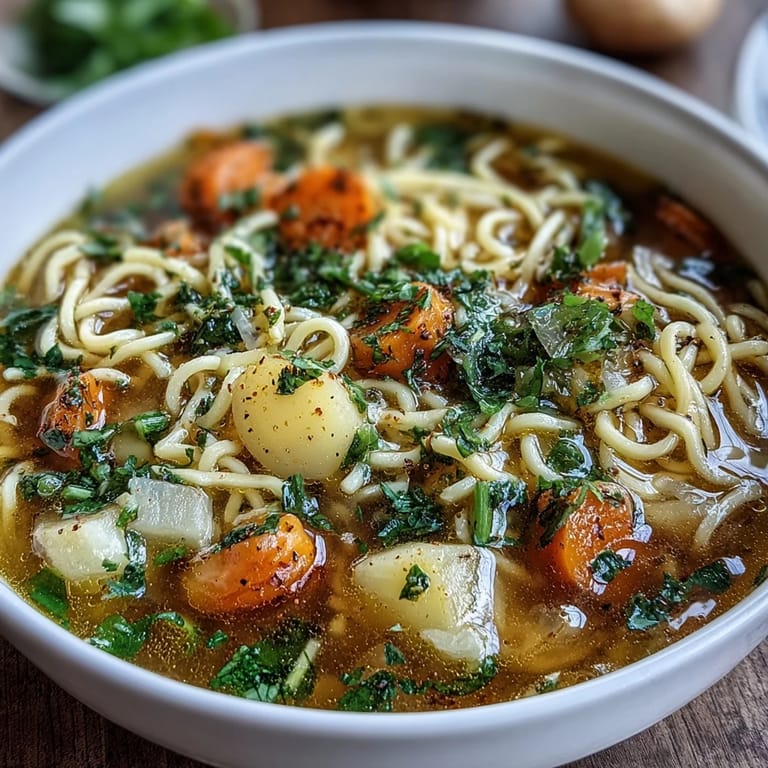
- Egg noodles or small pasta: The noodles absorb the broth as they cook, so by the end, every bite carries flavor.
- Optional spinach or kale: Adding greens at the last minute keeps them bright and slightly firm instead of turning into mush.
- Lemon juice: A tablespoon at the end wakes everything up and cuts through the richness.
Tired of Takeout? 🥡
Get 10 meals you can make faster than delivery arrives. Seriously.
One email. No spam. Unsubscribe anytime.
Instructions
- Start with the aromatics:
- Heat your pot and let the onion and garlic get to know the heat for a couple minutes until your kitchen smells undeniably good. You're building layers here, and this is the first one.
- Toast the hard vegetables:
- Add carrots, celery, potato, and green beans and let them catch a little color and heat for a few minutes. This step is easy to skip, but it makes the whole soup taste more intentional.
- Bring in the liquid:
- Pour the broth in and add your seasonings, then let it come to a boil so you know everything is heating through properly. The bay leaf will sit there quietly doing its job.
- Let vegetables become tender:
- Lower the heat and cover it, then give things about 10 minutes to soften up. You're not rushing—you're letting flavors meld.
- Add the noodles:
- Stir them in and watch as they gradually soften and absorb the broth around them, thickening the whole pot slightly. This takes about 8 minutes, and you'll know they're ready when they bend easily.
- Finish with brightness:
- Toss in any greens in the last couple minutes so they stay vibrant, then squeeze in the lemon juice right before ladling into bowls. Taste as you go and adjust salt and pepper—this is your moment to own it.
 Save
Save One winter evening, my daughter helped me make this and asked why I was stirring the pot so much. I realized I wasn't stirring for any practical reason—I was just standing there, letting the steam warm my face and thinking about nothing in particular. That's when I understood this soup isn't just food. It's permission to slow down.
Making It Your Own
The beauty of this soup is that it adapts to whatever season you're in and whatever you have on hand. Swap the green beans for zucchini in summer, throw in diced tomatoes if you have them, or add a cup of chickpeas if you need more protein. I've made it with mushrooms, with kale instead of spinach, with tiny pasta shells instead of egg noodles. Every version is good because the foundation is solid.
Storage and Reheating
This soup keeps beautifully for four days in the fridge, and honestly, it tastes better on day two or three once everything has had time to get friendly. If you're freezing it, leave out the noodles and add fresh ones when you reheat—otherwise they'll turn into mush. Reheat gently over medium heat, never a hard boil, and add a splash of water if it's gotten too thick.
When You Need Comfort
This soup shows up for people. Make it when someone needs feeding, when you're cold and tired, when the world feels too big and you just need something warm in your hands. It's not trying to be impressive—it's just trying to take care of you, and somehow that's the best thing a bowl of soup can do.
- A grilled cheese sandwich on the side turns this into a complete, deeply satisfying meal.
- If you're making it for someone else, don't apologize for its simplicity—that's where the power is.
- Keep the pot warm on the stove for seconds, thirds, and anyone who wanders in cold and hungry.
 Save
Save This is the soup I reach for on cold days, gray days, and days when I don't have the energy to think. It's proof that the best things don't need to be complicated.
Kitchen Guide
- → Can I use gluten-free noodles in this soup?
Yes, gluten-free noodles can be substituted to accommodate dietary needs without affecting the overall texture.
- → What vegetables work best in this soup?
Carrots, celery, potato, green beans, and leafy greens like spinach or kale provide great flavor and texture.
- → How long should I simmer the noodles?
Simmer uncovered for 7-10 minutes until noodles and vegetables are tender but not mushy.
- → Can I add protein to the soup?
Cooked chickpeas or white beans are excellent protein additions that complement the flavors well.
- → Is lemon juice necessary?
Lemon juice is optional but adds a bright, fresh note to balance the savory broth.
- → How do I store leftovers?
Store in an airtight container in the refrigerator for up to 3 days; reheat gently on the stove.