 Save
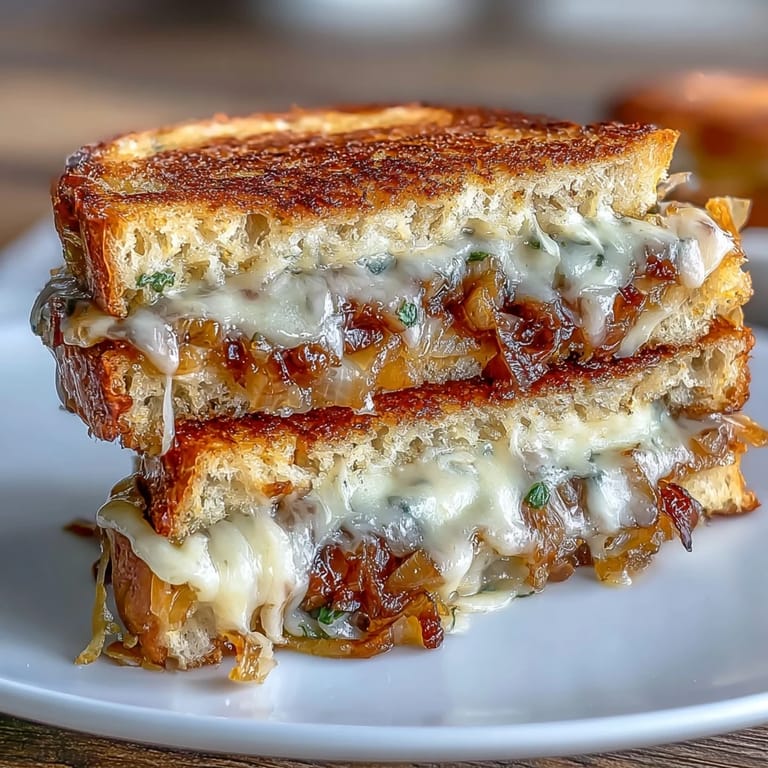
Save There's this golden hour in late afternoon when my kitchen smells like caramelized onions and butter, and suddenly I'm not just making lunch anymore—I'm transported to a tiny bistro in Paris where I once had French onion soup that changed how I thought about humble ingredients. Years later, standing at my stove with these same onions slowly turning amber, I thought: what if I could capture that rich, wine-soaked depth between two pieces of sourdough? This sandwich became that answer, a warm embrace of melted cheese and sweet onions that tastes like both comfort and sophistication in every bite.
I made these for my neighbor on a rainy Tuesday when she'd just moved in, and the way her eyes closed after that first bite told me everything—sometimes the most elegant meals happen in the most ordinary moments, over a kitchen counter with two mugs of coffee growing cold nearby.
Ingredients
- Unsalted butter (4 tablespoons total): You need the good stuff here, split between caramelizing and spreading, because it's doing the real work of flavor.
- Large yellow onions (2, thinly sliced): Don't rush this part—thin, even slices mean they caramelize uniformly instead of some pieces burning while others stay stubborn.
- Sugar and salt (1 teaspoon and 1/2 teaspoon): These humble additions coax the onions' natural sweetness forward, a trick I learned from someone's grandmother who swore by it.
- Fresh thyme leaves (1 teaspoon, optional): If you have it, it adds this quiet earthiness that makes people ask what's in here—if you don't, the sandwich still sings.
- Dry white wine or sherry (2 tablespoons, optional): This lifts the whole dish into bistro territory, but skip it if you need to.
- Sourdough bread (4 slices): The bread is your foundation—get the kind with actual tang and a proper crust, not the sad stuff from the middle shelf.
- Dijon mustard (1 tablespoon): A thin layer is all you need, just enough to remind your palate what it's tasting.
- Gruyère cheese, grated (1 cup): This is the star—nutty, slightly salty, the kind that actually melts into strings rather than gluey puddles.
- Swiss cheese, grated (1/2 cup): It keeps things from being too heavy, adds this subtle sweetness that balances the onions.
- Freshly ground black pepper (to taste): Grind it fresh right before you use it—the difference is worth the thirty seconds.
Tired of Takeout? 🥡
Get 10 meals you can make faster than delivery arrives. Seriously.
One email. No spam. Unsubscribe anytime.
Instructions
- Start the slow magic with your onions:
- Melt butter over medium heat and add your sliced onions with the sugar and salt, then let them do their thing for about 20 to 25 minutes, stirring every few minutes so they toast evenly instead of catching and burning. You'll know they're done when they're mahogany colored and smell like caramel—this is where patience becomes flavor.
- Finish the onions with wine if you're going there:
- Stir in the thyme, then pour in that white wine or sherry and scrape the bottom of the pan to get all those browned bits, letting the liquid evaporate into the onions. This step tastes like you know what you're doing, even if you're making it up as you go.
- Prep your bread and cheese layers:
- Spread a thin layer of Dijon mustard on one side of each bread slice, then divide your mixed Gruyère and Swiss between two slices, mounding them generously in the center. Top each cheese pile with a heap of caramelized onions, a few grinds of black pepper, more cheese to seal it all together, and press the other bread slice on top, mustard side facing inward so it's a secret between you and the sandwich.
- Butter the outside like you mean it:
- Spread softened butter on both outer faces of each sandwich—this is what creates that golden crust that makes people lean in closer. You want enough butter to see it shine, not so much it's streaming off into your skillet.
- Grill until golden and the cheese is melted:
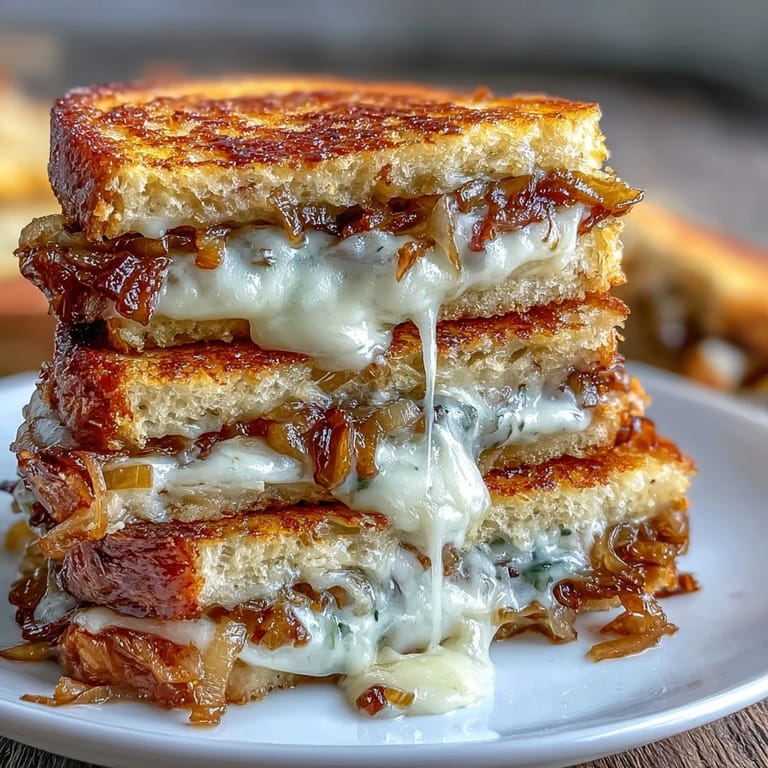
- Heat your skillet over medium-low (this matters—too hot and the bread burns before the cheese wakes up) and lay the sandwiches down gently, pressing them with a spatula for about 3 to 4 minutes until they're dark golden and the edges are crisp. Flip carefully, press again, and cook the other side the same way until you can hear the cheese making those little sizzling sounds inside.
- Rest and serve:
- Let them sit for a minute after you pull them from the heat so the cheese sets enough to hold together instead of sliding out when you bite into it. Slice diagonally (it tastes better this way, I swear) and serve while it's still steaming.
 Save
Save My mom tried one of these on a random Thursday and asked for the recipe, which felt like the highest compliment because she's not someone who asks for recipes—she just eats and moves on. But this sandwich made her pause, really taste it, remember out loud why she loved cooking in the first place.
The Art of Caramelizing Without Rushing
Caramelization isn't about heat, it's about time and presence, the kind of kitchen work that teaches you patience in a way nothing else can. I used to think more heat meant faster caramel, then I'd end up with burnt onions and regret—now I know the onions themselves tell you when they're ready, getting softer and more yielding as their sugars slowly brown, releasing smells that could make anyone weak in the knees. The wine or sherry isn't just flavor, it's a way of deglazing all those stuck-on bits of caramelized goodness, lifting them off the pan so nothing gets wasted.
Why Sourdough Matters Here
Regular bread would disappear under all this cheese and onion like it never had a chance, but sourdough has backbone—that underlying tartness that doesn't apologize or fade into the background. It also has a tighter crumb structure, so it doesn't get soggy from the moisture of the melted cheese and caramelized onions the way softer breads do, staying crisp and structured from first bite to last. I tried this once with brioche because I thought the sweetness would be nice, and it turned into soup between two pieces of bread by the time I sat down to eat it.
Making It Your Own
This sandwich is structured enough that it works as written, but flexible enough that your kitchen instincts should lead—if Emmental or sharp cheddar is what you have, use that instead of Gruyère and watch how differently it sings. A pinch of garlic powder in the onions during caramelization adds depth without announcing itself, and some people swear by a tiny smear of horseradish mustard instead of Dijon for brightness. The beauty of this recipe is that it's forgiving enough for experimentation but solid enough that your experiments will probably turn out better than you expected.
- Try caramelizing your onions a day ahead—they deepen and meld overnight in the refrigerator.
- A side of tomato soup transforms this from lunch into something that feels like dinner, or pair it with a crisp green salad if you need vegetables to feel virtuous.
- Leftover caramelized onions belong on every burger, pizza, and piece of toast for the next week, so make extra without guilt.
 Save
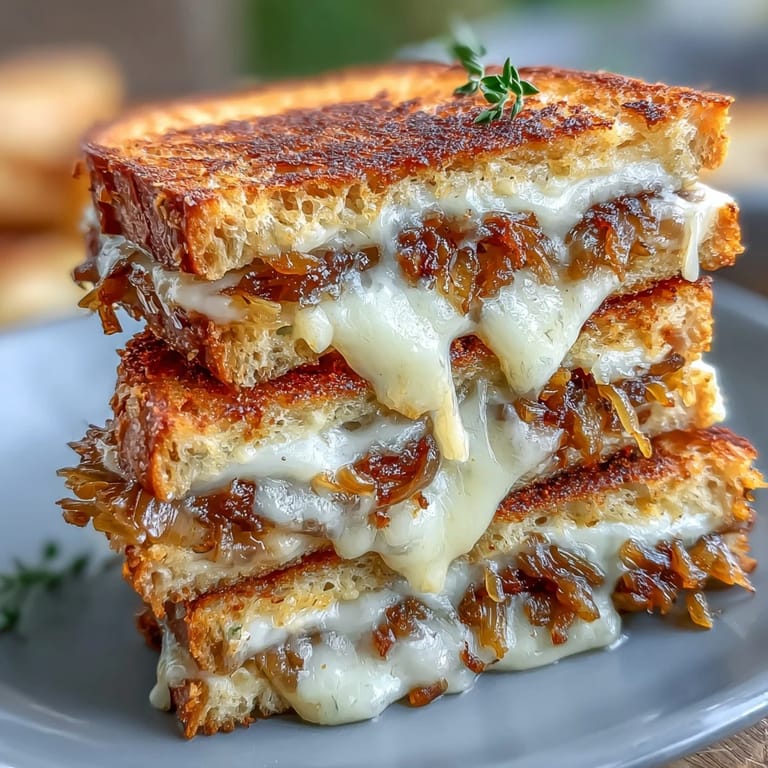
Save There's something about a grilled cheese that reminds you why cooking matters—it's humble enough not to pretend, fancy enough to feel like you did something right. Serve this warm, let someone you care about taste it, and watch their face say everything you need to know about whether you nailed it.
Kitchen Guide
- → How do you caramelize onions properly?
Cook sliced onions slowly in butter over medium heat, stirring frequently, until they turn a deep golden color and develop a sweet flavor. Adding a pinch of sugar helps enhance caramelization.
- → Can I substitute the Gruyère cheese?
Yes, Emmental or sharp white cheddar can be used as alternatives, each bringing a unique flavor and meltability to the sandwich.
- → Is it better to use dry white wine or sherry for the onions?
Both dry white wine and sherry add a subtle tanginess that balances the sweetness of the onions. Choose based on your flavor preference or skip if desired.
- → What type of bread works best for this sandwich?
Crisp sourdough bread is ideal due to its sturdy texture and tangy flavor that complements the rich cheeses and onions.
- → How do you achieve a crispy exterior while melting the cheese inside?
Spread softened butter on the outside of the sandwich and cook over medium-low heat, pressing gently with a spatula to ensure even melting and a golden crust.