 Save
Save The first time I made sushi bake, I was standing in my kitchen on a lazy Sunday afternoon, staring at a half-empty container of cream cheese and wondering what to do with leftover salmon. I'd been scrolling through food videos earlier that week, mesmerized by deconstructed sushi casseroles—all those beautiful layers baked into something warm and melty that didn't require the precision of rolling. Something about it felt like permission to stop overthinking and just layer things I loved into a dish. Twenty minutes later, my kitchen smelled incredible, and I realized I'd accidentally stumbled onto something that felt both impressive and impossibly easy.
I made this for friends during a dinner party where someone mentioned they'd never had good sushi at home. As I pulled that golden, bubbling casserole from the oven, the table got quiet, and then everyone leaned in at once. It was one of those rare moments when a dish becomes the entire conversation—not because it's complicated, but because it somehow tastes better than it should.
Ingredients
- Sushi rice: This is the foundation, and rinsing it properly makes all the difference—it removes excess starch so each grain stays distinct instead of turning into mush.
- Rice vinegar, sugar, and salt: These three combine to give the rice that characteristic sushi flavor without needing to fuss with a sushi vinegar bottle.
- Salmon fillet: Fresh, high-quality salmon bakes beautifully and flakes into tender pieces that fold seamlessly into the creamy layer.
- Sesame oil and soy sauce: Just a touch of each seasons the salmon perfectly without overpowering it.
- Cream cheese and Kewpie mayo: Kewpie is worth seeking out because it's slightly sweeter and richer than regular mayo, creating a more authentic sushi experience.
- Avocado: Wait to slice and add it until the last moment so it doesn't brown or get mushy in the heat.
- Nori: Cut it into small squares just before serving so it stays crispy instead of absorbing moisture from the casserole.
- Sesame seeds and spring onions: These aren't just garnish—they add the textural contrast that makes each bite interesting.
Tired of Takeout? 🥡
Get 10 meals you can make faster than delivery arrives. Seriously.
One email. No spam. Unsubscribe anytime.
Instructions
- Prepare the rice foundation:
- Rinse your sushi rice under cold running water, stirring gently with your fingers until the water runs clear—this takes patience but pays off in texture. Combine with fresh water in a saucepan, bring to a boil, then reduce to low heat, cover tightly, and simmer for exactly 15 minutes without lifting the lid.
- Season the rice:
- While the rice is still warm, drizzle in the vinegar mixture and fold it gently with a fork, never a spoon, which crushes the grains. Spread it evenly across your prepared baking dish and let it cool slightly while you prepare the other components.
- Bake the salmon:
- Place your salmon on parchment paper, brush lightly with soy sauce and sesame oil, and crack fresh black pepper over the top. Slide it into a 400°F oven for 12 to 15 minutes—it should be opaque and flake apart with gentle pressure, not fall apart in chunks.
- Create the creamy layer:
- Combine softened cream cheese, Kewpie mayo, a pinch of sriracha if you want heat, and fresh lemon juice in a bowl, stirring until silky smooth. Fold in the flaked salmon carefully, keeping some pieces visible rather than creating a uniform paste.
- Assemble and bake:
- Spread the salmon mixture evenly over your rice layer, then slide the whole casserole back into the oven for 10 minutes until the edges are warm and slightly golden. The warmth will soften everything together without cooking anything further.
- Top and serve:
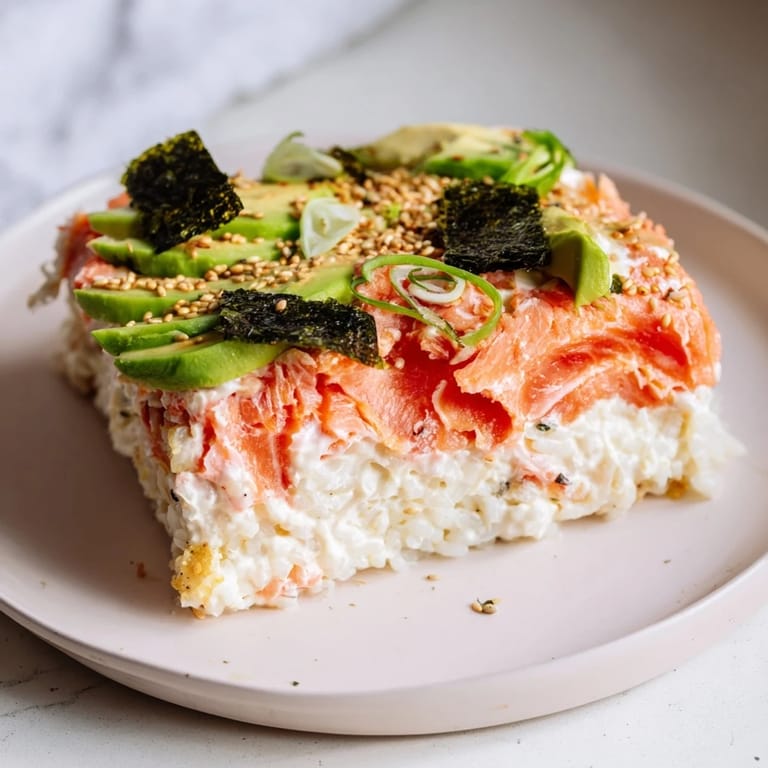
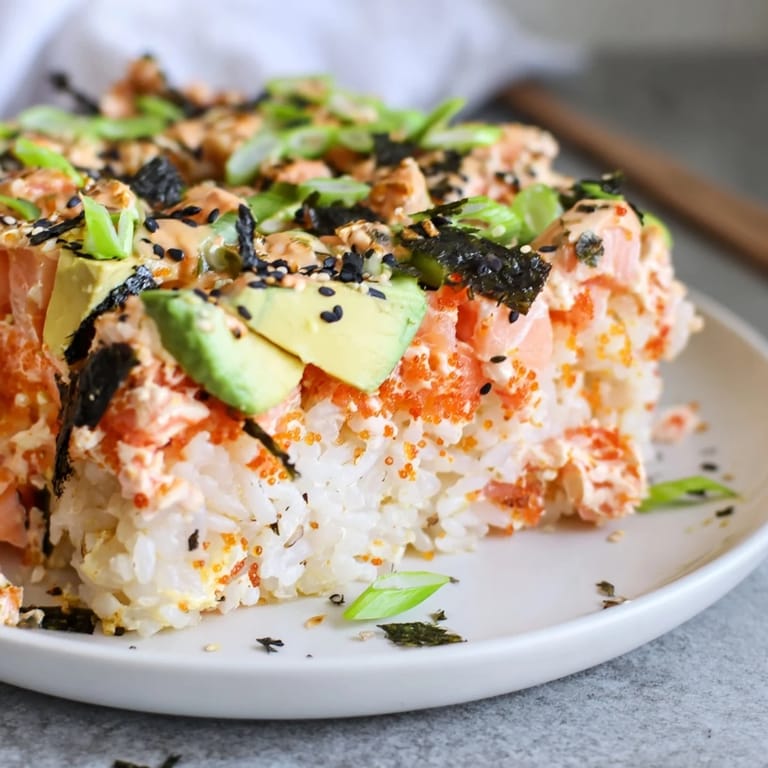
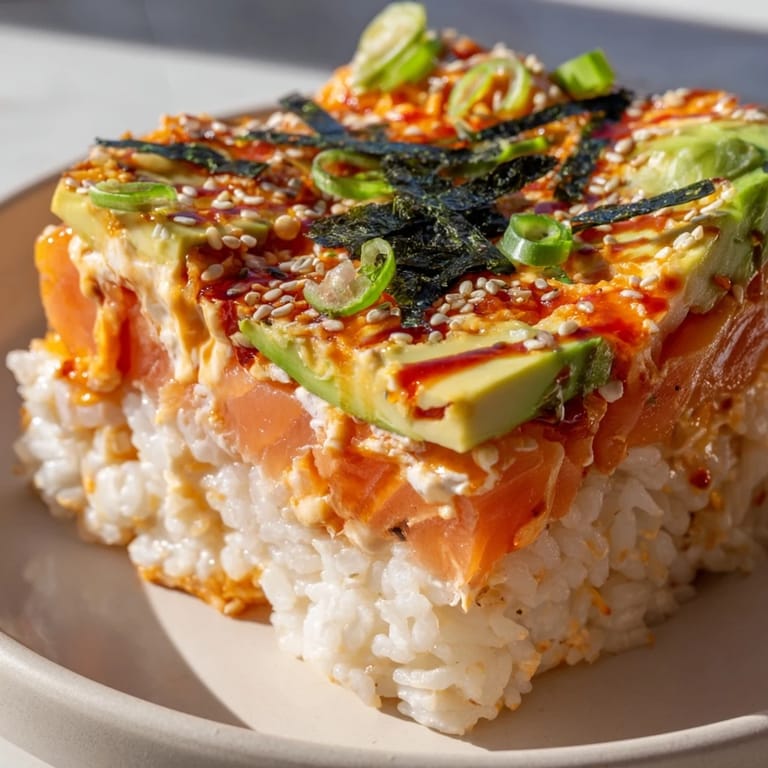
- Remove from the oven and immediately add your sliced avocado, nori squares, toasted sesame seeds, and fresh spring onions, then slice into portions and serve with small bowls of soy sauce, pickled ginger, and wasabi on the side.
 Save
Save There's something about serving this dish that makes people realize you don't need a rolling mat and steady hands to create something genuinely crave-worthy. It transformed how I think about sushi—less as a technique to master and more as flavors and textures to arrange however feels right.
Why This Bake Method Works
Baking brings gentle, even heat that warms everything together without requiring the speed and precision of stovetop cooking. The cream cheese and mayo soften slightly, binding the salmon to the rice, while the brief second bake creates just enough warmth to make the avocado feel buttery without turning it brown. It's the kind of technique that looks like you spent hours on technique but actually just involves letting the oven do most of the work.
Customizing Your Casserole
The beauty of a casserole is how forgiving it is to substitutions. Crab meat brings a delicate sweetness, cooked shrimp adds a slight bite, and canned tuna works in a pinch when fresh salmon isn't available. Even vegetables like cucumber, pickled radish, or roasted carrots can layer between the rice and creamy top if you're cooking for someone who prefers lighter protein.
The Details That Elevate It
The small choices are what transform this from just dinner into something memorable—using Kewpie mayo instead of regular, choosing truly fresh avocados, toasting your own sesame seeds. These aren't required, but they're the kind of refinements that come from making something once and immediately thinking about how to make it again. The first time someone takes a bite, they're experiencing comfort food that feels sophisticated, and that moment is worth a few extra minutes of attention.
- Toast your sesame seeds lightly in a dry pan just before serving so they're fragrant and crispy.
- Keep everything component-separate until the final assembly so you maintain textural contrast instead of creating a unified mush.
- Serve immediately after topping so the warm rice contrasts beautifully with the cool avocado and crispy nori.
 Save
Save This sushi bake has become the recipe I reach for when I want to feel creative in the kitchen without worrying about failure. It's taught me that sometimes the most rewarding dishes come not from mastering techniques, but from knowing when to break the rules.
Kitchen Guide
- → Can I use other fish instead of salmon?
Yes, cooked crab meat, canned tuna, or cooked shrimp can be substituted for salmon to vary flavor and texture.
- → How should the sushi rice be prepared for best results?
Rinse the rice under cold water until clear, simmer it with water, then mix in a vinegar, sugar, and salt blend to create the signature seasoned flavor.
- → What is the purpose of adding cream cheese and mayonnaise?
They create a creamy layer that binds the flaked salmon and adds richness and subtle tang to the dish.
- → Can this dish be made ahead of time?
Yes, it can be assembled in advance and baked just before serving to maintain freshness and texture.
- → What toppings enhance the layered casserole?
Sliced avocado, roasted nori squares, toasted sesame seeds, and spring onions add freshness, crunch, and umami complexity.
- → Is there a recommended sauce for serving?
Soy sauce pairs perfectly as a dipping sauce, complementing the layered ingredients and balancing flavors.