 Save
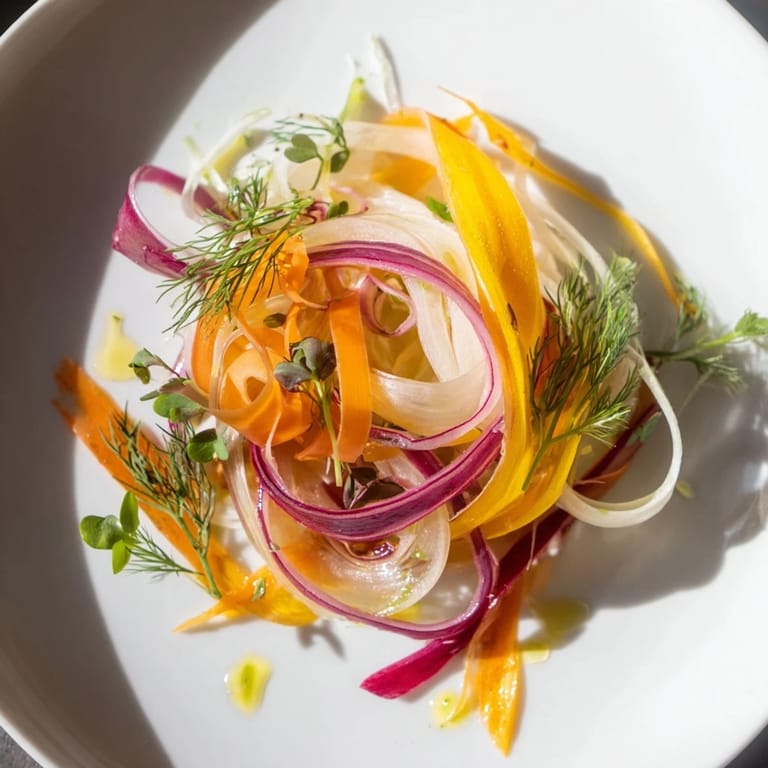
Save I discovered this salad entirely by accident while reorganizing my kitchen one afternoon, pulling out my mandoline slicer that had been gathering dust for months. I'd been craving something light and visually interesting, so I started shaving whatever vegetables I had on hand—fennel, carrots, a golden beet—and suddenly the ribbons were curling under the cold water like they were dancing. What started as an experiment in texture became this mesmerizing spiral arrangement, and I realized I'd stumbled onto something that felt both playful and elegant.
I made this for my sister's dinner party on a sweltering summer evening, and watching her face when I set it down was worth every careful slice. Everyone thought I'd spent hours in the kitchen, but the secret was just patience with the mandoline and understanding how cold water transforms thin slices into these beautiful curled ribbons. It became the thing people talked about more than the main course, which felt like a small victory for someone who usually plays it safe with food.
Ingredients
- Fennel bulb: Choose one that's pale and firm, as the delicate anise flavor becomes almost sweet when shaved thin, and the natural structure holds its shape beautifully when arranged.
- Rainbow carrots: The color variation is what makes this salad visually stunning, but they also taste subtly different—orange tends toward earthy, purple toward peppery—so use what feels right.
- Golden beet: Less earthy than red beets, it adds a gentle sweetness and that gorgeous warm hue without staining everything around it, which I learned the hard way with a red beet version.
- Red onion: A small half keeps the bite present without overwhelming the delicate vegetables, and the thinness mellows the sharpness just enough.
- Fresh dill and chervil: These soft herbs scatter across the arrangement like final brushstrokes, bringing brightness and keeping the whole thing feeling alive rather than overly styled.
- Microgreens: They're less about nutrition here and more about adding those tiny accent notes that catch the light and make the plate feel finished.
- Extra-virgin olive oil: The quality matters because it's not being cooked or masked—it becomes part of the flavor story, so use something you'd actually taste in a dressing.
- Lemon juice and Dijon mustard: This combination brightens the whole salad without heaviness, and the mustard adds an unexpected depth that makes people pause and wonder what they're tasting.
Tired of Takeout? 🥡
Get 10 meals you can make faster than delivery arrives. Seriously.
One email. No spam. Unsubscribe anytime.
Instructions
- Shave your vegetables into delicate ribbons:
- Use a mandoline or sharp vegetable peeler to create those thin, almost translucent slices—this is where the magic of the visual effect actually happens. Move carefully and let the blade do the work, aiming for ribbons thin enough to see light through them.
- Soak them in ice water to crisp and curl:
- This step transforms flat slices into these elegant curled shapes with natural movement, and the cold water wakes up the vegetables, making them taste fresher and crisper. Five to ten minutes is the sweet spot before they start to lose their color or texture.
- Build your dressing with balance:
- Whisk the oil, lemon, honey, and mustard together, tasting as you go—the honey rounds out the acidity, and the mustard adds that subtle complexity that keeps people guessing. Salt and pepper at the end let you dial in exactly what you're looking for.
- Arrange in a tight circular pattern:
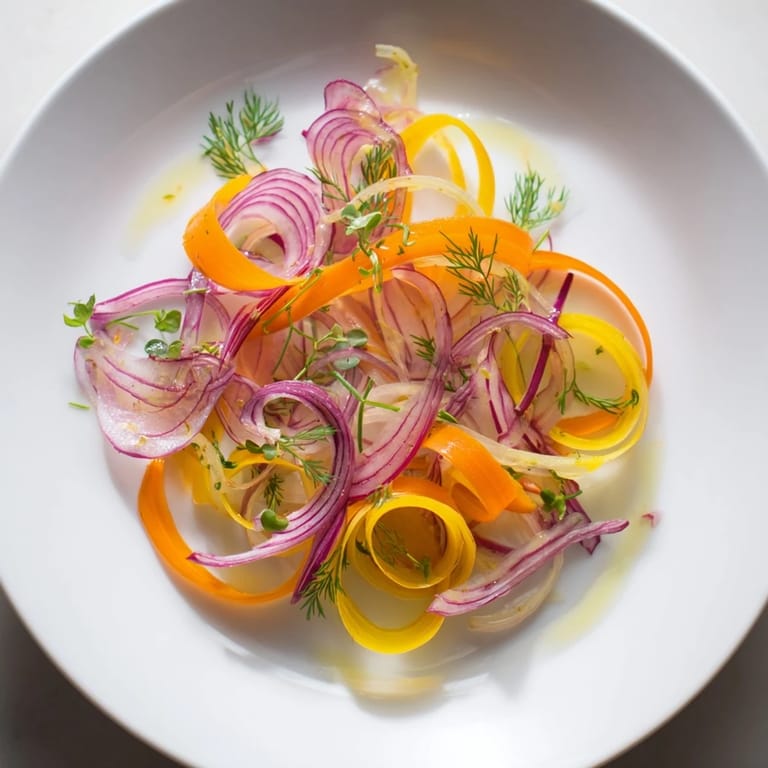
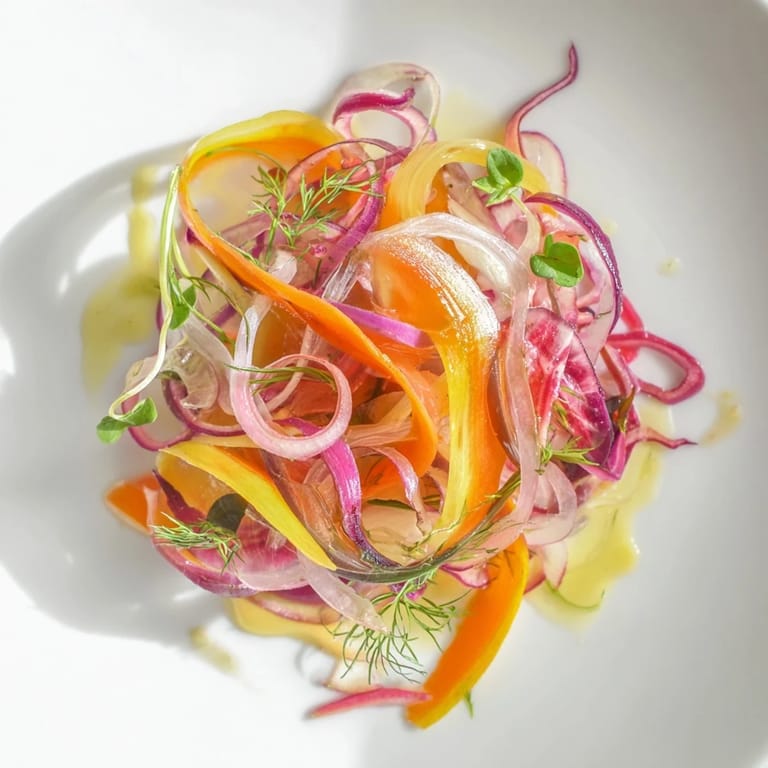
- Start from the center of your plate and work outward in a spiral, letting the ribbons overlap and extend past the edge for that dynamic, almost spinning effect. Think of it less like plating and more like composing, where every layer matters and the chaos is actually intentional.
- Scatter herbs and microgreens strategically:
- Pile more herbs toward the outer edges so the plate feels like it's still moving, and let them peek through the ribbons rather than sitting on top like an afterthought. This is where the dish goes from vegetable salad to something that feels thoughtfully composed.
- Dress it moments before serving:
- Wait until the very last second to drizzle the dressing so the vegetables stay crisp and the whole arrangement holds its shape and shimmer. Cold vegetables and a light hand with the dressing keep this feeling delicate rather than wilted.
 Save
Save What moved me most about this salad was realizing that simple vegetables, treated with a little intention and a steady hand, could become something that made people slow down and actually look at their plate. It's become my go-to when I want to cook something that feels special without relying on complicated techniques or expensive ingredients.
The Mandoline Is Your Best Friend
The first time I used my mandoline slicer, I was terrified of the blade and went too slow, which actually made thicker, less impressive slices. Once I realized the speed and pressure were half the battle, everything changed—thin, consistent ribbons became possible, and the whole visual effect came together. It's also worth investing in a proper guard because I've learned the hard way that sliced fingertips don't make for great plating stories.
Playing With Color and Texture
The beauty of this salad is how forgiving it is if you don't have exact vegetables on hand, so long as you think about color contrasts and how different textures will feel together. I've made versions with radishes, cucumber, and shaved apple, and each time the core idea remains the same—thin, delicate ribbons arranged with intention. The golden beet is special because it gives you that warm color without the mess, but a regular beet works just as well if you're not worried about staining.
Serving and Pairing Ideas
This salad lives best on a large, pale plate or platter where the spiral arrangement can really breathe and the colors stand out without competing with busy backgrounds. A crisp white wine like Sauvignon Blanc really does complement it beautifully—something about the acidity matches the lemon in the dressing and the fresh herbs. It works wonderfully as an opener to a bigger meal, or as a light side alongside something more substantial.
- Serve immediately after dressing so the vegetables stay crisp and the whole arrangement holds its elegant shape.
- If you're plating ahead, skip the dressing until the last moment and store the vegetables and herbs covered in the cold water.
- Double-check for any lurking mustard allergies before serving, since it's there but subtle enough that people sometimes miss it.
 Save
Save This dish taught me that sometimes the most impressive food comes not from complicated recipes but from respecting simple ingredients and paying attention to how they look, taste, and feel in conversation. It's become a reminder that plating with intention, even when it's just a salad, makes the whole experience feel more special.
Kitchen Guide
- → How do you create the thin vegetable ribbons?
Using a mandoline slicer or vegetable peeler, shave the fennel, carrots, beet, and onion into thin, wispy ribbons for a delicate texture.
- → Why soak the shaved vegetables in ice water?
Soaking them crisps and curls the edges, giving the ribbons a lively, fresh appearance and better texture.
- → What herbs complement this salad best?
Dill, chervil or parsley, and microgreens add brightness and an aromatic lift, enhancing the fresh vegetable flavors.
- → How is the dressing prepared for this salad?
A simple blend of olive oil, lemon juice, honey, Dijon mustard, salt, and pepper balances acidity, sweetness, and depth.
- → Can this dish be made ahead of time?
For optimal crispness and appearance, it is best served immediately after assembling and dressing.