 Save
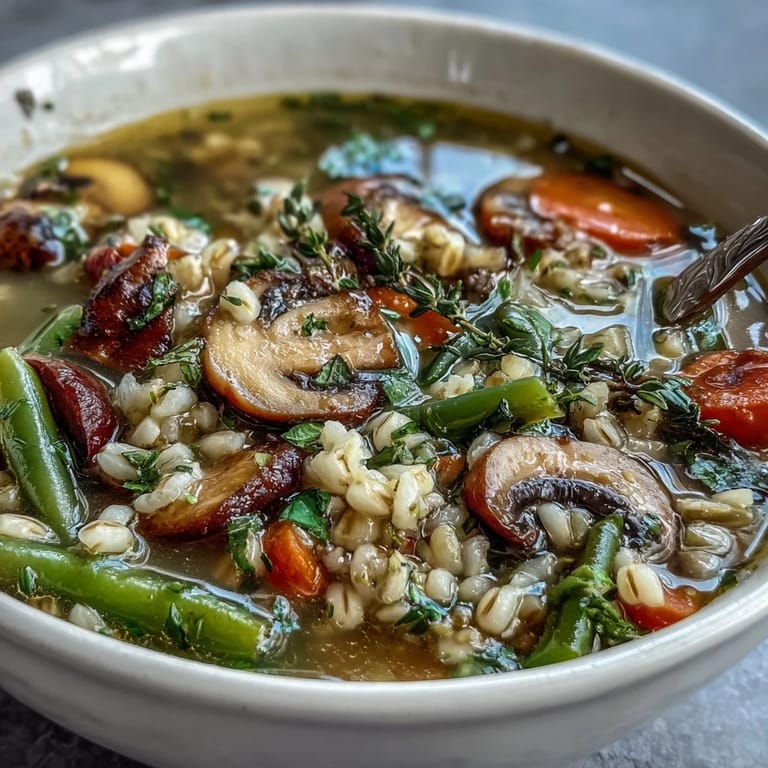
Save There's something about the smell of mushrooms hitting hot oil that makes a kitchen feel instantly purposeful. I discovered this soup on a gray October afternoon when my fridge held nothing but vegetables and a forgotten box of pearl barley in the back. What started as improvisation became something I found myself making almost weekly through winter, each bowl a small act of taking care of myself without fuss or pretense.
I made this for my neighbor when she moved in, ladling it into containers still warm, and watched her face when she tasted how the earthy mushrooms and tender barley somehow balanced into something lighter than it looked. She's asked for the recipe three times since, each time saying she'd never realized soup this nourishing didn't need to be complicated.
Ingredients
- Pearl barley (3/4 cup): Rinse it under cold water first to remove surface starch, which helps each grain stay distinct rather than turning gluey.
- Olive oil (2 tablespoons): Don't skimp here, it's what coaxes out sweetness from the onions and carries flavor through the whole pot.
- Yellow onion (1 large): The foundation of everything good that follows, softening into almost nothing but making everything taste fuller.
- Carrots and celery (2 medium carrots, 2 stalks): This classic pairing builds depth quietly without announcing itself.
- Garlic (3 cloves): Mince it fine so it melts into the mushrooms rather than staying chunky.
- Cremini or white mushrooms (8 oz): These release umami into the broth as they cook down, making the whole soup taste savory and intentional.
- Potato (1 large): Dices into small pieces to soften quickly and add subtle richness without heaviness.
- Zucchini (1 medium): Adds freshness and texture, staying tender without falling apart completely.
- Canned diced tomatoes (14 oz): Use the juice too, it's where the brightness lives.
- Green beans (1 cup): Cut them small so they cook in time with everything else.
- Vegetable broth (6 cups): Good broth makes this soup sing, so taste it first if you can and adjust salt accordingly.
- Dried thyme and oregano (1 teaspoon each): Dried herbs are your friend here, they withstand the long simmer without losing personality.
- Bay leaf (1): Don't forget to fish this out before serving, learned that lesson the messy way.
- Black pepper and salt (1/2 teaspoon and 3/4 teaspoon): Season in layers, tasting as you go rather than all at once.
- Fresh parsley (2 tablespoons): Scattered on top at the end, it's the final note that makes everything taste brighter.
Tired of Takeout? 🥡
Get 10 meals you can make faster than delivery arrives. Seriously.
One email. No spam. Unsubscribe anytime.
Instructions
- Build your foundation with heat:
- Pour the olive oil into a large pot over medium heat, then add your diced onion, carrots, and celery all at once. Let them soften together for about five minutes, stirring occasionally so they cook evenly without browning too hard.
- Welcome the mushrooms:
- Stir in the minced garlic and sliced mushrooms, cooking for another five minutes until you notice the mushrooms have released their liquid and shrunk down noticeably. This step matters more than it sounds, because it's where the soup starts tasting deep and earthy rather than flat.
- Layer in the vegetables:
- Add the diced potato, zucchini, green beans, and your canned tomatoes with all their juice, stirring everything together so nothing settles at the bottom. The kitchen will smell almost ready at this point, even though you're only halfway there.
- Add the backbone:
- Pour in your vegetable broth and scatter the rinsed pearl barley across the top, then add the thyme, oregano, bay leaf, salt, and pepper. Stir well so the barley distributes evenly rather than clumping in one spot.
- Bring it to life with gentle heat:
- Let everything come to a boil over medium-high heat, then immediately lower the heat to low and cover the pot. Simmer for forty to forty-five minutes, stirring every fifteen minutes or so, until the barley has turned tender and the vegetables have softened completely.
- Finish and serve:
- Remove the bay leaf carefully, then taste the soup and adjust the salt and pepper as needed because every broth is slightly different. Ladle it into bowls and scatter the fresh parsley over each one, letting it sit on top like a final benediction before you eat.
 Save
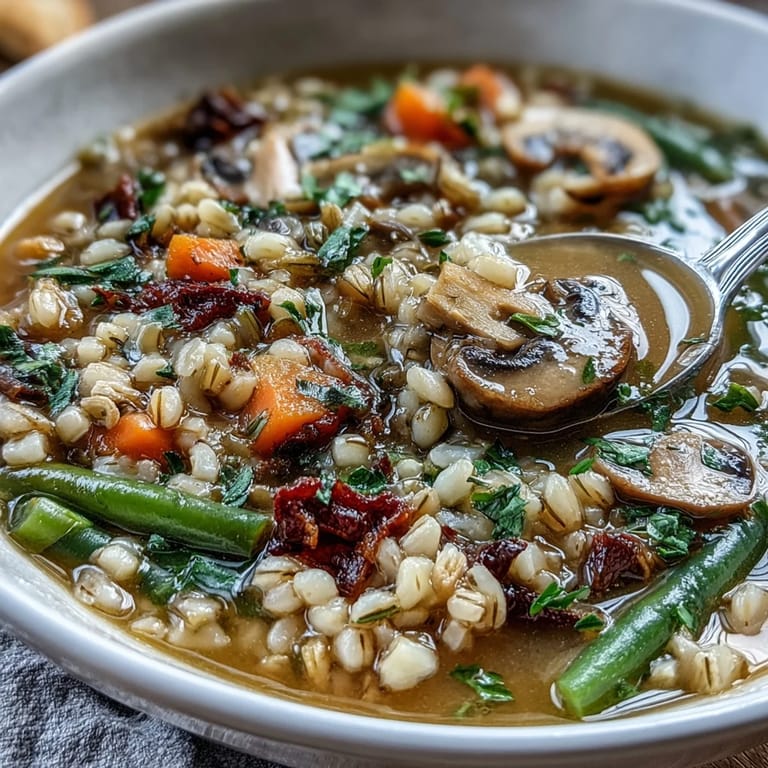
Save My partner came home one evening to find me standing over a bowl of this soup, steam rising into my face, and asked if I was okay just from watching how peaceful I looked eating it. That's when I realized this wasn't just a recipe anymore, it was a small ritual that helped me settle into colder seasons without dread.
The Magic of Barley
Pearl barley doesn't get the attention it deserves in modern cooking, overshadowed by trendier grains, but it does something truly special when simmered slowly in broth. It releases a gentle starch that thickens the soup from within, creating a natural creaminess that feels luxurious without any cream at all. This is why the soup tastes fuller on day two or three, after the barley has continued softening and settling into every spoonful.
Vegetables as Canvas
The beauty of this soup lives in how flexible it is without falling apart into chaos. You can swap carrots for parsnips, potato for sweet potato, or add a handful of kale in the final minutes without changing the soul of the dish. The only rule that matters is cutting everything roughly the same size so nothing finishes cooking too early or languishes in the pot too long.
Serving and Storage Wisdom
This soup tastes good the moment it's finished but becomes something deeper after sitting overnight, the flavors marrying together in a way that feels almost intentional. Refrigerate it in containers for up to four days, or freeze it for months, though I find myself making it so often I rarely have leftovers long enough to test that theory seriously.
- Serve with thick crusty bread for soaking up every last spoonful, or just eat it as is when you want something lighter.
- If the soup thickens too much in storage, thin it with a splash of broth or water when reheating over gentle heat.
- Add fresh parsley right before eating rather than beforehand, so it stays bright and doesn't darken from the heat.
 Save
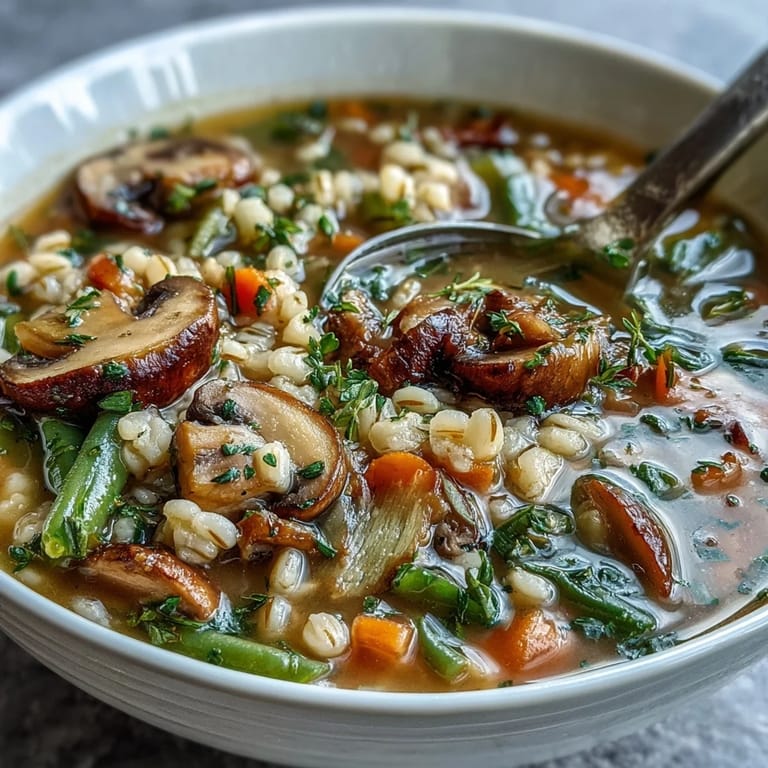
Save This soup reminds me that the best comfort food doesn't need a long list of special ingredients or techniques, just respect for what you're cooking and the patience to let flavors develop in their own time. Make it once and it becomes something you return to, each time feeling like you're remembering an old friend rather than following a recipe.
Kitchen Guide
- → What grains work well besides barley?
Brown rice and quinoa make excellent gluten-free alternatives that can be used with adjusted cooking times.
- → Can this be made vegan-friendly?
Yes, the dish is naturally vegan. Adding white beans enhances protein content without changing its plant-based nature.
- → How to enhance the soup’s flavor?
Sautéing mushrooms and aromatics first deepens the flavor while fresh herbs such as thyme and oregano add aromatic notes.
- → What vegetables complement this dish?
Carrots, celery, zucchini, potatoes, and green beans contribute to texture and a colorful, balanced mix.
- → How should leftovers be stored?
Keep leftovers refrigerated in an airtight container for up to 3 days; flavors often deepen overnight.