 Save
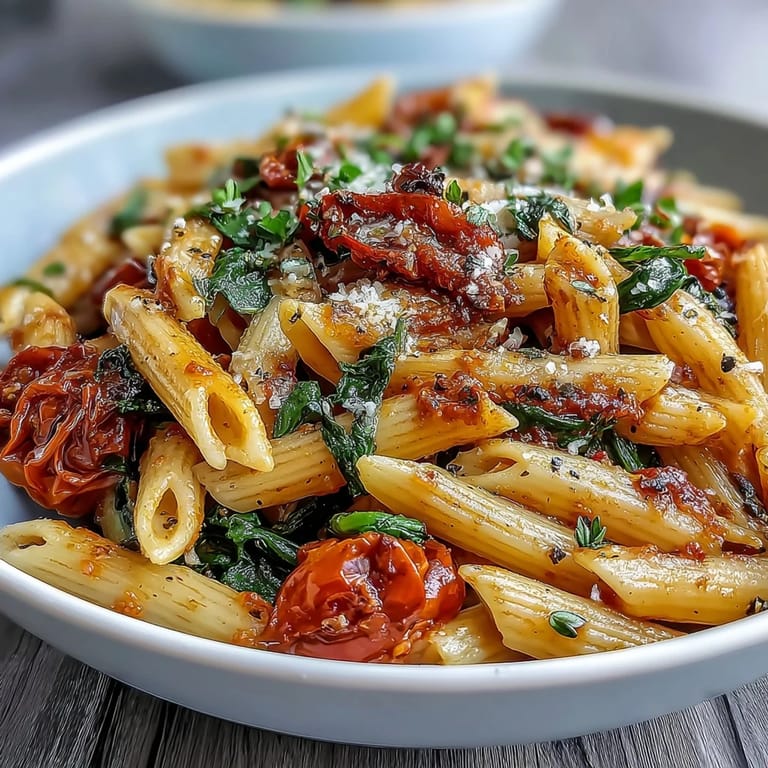
Save There's something magical about watching a pot do double duty—cooking the pasta while building the sauce all at once. I stumbled onto this method during a particularly hectic Tuesday when I'd promised my roommate dinner but had barely thirty minutes before we both needed to head out. What started as kitchen improvisation became my go-to weeknight anchor, the dish I reach for when I want something warm and satisfying without the sink full of pans that usually follows.
I made this for a friend who'd just moved into her first apartment with zero cookware beyond a single large pot, and watching her face light up when she realized she could make something this good without a full kitchen setup reminded me why I love this recipe so much. It became her starter dish, the one she'd make when people came over to prove she could cook, and somehow that mattered more than all the five-course dinners I'd ever stressed over.
Ingredients
- Dried penne or fusilli, 350 g: The shape matters more than you'd think—tubes and spirals trap sauce beautifully, and using dried pasta means it releases starch that naturally thickens your broth into something silky.
- Medium onion and garlic cloves: These two are your flavor foundation, and cooking them until they're just translucent gives you that aromatic base without any harsh raw bite.
- Zucchini and red bell pepper: Beyond nutrition, these add natural sweetness and a bit of texture variety that keeps every spoonful interesting.
- Canned diced tomatoes with juices, 400 g: Don't drain them—those juices are liquid gold, adding body and acidity that makes the whole dish sing.
- Baby spinach, 100 g: It wilts down to almost nothing but adds iron and a gentle earthiness that balances the bright tomato.
- Vegetable broth, 700 ml: This is your cooking liquid and sauce base combined, so don't skip it or substitute with water alone.
- Parmesan cheese, 60 g: Freshly grated makes a difference—it melts faster and distributes more evenly than pre-grated, creating a creamier finish.
- Olive oil, 2 tbsp: Good enough to taste, cheap enough not to cry about, this is your cooking fat and brings everything together.
- Dried Italian herbs and chili flakes: The herbs give Mediterranean warmth, while chili flakes add optional heat that sneaks up on you in the best way.
Tired of Takeout? 🥡
Get 10 meals you can make faster than delivery arrives. Seriously.
One email. No spam. Unsubscribe anytime.
Instructions
- Warm your pot and start the aromatics:
- Heat that olive oil over medium until it shimmers, then add your chopped onion and garlic—you'll know they're ready when the kitchen smells incredible and the onion starts turning see-through, about two to three minutes. This step builds your flavor foundation, so don't rush it.
- Introduce the vegetables:
- Stir in your diced zucchini and bell pepper, letting them cook just long enough to start softening and releasing their own flavors into the oil, roughly two to three more minutes. You're not trying to cook them through here, just getting them started.
- Bring everything together:
- Now add your raw pasta, canned tomatoes with all their juice, and that full measure of broth—it'll look like a lot of liquid, and that's exactly right. Sprinkle in your herbs, chili flakes if you're using them, salt, and pepper, then stir everything so the pasta doesn't stick to the bottom.
- Let it simmer and transform:
- Bring the whole pot to a boil, then lower the heat and cover it—the pasta will cook in that broth just like it's in a pot of water, but absorbing all the flavor as it goes. Stir occasionally so nothing burns, and you'll watch the liquid gradually get absorbed as the pasta softens, about ten to twelve minutes total.
- Finish with the green and the cheese:
- When the pasta is tender and most of the liquid is gone, uncover the pot and stir in your spinach and grated Parmesan—the heat from the pasta and broth will wilt the greens and melt the cheese into a creamy sauce in just a minute or two. Taste it now and adjust salt and pepper if needed.
- Serve and celebrate:
- Ladle it into bowls while everything's still hot, top with extra Parmesan, and take a moment to appreciate that you're done with dinner and done with dishes all at once.
 Save
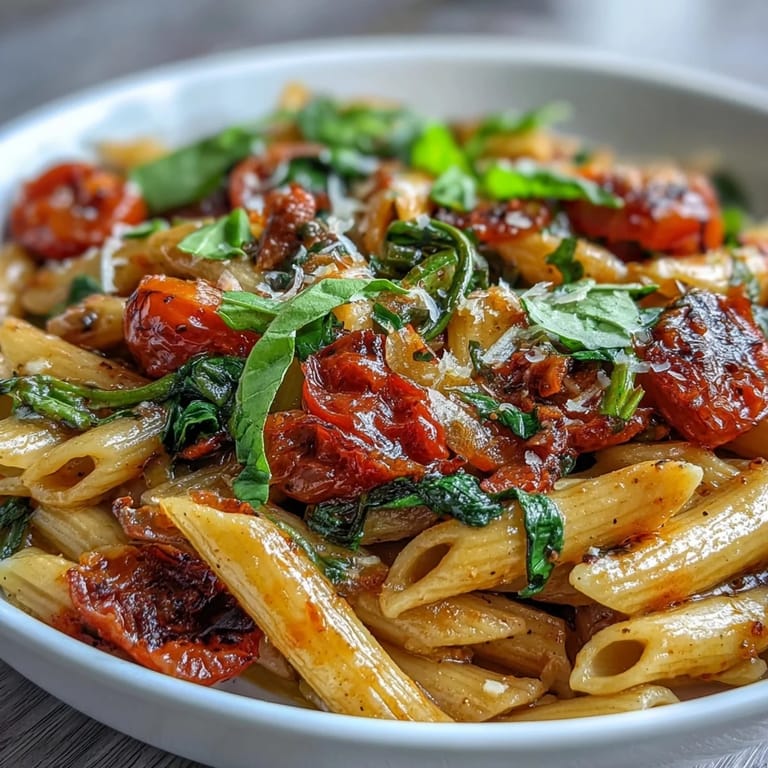
Save The real moment this dish won me over was when my dad, a man who'd spent decades dismissing weeknight shortcuts, tasted it and asked for the recipe—not to critique it, but because he wanted to make it himself. Somehow in one pot, we'd created something that felt both like cheating and like real cooking, and that contradiction is exactly what makes it so worth making again and again.
Making It Your Own
This recipe is genuinely a canvas, and I've never made it the same way twice because whatever I have on hand always seems to work. If you've got mushrooms, they add an earthy depth; if you have frozen peas, they bring sweetness; even carrots, thinly sliced or grated, work beautifully since they soften in the broth anyway. The beauty is that you're not locked into perfection—you're building something adaptable.
Protein Variations to Consider
While this dish is completely satisfying vegetarian, it also welcomes additions without complaint. Sliced cooked sausage stirred in at the end gives it a heartier edge, or you can shred in some rotisserie chicken for something lighter; even a can of white beans drained and added during the last few minutes brings protein and substance. I've even tossed in diced cooked ham before, and it transformed into something entirely different but equally welcome.
Dietary Flexibility and Storage
Gluten-free pasta swaps in without a fuss—just follow the package timing since some brands cook slightly differently, though the method stays exactly the same. This dish actually tastes better the next day after the flavors have gotten properly acquainted, so making extra is never a mistake; it keeps in the fridge for three days and reheats gently with a splash of water or broth if needed.
- Dairy-free is easy—skip the Parmesan or use a plant-based alternative, and the dish remains deeply satisfying.
- Keep your liquid measurements loose rather than precise—broth varies in saltiness, so taste as you go and adjust accordingly.
- Make this in a Dutch oven if you have one; the weight helps distribute heat more evenly and prevents those frustrated burnt spots.
 Save
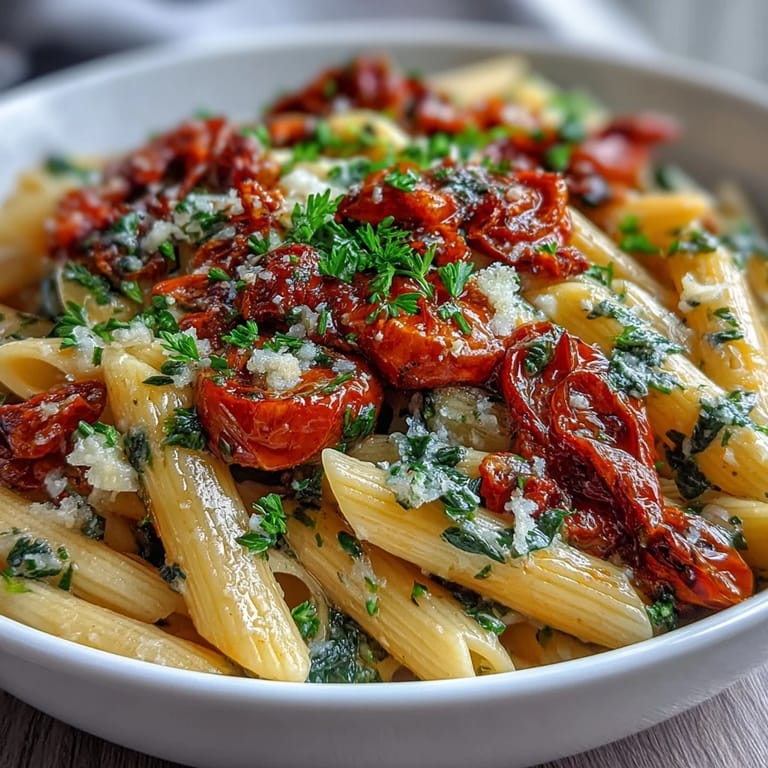
Save This recipe taught me that cooking doesn't have to be complicated to be good, and that sometimes the best meals are the ones where you're not fussing the whole time. Make it, feed people, and keep the recipe close—you'll absolutely make it again.
Kitchen Guide
- → Can I use different pasta shapes?
Yes, penne or fusilli are recommended for best results, but other dry pasta shapes like rigatoni or rotini work well too.
- → How can I make this dish protein-rich?
Adding sliced cooked sausage, shredded chicken, or canned beans boosts protein and complements the vegetable base nicely.
- → Is it possible to prepare this gluten-free?
Absolutely, substituting traditional pasta with gluten-free pasta varieties ensures the dish remains accessible to gluten-sensitive diets.
- → What is the purpose of cooking pasta directly in broth and tomato juice?
Cooking pasta in broth and tomato juice infuses flavor into the noodles while reducing cleanup by keeping all ingredients in one pot.
- → Can I adjust the spice level in this dish?
Yes, chili flakes are optional and can be added according to your preferred spice tolerance or omitted entirely.
- → How do I store leftovers and reheat them?
Store leftovers in an airtight container in the refrigerator for up to 3 days. Reheat gently on the stove or microwave, adding a splash of broth if needed.