 Save
Save My mum always said the best cakes taste like someone's thinking of you while they bake, and this lemon drizzle has become my way of proving her right. There's something about the brightness of fresh lemon that cuts through the richness of butter and sugar, making every bite feel a little bit special. Years ago, I watched her poke holes into a warm cake with the kind of patience I didn't understand then, slowly letting syrup seep in like it had all the time in the world. Now, standing in my own kitchen doing exactly that, I finally get it. This cake has become my Mother's Day tradition.
I made this for my sister's birthday last spring, and the smell alone had everyone gathering in the kitchen before it even finished cooling. She walked in from work, paused at the doorway, and just breathed it in—no words needed. Later, as people ate slices decorated with purple violas from the garden, someone said it tasted like sunshine, and honestly, that's stuck with me ever since.
Ingredients
- Unsalted butter, softened (225 g): Room temperature butter creams properly with sugar, trapping tiny air bubbles that make the cake light and tender—don't skip the softening or you'll fight with it.
- Caster sugar (225 g): Its fine crystals dissolve faster than granulated, creating that signature fluffy texture when beaten with butter.
- Large eggs (4): Room temperature eggs blend smoothly into the mixture; cold eggs can cause curdling and throw off your beautiful batter.
- Self-raising flour (225 g): This already has raising agents built in, which means you don't have to think about chemistry—just fold it in gently.
- Unwaxed lemon zest (2 lemons): The zest holds the true lemon flavor; juice alone tastes sharp and one-dimensional, but zest adds warmth and complexity.
- Whole milk (2 tbsp): Just enough to loosen the batter slightly so it flows evenly into the tin without becoming dense.
- Salt (pinch): A tiny amount lifts the lemon flavor and balances sweetness so the cake doesn't taste cloying.
- Lemon juice (juice of 2 lemons): For the drizzle, this creates that signature tang that makes people pause and say, yes, that's exactly right.
- Icing sugar (125 g for drizzle, plus 2 tbsp optional for dusting): Fine and dissolves instantly, creating a smooth glaze that soaks into warm cake without sitting on top.
- Edible flowers (assorted violas, pansies, nasturtiums, rose petals): These are purely for beauty, but they transform a simple cake into something that feels like a celebration before anyone even tastes it.
Tired of Takeout? 🥡
Get 10 meals you can make faster than delivery arrives. Seriously.
One email. No spam. Unsubscribe anytime.
Instructions
- Prepare your space and oven:
- Heat the oven to 180°C (160°C fan) / 350°F, then grease and line a 900g loaf tin with parchment paper—this little bit of prep means your cake slides out cleanly later without sticking or crumbling.
- Cream butter and sugar until fluffy:
- Beat them together for about 3-4 minutes until the mixture looks pale and mousse-like, with no visible grains of sugar. This is where the magic happens—you're building structure that will make the cake light.
- Add eggs one at a time:
- Drop in each egg, beat well, then move to the next; rushing this step or adding them all at once can cause the mixture to split and look broken. If it does curdle, a splash of milk usually brings it back together.
- Fold in the dry ingredients gently:
- Add flour, lemon zest, milk, and salt, then fold with a spatula using as few strokes as possible—overmixing develops gluten and makes the cake tough instead of tender. Stop as soon as no flour streaks remain.
- Bake until a skewer comes out clean:
- Pour batter into the tin, level the top, then bake 40-45 minutes until golden and a skewer inserted into the center comes out clean or with just a few moist crumbs. The smell will tell you when it's close.
- Make the drizzle while cake bakes:
- Whisk lemon juice and icing sugar together in a small bowl until smooth, then let it sit—it'll thicken slightly as the sugar fully dissolves.
- Poke holes and pour while warm:
- Once baked, leave the cake in the tin and use a skewer to poke holes all over the top, then slowly pour the drizzle over, letting it soak in. This is the step that keeps the cake moist for days.
- Cool completely before decorating:
- Let the cake sit in the tin until completely cool, then turn it out onto a serving platter and add edible flowers just before serving so they stay fresh and vibrant.
 Save
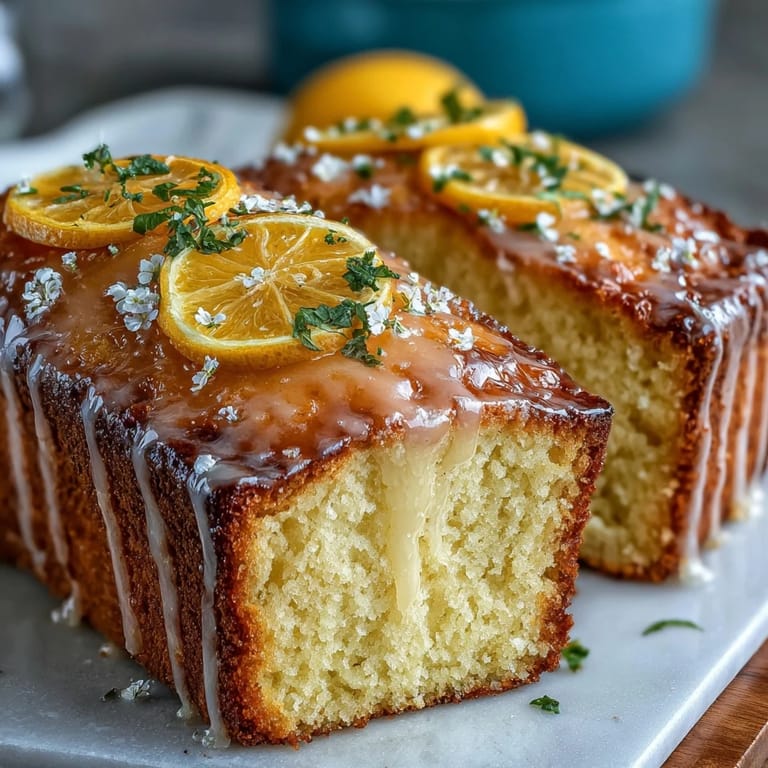
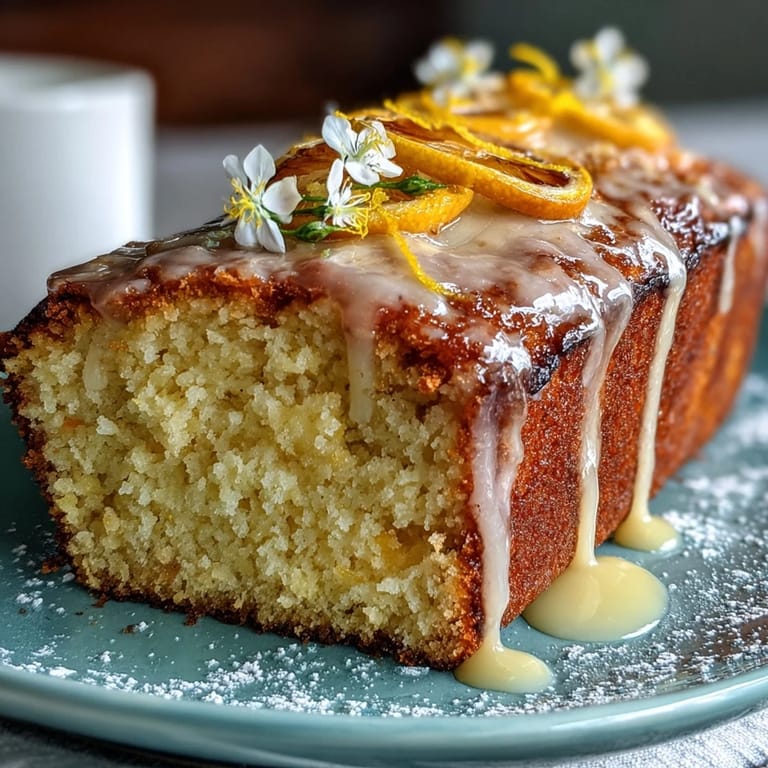
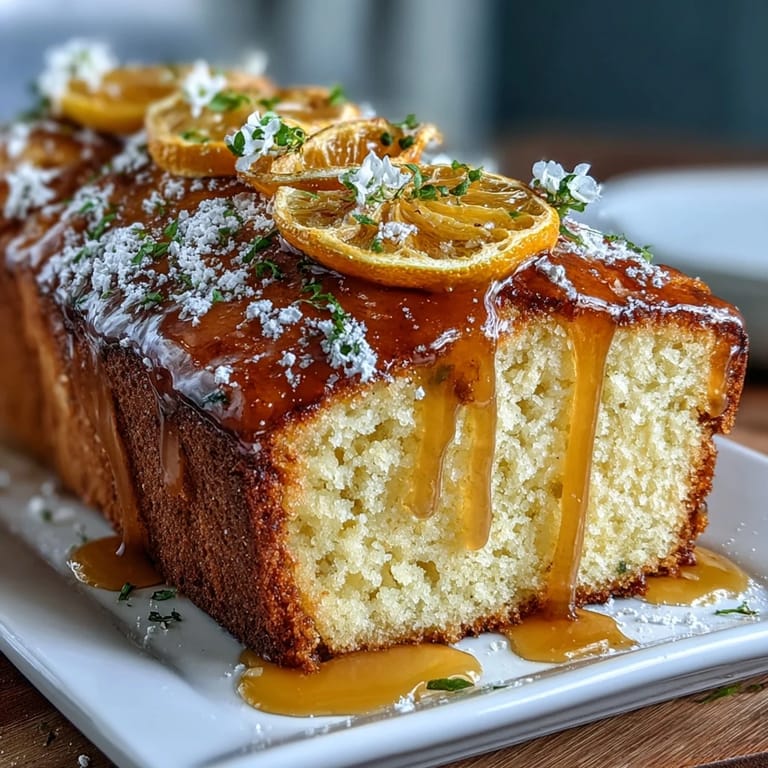
Save There's a moment between slicing into this cake and the first taste where you see how golden the crumb is, how the drizzle has seeped all the way through, and you know you've done something right. My mum now asks me to make this one, and somehow that feels like the greatest compliment.
Why the Drizzle Matters So Much
The drizzle isn't just topping—it's what transforms a good cake into one people remember. By poking holes and pouring it in while the cake is still warm, you're letting the syrup soak all the way through instead of sitting on the surface. I learned this the hard way years ago when I waited until the cake cooled, and the drizzle just pooled on top, sliding off when I moved the plate. Now I understand that timing is everything in a cake like this.
Choosing and Handling Edible Flowers
The flowers aren't essential to taste, but they change how the cake feels—they make it look like something you'd see at a garden party or a fancy celebration. I always add them last, just before serving, because they're delicate and wilting flowers lose their charm. Violas and pansies have a slight peppery taste that works beautifully with lemon, though rose petals are purely for beauty and nostalgia.
Storage and Serving Suggestions
This cake keeps beautifully wrapped in an airtight container for up to 4 days, and honestly, it tastes even better on day two when the flavors have settled and deepened. Serve it with whipped cream or a dollop of crème fraîche to add richness that plays off the sharp lemon, and pour a cup of strong tea on the side.
- For a gluten-free version, swap self-raising flour for a gluten-free blend plus 1 tsp baking powder mixed in.
- If you want extra zestiness, add a little extra lemon zest directly to the drizzle mixture.
- The cake freezes beautifully for up to a month before decorating, so you can prepare it ahead for Mother's Day.
 Save
Save This cake has become my way of saying I'm thinking of you, one slice at a time. Bake it with care, and it'll carry that feeling straight to the table.
Kitchen Guide
- → How do I keep the cake moist?
Ensure not to overmix the batter and soak the warm cake thoroughly with the lemon drizzle for extra moisture.
- → Can I use different edible flowers for decoration?
Yes, make sure the flowers are pesticide-free and safe for consumption, such as violas, pansies, or nasturtiums.
- → What is the best way to add more lemon flavor?
Adding extra lemon zest to the drizzle or batter intensifies the citrus aroma and taste without overpowering.
- → How should I store the cake after baking?
Keep the cake covered in an airtight container at room temperature to preserve freshness for up to 2 days.
- → Can this cake be made gluten-free?
Yes, substitute self-raising flour with a gluten-free blend and add a teaspoon of baking powder for proper rise.