 Save
Save I was flipping through a design magazine in my kitchen one afternoon when a stark photograph of minimalist plating caught my eye—just a single, confident stroke of color across white space. It struck me that vegetables could be just as dramatic as any fancy protein, and I became obsessed with the idea of building something bold from simple purées. That evening, I pulled out my blender with zero plan and started roasting beets, almost on impulse, and by the time the kitchen smelled like caramelized earth and ginger, I knew I'd stumbled onto something worth repeating.
I made this for a dinner party where one guest brought a wine pairing they were excited about, and halfway through their bite, they stopped mid-conversation to look at their plate. There was something about the simplicity of it that made people slow down—no fussy towers to navigate, just pure color and flavor. That moment taught me that sometimes the most memorable dishes aren't the complicated ones, but the ones that feel intentional and confident.
Ingredients
- Beets (2 medium, peeled and diced): Roasting concentrates their earthiness and natural sweetness, making them less vegetal and more elegant on the plate.
- Carrots (3 large, peeled and sliced): They become almost buttery when pureed, and fresh ginger cuts through the sweetness with a warm spice that feels sophisticated.
- Fresh ginger (1 tsp grated): This is the secret weapon—it prevents the carrot stripe from tasting one-dimensional and adds a subtle heat that lingers.
- Avocado (1 ripe): Choose one that yields gently to pressure; if it's overripe, the cream becomes too soft to pipe cleanly, and the whole plating falls apart.
- Greek yogurt (2 tbsp): It keeps the avocado from oxidizing too quickly and adds a subtle tang that balances the richness.
- Lime juice (1 tsp): A squeeze of brightness that wakes up the entire plate; lemon works too, but lime feels more modern.
- Olive oil, sea salt, and lemon juice: These are your silent partners—they're what make each purée taste like itself, amplified.
- Microgreens, edible flowers, crushed pistachios, and flaky sea salt: These aren't decoration; they're the textural punctuation mark that makes the dish complete.
Tired of Takeout? 🥡
Get 10 meals you can make faster than delivery arrives. Seriously.
One email. No spam. Unsubscribe anytime.
Instructions
- Roast the beets:
- Preheat your oven to 400°F and toss your diced beets with olive oil and sea salt, then spread them on a tray. After about 30–35 minutes, they should be fork-tender with slightly caramelized edges; you'll smell the earthy sweetness before you see them ready. If you cut into one and it crumbles slightly, you've hit the mark.
- Cook the carrots:
- While the beets roast, steam or boil your carrot slices until they're almost falling apart when you pierce them with a fork—about 15–20 minutes. This is longer than you think you need, but soft carrots blend into silk, while firm ones become gluey.
- Make the beet purée:
- Blitz your roasted beets with lemon juice in a food processor, scraping down the sides once or twice until there are absolutely no lumps. If it's too thick, add water one tablespoon at a time until you reach a consistency that spreads smoothly.
- Make the carrot & ginger purée:
- Blend your cooked carrots with the ginger, butter, and salt until completely velvety; taste as you go and adjust the ginger if it feels too sharp or too mild. The butter rounds out the ginger's heat and gives the whole thing a luxurious mouthfeel.
- Make the avocado cream:
- Mash your avocado with yogurt, lime juice, and a tiny pinch of salt in a bowl, then transfer it to a piping bag or squeeze bottle so you can control exactly where it lands on the plate. Work quickly; avocado oxidizes, and you want it pale green, not brown.
- Build the stripe:
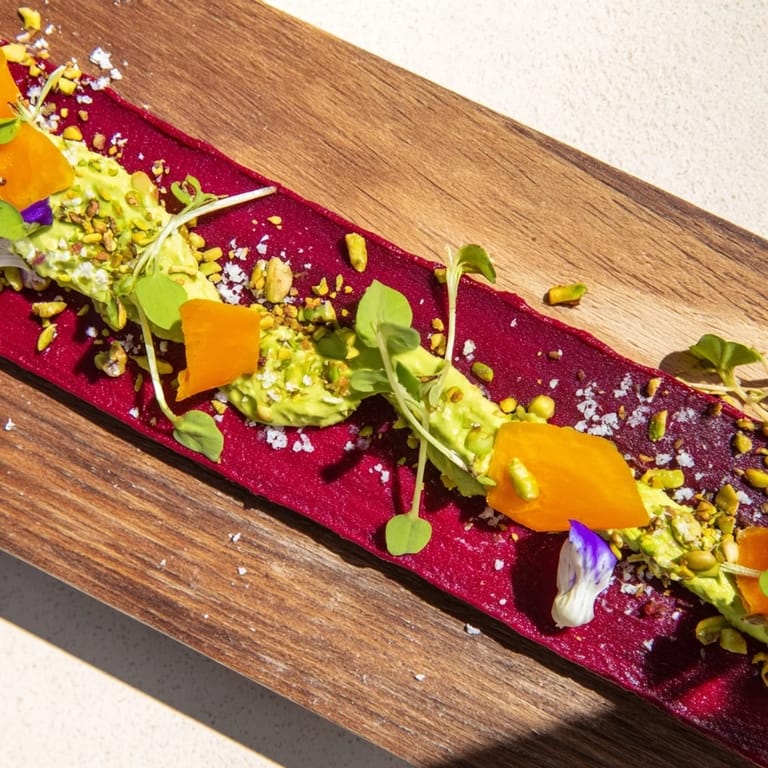
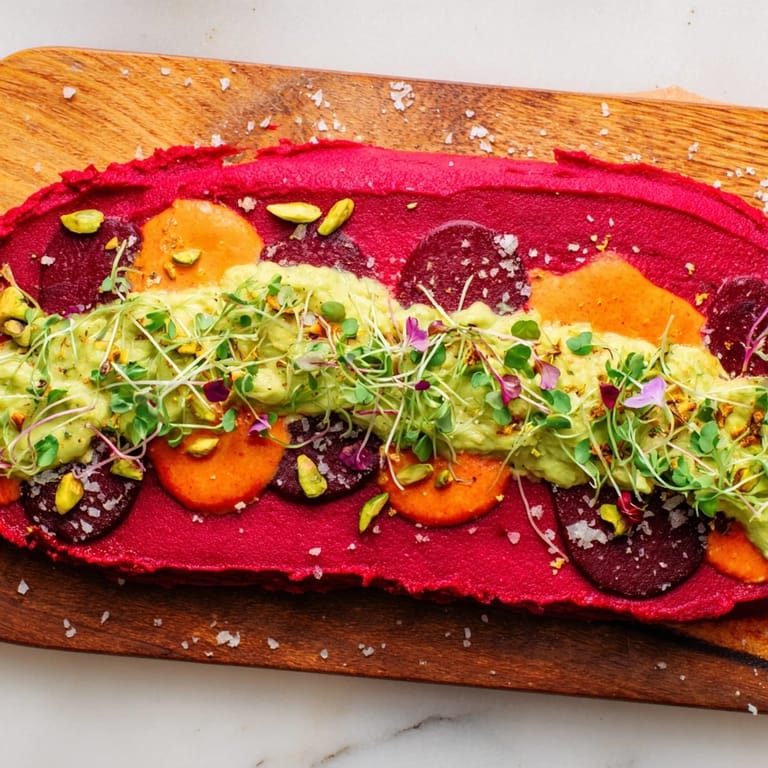
- On a clean board, use a wide offset spatula or the back of a large spoon to drag a thick, confident stripe of beet purée down the center, about 3 inches wide. Your hand should move in one smooth motion, not a tentative dabbing—confidence shows.
- Layer the other purées:
- Pipe or drizzle the carrot purée along the beet stripe in artistic strokes or dots, then follow with the avocado cream. Think of it like abstract art: the arrangement doesn't have to be perfect, just intentional.
- Finish with flair:
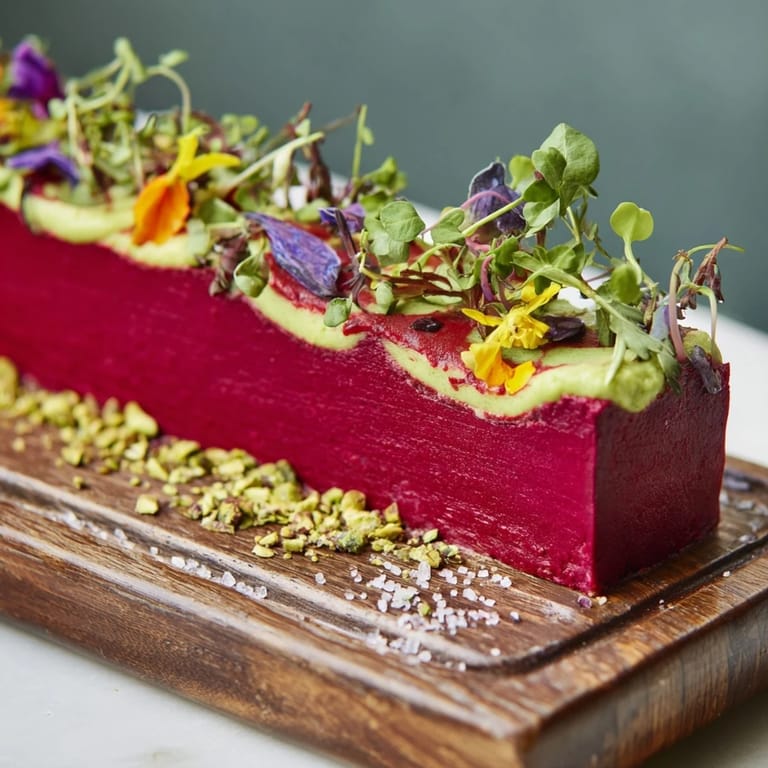
- Scatter microgreens, edible flowers, and crushed pistachios across the stripe, then finish with a light sprinkle of flaky sea salt. The garnish should feel like the last brushstroke, not an afterthought.
- Serve immediately:
- Bring it straight to the table and encourage your guests to scoop from the stripe directly, mixing the elements as they eat. This is meant to be interactive and fun.
 Save
Save The first time I plated this for someone, they took a photo before eating—not the pretentious kind, but the genuine kind, like they wanted to remember the moment. That's when I realized this dish does something most food does: it makes people pay attention. It slows them down and makes them feel like they're part of something thoughtful.
Why This Works as Appetizer Theater
Modernist plating isn't about being complicated; it's about being intentional. This stripe demands the diner's full attention because there's nowhere to hide—every element has to be perfect because there aren't many elements. The visual boldness also means your guests are impressed before they even taste it, and then the flavors deliver on that promise. It's a small plate that tastes generous, which is the real magic of good appetizer design.
Playing with Color and Flavor Combinations
Once you master the technique with these three purées, the template becomes endlessly flexible. I've tried sweet potato with sage, green peas with mint, and roasted squash with turmeric, and each combination tells a different story. The key is picking purées with contrasting colors and flavors that don't compete—one earthiness, one brightness, one creaminess. You want people to taste the difference between each stripe, not blend into a muddy brown mess.
Wine Pairing and Serving Suggestions
A crisp white wine like Sauvignon Blanc cuts through the richness beautifully, especially the avocado cream. The acidity cleanses the palate between bites and makes the whole experience feel more refined. I also love pairing this with sparkling wine if you're in the mood for something celebratory, or even a light rosé in the summer. Serve it as the first course at a dinner party, and your guests will know you put thought into every detail.
- For extra texture and interest, scatter roasted chickpeas or pickled red onions across the stripe.
- If you're serving a crowd, you can pipe everything in advance and garnish just before plating to save yourself time.
- The whole dish should be eaten within 10 minutes of plating, so don't make it too far ahead.
 Save
Save This dish is a reminder that sometimes the most impressive things come from simplicity and precision rather than complexity. Once you make it once, you'll find yourself coming back to it whenever you want to feel like you're cooking at a level that surprises even yourself.
Kitchen Guide
- → What vegetables are used in this dish?
Roasted beets, carrots with ginger, and ripe avocado form the primary components of the layered purées.
- → How should the beet purée be prepared?
Beets are peeled, diced, tossed in olive oil and salt, roasted until tender, then blended with lemon juice until smooth.
- → Can the dairy ingredients be substituted?
Yes, Greek yogurt and butter can be replaced with plant-based alternatives to make the dish vegan-friendly.
- → What garnishes add texture and flavor?
Microgreens, edible flowers, crushed pistachios, and flaky sea salt enhance both texture and appearance.
- → How is the plating technique executed?
A wide spatula spreads a thick stripe of beet purée down the board, followed by layered or piped carrot and avocado purées for artistic effect.
- → Are there any allergen concerns?
The dish contains dairy and nuts; these can be omitted or substituted depending on dietary needs.