 Save
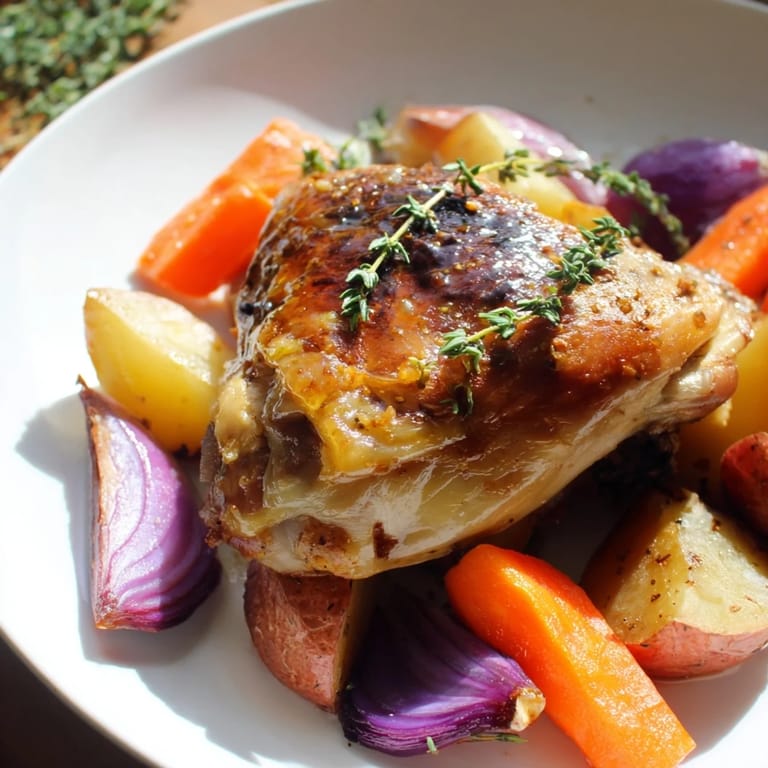
Save There's something about the smell of maple and mustard hitting hot chicken skin that makes you understand why weeknight dinners don't have to feel rushed. I discovered this glaze combination one autumn evening when I was looking at chicken thighs and a nearly empty pantry, thinking I could either phone in dinner or actually try something. The maple syrup caught my eye—not as a dessert move, but paired with the sharp tang of Dijon, it seemed like it could work. Forty minutes later, my kitchen smelled incredible and I had figured out why roasted chicken thighs with the skin on have this almost magical way of holding a glaze while staying impossibly juicy underneath.
I made this for my partner's parents who were visiting from out of town, and I remember standing there at the oven window watching the skin turn this deep caramel color while they sat at the kitchen table talking about nothing in particular. When I pulled the pan out and let it rest for those five minutes, you could hear them pause mid-conversation—that's when you know something smells right. By the time we sat down to eat, it had become one of those meals that sticks with people, the kind they ask about months later.
Ingredients
- Bone-in, skin-on chicken thighs: Eight pieces give you enough for four people with the right amount of skin to glaze and crisp, and bone-in keeps everything tender because the bones release gelatin as they cook.
- Pure maple syrup: The real stuff matters here—the caramelization is different with the real version, deeper and more complex than imitation.
- Dijon mustard: This is your savory anchor, the thing that keeps the glaze from being just sweet.
- Apple cider vinegar: A small amount creates brightness and keeps the glaze from feeling heavy.
- Fresh garlic: Minced small so it cooks through and flavors the glaze evenly.
- Fresh thyme: If you have it, use it—dried works but fresh has this peppery edge that dried thyme loses.
- Smoked paprika: Not essential but it adds a whisper of something savory-smoky that makes people wonder what your secret is.
- Baby potatoes and carrots: Cut them roughly the same size so they finish cooking at the same time as the chicken.
- Red onion: The natural sugars caramelize as everything roasts, tying the whole pan together.
Tired of Takeout? 🥡
Get 10 meals you can make faster than delivery arrives. Seriously.
One email. No spam. Unsubscribe anytime.
Instructions
- Get your oven ready and prep your pan:
- Preheat to 425°F and line your sheet with parchment or foil—this makes cleanup almost painless and prevents sticking. A hot oven is going to be your friend here for getting that skin crispy.
- Dry those chicken thighs:
- Pat them completely dry with paper towels, then season both sides generously with salt and pepper. Dry skin is the whole game for getting it to crisp instead of steam.
- Make your glaze:
- Whisk maple syrup, Dijon, olive oil, vinegar, minced garlic, thyme, and paprika together in a small bowl until it looks glossy and combined. The garlic should be small enough that it won't burn before the chicken finishes cooking.
- Arrange your vegetables:
- Toss potatoes, carrots, and onion with a small drizzle of olive oil and salt and pepper, then spread them in a single layer on your pan. They need room to roast and caramelize, not crowd each other.
- Nestle the chicken and glaze:
- Place thighs skin-side up among the vegetables and brush each one generously with that maple-Dijon mixture, saving about 2 tablespoons for later. The glaze coating will start to set and create that sticky, caramelized exterior.
- Roast for the first stretch:
- Into the oven for 30 minutes—the skin will turn golden and the glaze will start to caramelize. The vegetables will soften but still have some texture.
- Hit it with the second glaze coat:
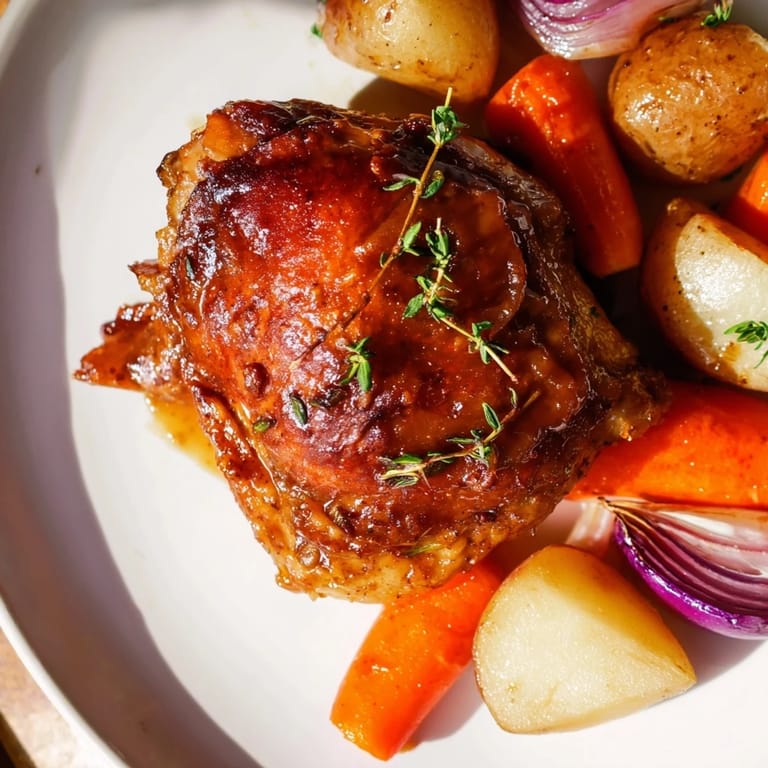
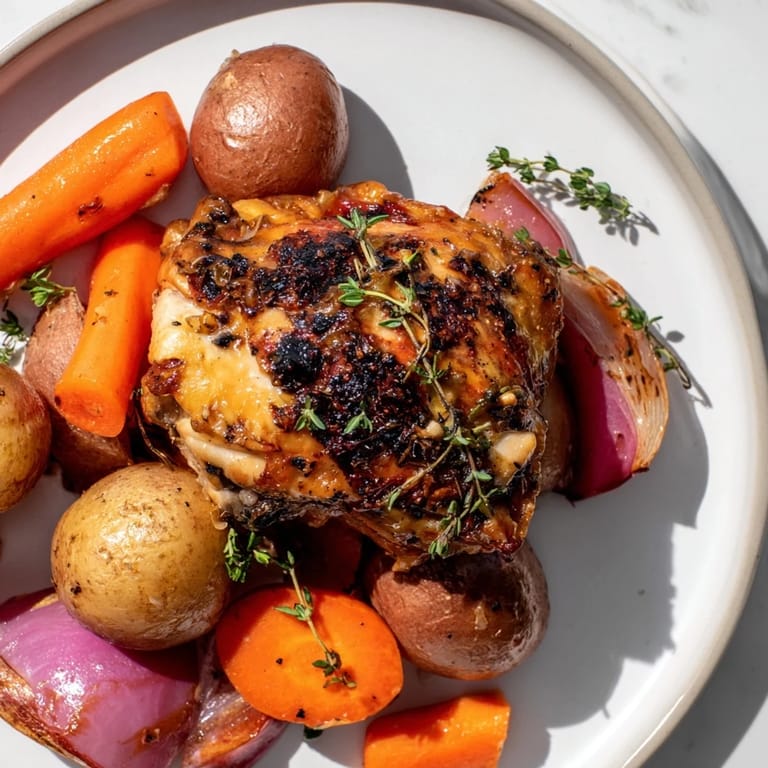
- Pull the pan out, brush with that reserved glaze, and return to the oven for another 5 to 10 minutes until the chicken reaches 165°F internally and the skin is that deep caramel brown that makes your mouth water before you even taste it.
- Let it rest and serve:
- Five minutes of resting lets the juices settle back into the meat instead of running all over the plate. Garnish with extra thyme if you're feeling fancy.
 Save
Save There was a night when my teenage nephew came home from a rough day at school and announced he wasn't hungry, which was almost impossible to believe. I slid this pan into the oven anyway, and by the time those chicken thighs hit their caramel peak, he appeared in the kitchen without being asked, drawn by the smell. We ate together mostly quiet, and he went to bed without whatever was bothering him hanging so heavy on him—sometimes dinner is exactly what you needed, even when you didn't know it.
Why This Works as a Weeknight Dinner
Everything cooks in one pan, so you're not juggling multiple pots and timers while trying to keep everything warm. The vegetables roast right there with the chicken, soaking up all the glaze that drips down, so you end up with this almost-sauce coating everything. It takes fifty minutes total, which means you can actually have a conversation with someone while it's cooking instead of standing at the stove the whole time. The smell alone is a kind of comfort that feels intentional even on days when you're running on empty.
Building Flavor Through the Glaze
The maple and Dijon together create this sweet-savory-sharp balance that keeps the chicken from feeling one-note, and the apple cider vinegar prevents it from tipping into being too sweet or sticky. The smoked paprika is subtle but important—it adds a savory depth that makes people try to guess what the secret ingredient is. Fresh thyme brings an earthy pepper note that ties everything to the roasted vegetables, so the whole pan reads as intentional instead of random.
Variations and Swaps
If you want to play with it, swapping in sweet potatoes or parsnips instead of regular potatoes gives you a completely different sweetness profile that actually complements the maple glaze differently. Brussels sprouts roasted on the same pan get these crispy, charred edges that are almost better than the chicken itself. You can also use boneless thighs if that's what you have on hand, but reduce the cooking time by about 10 minutes since there's less mass to cook through. Boneless won't have quite the same juicy magic, but it'll still be delicious.
- Try a splash of bourbon or whiskey mixed into the glaze for a grown-up deepness.
- Fresh rosemary works if that's what you have instead of thyme, or use both if you're feeling generous.
- A squeeze of fresh lemon juice at the end adds brightness, especially if you're serving with something rich on the side.
 Save
Save This is the kind of dinner that doesn't announce itself as effort, but it absolutely is—the good kind of effort, the kind that makes people feel cared for without making you feel stressed. Once you've made it once, it becomes part of your regular rotation, the thing you reach for when you want something that tastes like you tried but doesn't ask for hours of your time.
Kitchen Guide
- → Can I use boneless chicken thighs instead?
Yes, boneless thighs can be used but require a shorter cooking time to avoid drying out. Monitor closely and adjust roasting duration accordingly.
- → What vegetables can I substitute?
Sweet potatoes, parsnips, or Brussels sprouts make excellent alternatives to baby potatoes and carrots for varied flavors and textures.
- → How do I know when the chicken is fully cooked?
Ensure the internal temperature reaches 74°C (165°F) and the skin is golden and caramelized for perfectly cooked thighs.
- → Is this glaze suitable for a gluten-free diet?
Yes, all ingredients in the maple Dijon glaze are naturally gluten-free, but always check labels on mustard and vinegar for cross-contamination risks.
- → Can I prepare this dish ahead of time?
Marinating the chicken in the glaze a few hours ahead can enhance flavor; however, roasting is best done fresh to maintain crisp skin and texture.