 Save
Save My friend texted me a photo of Korean BBQ at midnight, and I couldn't stop thinking about those charred, gochujang-glazed strips of beef. The next day, I was standing in my kitchen with a bag of tortilla chips, wondering if I could somehow capture that same bold, smoky magic in appetizer form. What started as a lazy Friday night experiment turned into something unexpectedly addictive—crispy, cheesy, piled high with sweet-spicy beef and fresh vegetables that somehow made the whole thing feel lighter than it had any right to be.
I made this for a small dinner party last month, and someone actually said the words 'these are dangerous' while reaching for their third handful. The kitchen smelled incredible—gochujang and sesame oil mingling with toasted cheese—and everyone circled the baking tray like it was the only food in the world. That's when I knew this dish had crossed from 'fun experiment' into 'permanent rotation.'
Ingredients
- Flank or sirloin steak, thinly sliced: Thin slices cook quickly and absorb the marinade beautifully; ask your butcher to slice it, or freeze the meat for 30 minutes before slicing yourself for cleaner cuts.
- Gochujang (Korean chili paste): This is the soul of the dish—its fermented depth and gentle heat make everything taste more interesting than generic hot sauce ever could.
- Soy sauce, brown sugar, sesame oil, garlic, ginger, rice vinegar: Together they create a glaze that's salty, slightly sweet, fragrant, and balanced with a whisper of acidity.
- Tortilla chips: Look for sturdy chips that won't shatter under the weight of cheese and toppings; thicker chips hold up better than delicate ones.
- Mozzarella and Korean cheese blend: The combination gives you both stretch and flavor; Korean pizza cheese melts beautifully and adds a slightly different richness than plain mozzarella.
- Red onion, carrot, cucumber, scallions: These raw vegetables stay crisp and provide essential contrast to the warm, rich beef and melted cheese.
- Kimchi and fresh herbs: These add brightness and a funky, fermented note that ties the whole thing back to Korean flavors.
- Toasted sesame seeds: They're small but mighty—nutty, toasted, and a visual reminder that care went into this dish.
Tired of Takeout? 🥡
Get 10 meals you can make faster than delivery arrives. Seriously.
One email. No spam. Unsubscribe anytime.
Instructions
- Mix and marinate the beef:
- Combine gochujang, soy sauce, brown sugar, sesame oil, garlic, ginger, rice vinegar, and black pepper in a bowl. The mixture should smell spicy and fragrant. Add your beef slices and stir until every piece is coated, then let it sit for at least 20 minutes—or up to a few hours if you have time, as the longer it sits, the deeper the flavor becomes.
- Sear the beef until caramelized:
- Heat a skillet over medium-high heat until it's genuinely hot. Working in batches so you don't crowd the pan, sear the beef for 2–3 minutes per side until the edges are dark and caramelized. You want a little char, not just cooked-through beef. Let it rest on a plate while you prep the tray.
- Layer and bake:
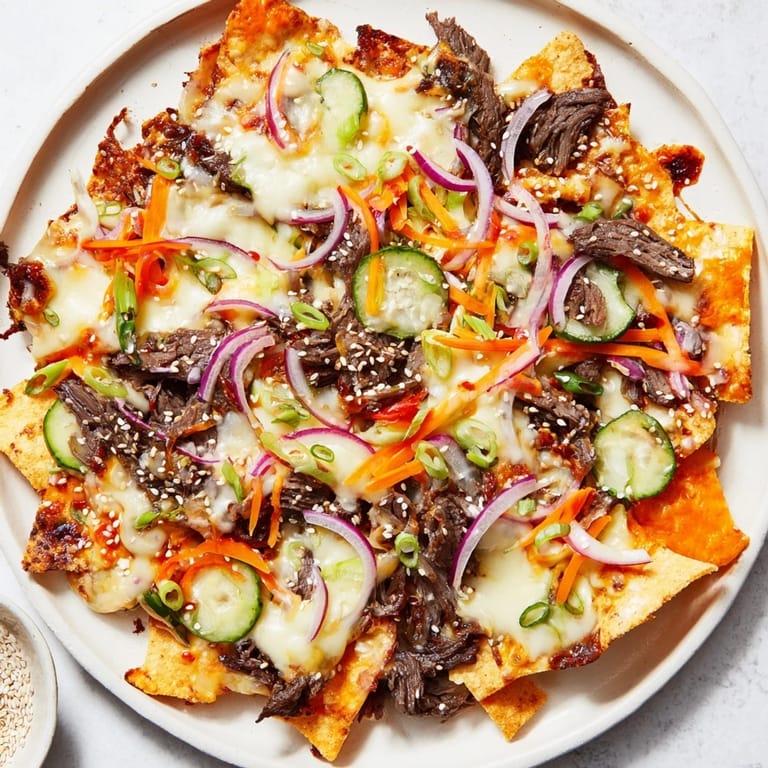
- Line a baking tray with parchment and spread tortilla chips in a single layer. Scatter half the cheese over the chips, then distribute the seared beef evenly, then top with the remaining cheese. Slide it into a 200°C (400°F) oven for 6–8 minutes until the cheese is bubbling and just starting to brown at the edges.
- Finish with fresh toppings and serve:
- Remove from the oven—the tray will be hot, so use oven mitts. Scatter red onion, carrot, cucumber, scallions, red chili, and sesame seeds over the warm cheese. Top with kimchi and fresh herbs, drizzle lightly with sriracha mayo or gochujang mayo if you're using it, and serve immediately with lime wedges on the side.
 Save
Save The best part about making these wasn't the eating—though that was incredible—it was watching my partner's face light up when they realized Korean BBQ and nachos actually belong together. In that moment, it wasn't just a dish; it was a small permission slip to cook without rules and trust your instincts.
Why the Beef Matters So Much
The gochujang marinade is what separates these nachos from ordinary cheese-covered chips. Gochujang brings fermented complexity and a slow-building heat that plays beautifully against the sweetness of melted cheese and the brightness of fresh vegetables. The key is slicing the beef thin and giving it time to marinate—those few minutes in the skillet turn the beef into something caramelized and dark, with edges that crisp up while the inside stays tender. When you layer that beef onto chips, everything it touches absorbs a little bit of its flavor.
Building the Perfect Nacho Architecture
There's actually a science to stacking nachos so every bite has cheese, beef, and vegetables. Start with chips spread flat in a single layer on your baking tray—no overlapping, no piling. Add half the cheese first; this creates a base that helps the chips hold up. Then scatter your seared beef evenly across the top, followed by the rest of the cheese, which will meld everything together as it bakes. The order matters because you want the heat from the oven to meld the cheese and warm the beef without the bottom chips becoming soggy. Twenty-eight minutes in the oven, and you've got a structure that's both delicious and technically sound.
Fresh Toppings and Final Touches
The vegetables and herbs are the final act, and they should be added right when the nachos come out of the oven so they stay crisp and bright. Red onion adds sharpness, cucumber brings coolness, carrot brings sweetness and crunch. Scallions are mild and aromatic, kimchi adds funk and spice, and fresh cilantro or shiso brings a herbal note that bridges Korean and Latin flavors. The toasted sesame seeds are the final flourish—they add nutty flavor and a visual cue that this dish came from someone who cares about details. Lime wedges on the side let everyone adjust the acidity to their taste.
- Toast your own sesame seeds in a dry skillet for 2–3 minutes if they're not already toasted; the difference in flavor is noticeable and worth those few extra minutes.
- If you can find shiso leaves instead of cilantro, use them—they add an herbaceous note that feels more authentically Korean.
- Serve immediately; nachos are best enjoyed while the cheese is still warm and the vegetables are still crisp.
 Save
Save These nachos remind me that the best meals happen when you stop thinking about what a dish 'should' be and just follow what makes you happy. Serve them warm, watch people smile, and feel good about feeding people something that tastes both comforting and exciting.
Kitchen Guide
- → What cut of beef works best?
Flank steak or sirloin thinly sliced are ideal for quick marinating and searing, yielding tender, flavorful meat.
- → Can I substitute the beef with another protein?
Yes, grilled chicken, tofu, marinated mushrooms, or jackfruit work well for different dietary preferences.
- → How do I achieve the perfect cheese melt?
Arrange cheeses evenly over chips and beef, then bake at 200°C (400°F) until cheese bubbles and turns golden, about 6–8 minutes.
- → Which fresh vegetables add the best texture?
Thinly sliced red onion, carrot, cucumber, scallions, and optional red chili provide a crisp, refreshing contrast.
- → What garnishes complement the flavors?
Chopped kimchi, fresh herbs like cilantro or shiso, and a drizzle of sriracha or gochujang mayo add layers of flavor and heat.
- → Can this dish be prepared vegetarian?
Yes, replace beef with mushrooms or jackfruit and ensure tortilla chips and toppings exclude animal products.