 Save
Save I discovered the magic of the keto power plate during a summer dinner party when I realized my guests needed something that felt indulgent without derailing their dietary goals. I'd spent the morning at the market selecting the finest cured meats and aged cheeses, and as I arranged them on a large platter with colorful vegetables, something clicked—this wasn't just food, it was edible art that could satisfy everyone at the table. That afternoon changed how I think about entertaining.
I remember my sister's face when she saw this platter at her birthday dinner last spring—she'd been nervous about finding something she could actually enjoy while managing her macros, and watching her load up her plate with premium meats and aged cheeses without a single moment of guilt was worth every carefully placed vegetable.
Ingredients
- Sliced roast beef (120 g): The foundation of your protein showcase—look for beef that's been slow-roasted and sliced thin enough to drape elegantly. Roast beef brings a deep, savory richness that anchors the whole platter.
- Sliced smoked turkey (120 g): A lighter counterpoint to heavier meats, smoked turkey adds complexity and a touch of smoke that makes people pause and really taste it.
- Prosciutto (120 g): The showstopper—delicate, salty, and when arranged with just a touch of fold, it practically sells itself. Buy it sliced fresh from the counter if you can.
- Salami, sliced (100 g): Your spiced element. Quality salami adds depth and a gentle heat that wakes up the palate between bites of cheese and vegetables.
- Aged cheddar, cubed (100 g): The bold choice. Aged cheddar has developed crystals and complexity that fresh cheese simply can't match—I learned this the hard way after years of using mild cheddar.
- Gruyère, sliced (100 g): Nutty, complex, and naturally melts on your tongue. Gruyère is what taught me that cheese deserves its own moment on a platter.
- Manchego, sliced (100 g): Slightly sweet with a buttery finish, Manchego adds an unexpected elegance that makes guests ask what it is.
- Cherry tomatoes, halved (1 cup): Their natural sweetness and bright color are essential for visual balance and a fresh contrast to all that richness.
- Cucumber, sliced (1 cup): Cooling, crisp, and pure. Cucumber is your palate cleanser in vegetable form.
- Radishes, sliced (1 cup): Peppery and sharp, radishes add bite and an unexpected complexity that makes people keep coming back.
- Baby bell peppers, sliced (1 cup): Sweet, colorful, and they make the platter sing visually while providing gentle sweetness.
- Celery sticks (1 cup): The crisp element. Celery's clean, refreshing quality is the palate's best friend on a rich platter like this.
- Green olives (1/4 cup): Briny and slightly herbaceous, they add sophisticated little pops of flavor throughout.
- Black olives (1/4 cup): Fuller bodied and earthier than green, black olives create visual rhythm and flavor complexity.
- Fresh parsley, chopped (2 tbsp): Not just garnish—it's the final breath of fresh herbaceousness that ties everything together.
- Extra virgin olive oil (2 tbsp): The finishing touch that makes vegetables glisten and carry subtle fruity notes into every bite.
- Freshly ground black pepper, to taste: Always grind it fresh. Pre-ground pepper is sad pepper. This matters.
Tired of Takeout? 🥡
Get 10 meals you can make faster than delivery arrives. Seriously.
One email. No spam. Unsubscribe anytime.
Instructions
- Start with your meats:
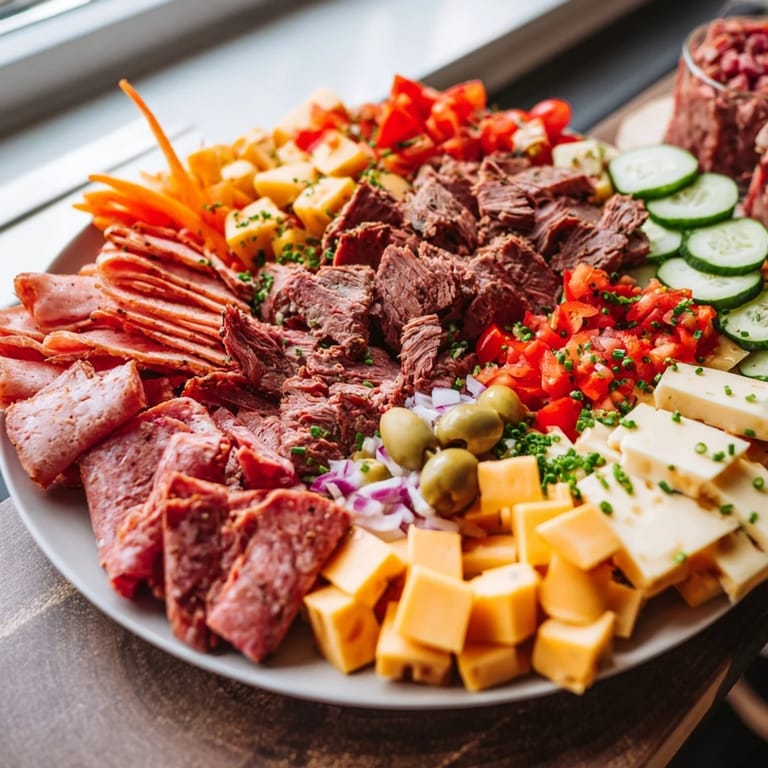
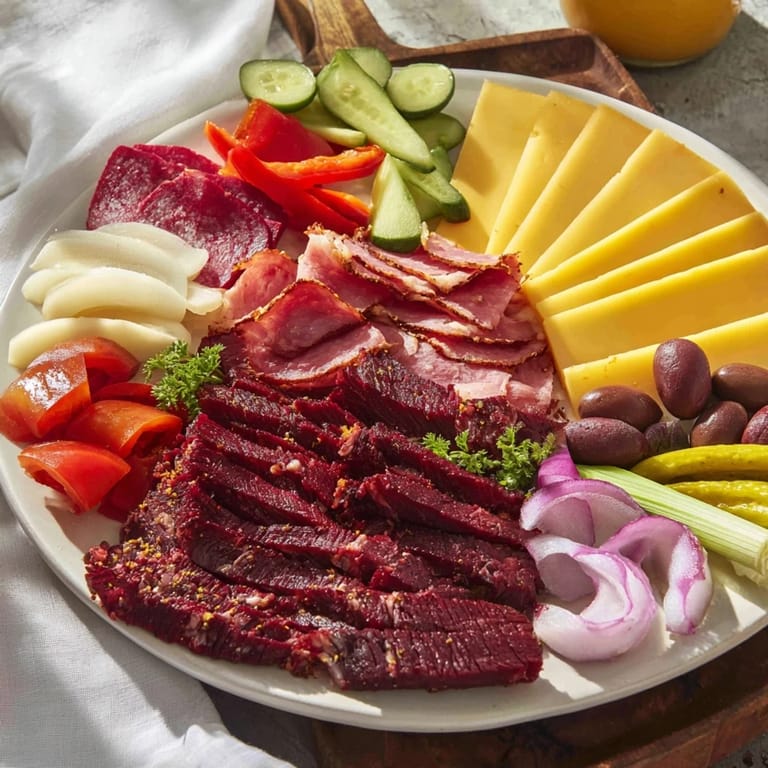
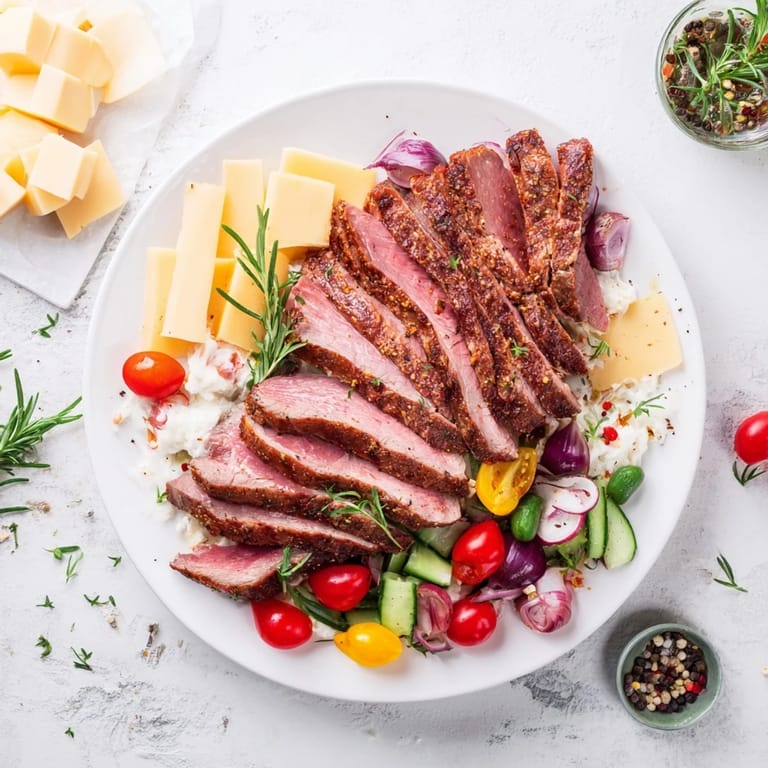
- Arrange your roast beef, smoked turkey, prosciutto, and salami in dense clusters across a large platter, grouping each type together. Think of it like creating little neighborhoods of flavor. Let the prosciutto drape naturally—those delicate folds are part of the beauty. You're looking for organized clusters that still feel organic and inviting, not rigid rows.
- Create cheese pockets:
- Position your three cheeses in tight groupings beside the meats, alternating between cubed cheddar, sliced Gruyère, and sliced Manchego. The different shapes and colors should create visual interest and make guests curious about the flavors. This is where you can experiment with your eye—what feels balanced to you?
- Fill the spaces with vegetables:
- Now comes the fun part—fill the remaining empty spaces with your vegetables, clustering similar items together for structure and visual clarity. Group your cherry tomatoes together, your cucumber slices together, and so on. You're creating little islands of color and texture that guide people's eyes around the platter.
- Distribute the olives:
- Scatter your green and black olives throughout the platter like you're hiding little treasure boxes. They should peek out from between other elements, adding color and that essential briny note in unexpected places.
- The final drizzle:
- Lightly drizzle your vegetables—not the meats or cheeses—with extra virgin olive oil. You want them to glisten, not glisten with grease. A light hand here is everything. Grind fresh black pepper over the vegetables and perhaps a tiny bit over the meats.
- Garnish and present:
- Just before serving, scatter your fresh chopped parsley across the platter. This final green note brings everything alive. Step back and look at it—you've just created something beautiful.
 Save
Save There's a moment that happens every time I bring out a power plate—that quiet pause when people take it all in, that moment before they reach for their first bite where they're assessing the whole landscape of flavor and color. That's when I know I've done it right.
The Art of Beautiful Assembly
Making something look this good is really just about understanding negative space and color balance. Your eye naturally wants to see variety and organization at the same time. The secret is clustering like items together while varying them across the platter—don't put all your reds in one corner or all your soft elements in the center. I learned this by watching how farmers' market vendors arrange their produce; they know that clusters draw the eye and make shopping—or in your case, eating—more enjoyable. Think of your platter as a landscape where every element has its own terrain but still feels connected to the whole.
Customization and Pairing
The beauty of this platter is that it's infinitely adaptable to what you have access to and what your guests love. Swap roast chicken for roast beef if that's what sings to you, or add prosciutto di Parma instead of regular prosciutto if you're feeling luxurious. I've added crispy bacon, fresh mozzarella balls, smoked salmon, and even some roasted vegetables for those moments when I want everything on one board. The vegetable side is equally flexible—pickled onions add tang, roasted vegetables add depth, and fresh herbs besides parsley bring their own character. The only rule is that every element should be keto-friendly and every ingredient should be something that makes you happy to eat it.
Serving and Enjoying
Serve this platter at room temperature or just slightly chilled—the cold kills the subtle flavors of aged cheeses and cured meats. I like to have small plates nearby so people can properly compose their bites, taking a piece of prosciutto, a cube of aged cheddar, perhaps a radish slice, and creating their own flavor combinations. A dry white wine or sparkling water with lemon is the perfect accompaniment, but honestly, this platter stands on its own beautifully. The keto-friendly dips like aioli or herbed cream cheese can be offered on the side for those who want them, but I've found most people just want to experience each element on its own.
- Let people assemble their own bites—it's more fun that way and everyone gets exactly what they want
- Have plenty of small plates and napkins nearby; this is interactive eating at its best
- The platter actually tastes better when everyone's relaxed and enjoying conversation, so don't stress the perfection—it's already perfect enough
 Save
Save Every time I make this platter, I'm reminded that the best meals aren't always the most complicated—sometimes they're just the most honest, with the best ingredients given their proper moment to shine. That's what this plate does.
Kitchen Guide
- → How should the meats be arranged?
Arrange meats in dense clusters grouped by type to create visual appeal and distinct flavor sections.
- → Which cheeses pair best with this platter?
Aged cheddar, Gruyère, and Manchego provide a rich, creamy contrast to the savory meats and fresh vegetables.
- → Can the vegetables be substituted?
Non-starchy vegetables like cucumbers, cherry tomatoes, radishes, and bell peppers work well, but feel free to swap for other fresh options.
- → Is olive oil necessary for this preparation?
A light drizzle of extra virgin olive oil enhances flavor and adds a subtle richness without overpowering the ingredients.
- → What are some good serving suggestions?
Serve on a large platter with fresh parsley garnish. Pair with keto-friendly dips like aioli or herbed cream cheese and a dry white wine or sparkling water.