 Save
Save The first time I arranged a board this way, I wasn't thinking about fancy presentations—I was thinking about survival. My sister was bringing her whole crew over on short notice, and my fridge had scattered ingredients that didn't quite make a meal. I grabbed what I had: some bread, fruit, cheese, and suddenly realized I could build something that felt intentional, even generous, with what felt like leftovers. That day taught me that the most beautiful food often comes from working with what's already in your kitchen, arranged with a little confidence and a lot of care.
I made this for a harvest gathering last October, and something shifted in the room when I set it down. The way the bread curved across the board caught the afternoon light, and someone—I can't even remember who—said it looked like a scythe cutting through wheat. That's when I realized the beauty wasn't just in the food; it was in telling a story through arrangement, through color, through the simple act of gathering good things together in one place.
Ingredients
- Baguette, sliced: Choose one with a crispy crust and tender crumb—it's the backbone of your board and deserves to be good bread, not an afterthought.
- Multi-grain crackers: These add texture and visual interest; look for ones with seeds visible on top.
- Seeded rye bread, thinly sliced: The earthiness anchors the whole arrangement and pairs beautifully with both fruit and cheese.
- Cooked farro or barley: This is your secret detail that makes guests pause and ask what it is—let it cool completely or it'll weep moisture onto everything else.
- Red grapes: Seedless ones mean guests can eat freely without hesitation or awkward spitting.
- Pears and apples: Slice these just before serving or toss lightly with lemon juice to prevent browning and keep everything looking fresh.
- Dried apricots: These bridge the gap between bread and fresh fruit, adding chewiness and a hit of natural sweetness.
- Fresh figs: If you find them, use them—their purple flesh against the board is stunning, but dried figs work just as well and last longer.
- Brie cheese: The soft, spreadable kind that melts slightly at room temperature is what you want here.
- Aged cheddar: Cube it generously; people love a substantial piece they can bite into.
- Honey or fig jam: A little goes a long way, so don't overload the bowls—let guests choose how much sweetness they want.
- Fresh mint and roasted nuts: These are your final flourishes that catch the eye and add unexpected texture when you bite down.
Tired of Takeout? 🥡
Get 10 meals you can make faster than delivery arrives. Seriously.
One email. No spam. Unsubscribe anytime.
Instructions
- Start with your foundation—the curve:
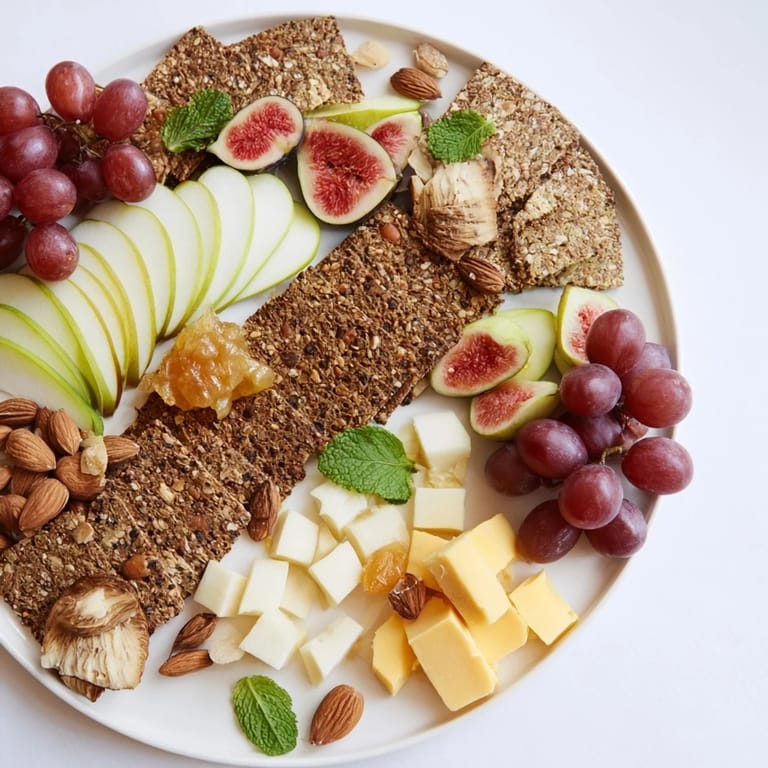
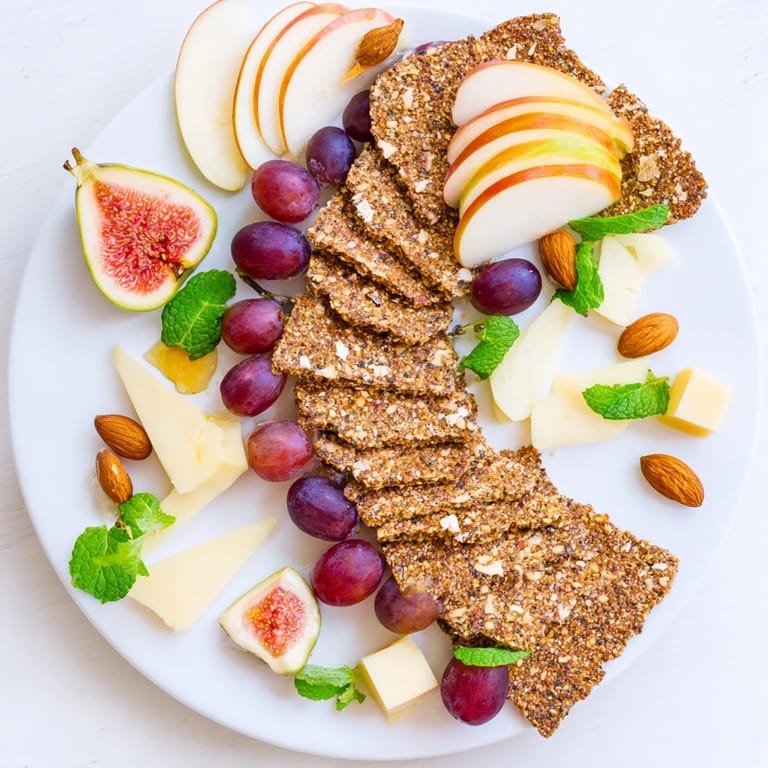
- Lay your sliced breads and crackers across the board in a sweeping arc, like you're actually cutting through an invisible field. Don't make it too rigid; a gentle curve feels more natural and honest than geometric precision.
- Build the inner landscape:
- Scatter the cooked grains along the inner edge of your bread curve, letting them pool slightly in places. This is where the 'field' lives, so let it feel abundant and a little loose.
- Layer in the color:
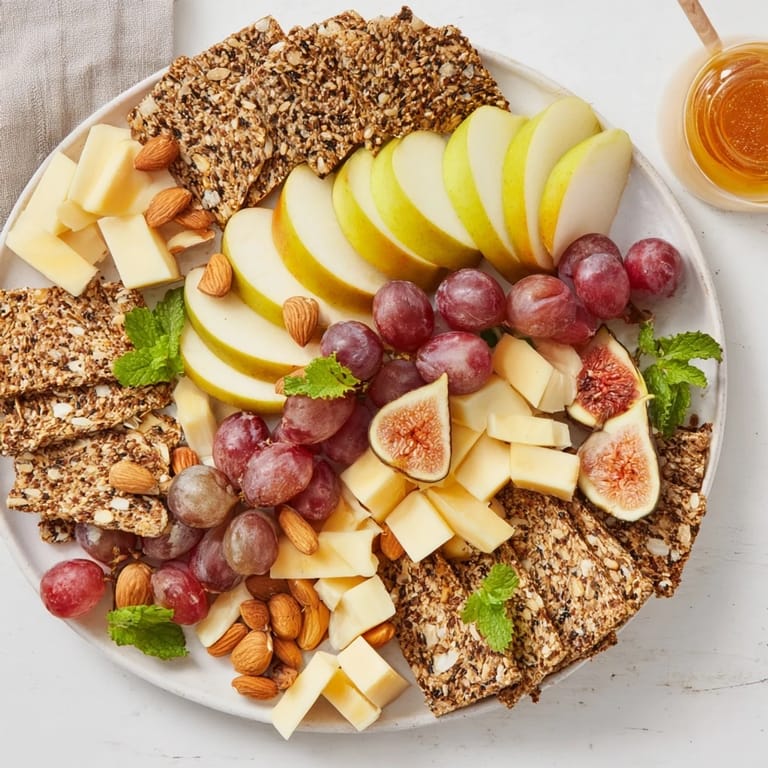
- Arrange your fruits by fanning them gently, mixing reds and yellows and greens so your eye travels across the whole board. Let some pieces slightly overlap; perfection here would feel sterile.
- Anchor with cheese:
- Tuck cheese clusters near the bread so they're easy to pair together. Small, accessible portions encourage people to build their own bites rather than feel like they're taking too much.
- Add the sweet touch:
- Place small bowls of honey or jam at the edge where people can easily reach them. This signals that there's a sweeter option available without overwhelming the savory elements.
- Finish with grace:
- Scatter mint leaves across the top like you're dressing a salad, and let roasted nuts settle into the crevices. The aroma that rises when people lean in is part of the experience.
- Serve immediately:
- Fresh fruit starts to brown, bread begins to dry, and the whole arrangement loses its sparkle if it sits. Get it to the table while everything is at its best.
 Save
Save What surprised me most about making this board wasn't the praise, though there was plenty. It was watching my 11-year-old reach past the fancy cheese to grab a handful of grapes and a piece of rye bread, the way her mouth moved trying all the textures together. That's when I understood: the board isn't really about presentation. It's about inviting people to build their own perfect bite, to trust their own taste, to slow down and enjoy.
The Art of the Arrangement
Every board tells a story about abundance and choice. The scythe shape isn't just decorative—it's a visual metaphor that says we've gathered and harvested and want to share. When you arrange your breads in that sweeping curve, you're not just placing food; you're creating a narrative about care and intention. The way colors alternate, how textures contrast, the little pockets where flavors can meet—these details are what separate a platter from a board that people actually remember.
Timing and Freshness
This recipe has one rule: freshness matters more than perfection. The bread should be sliced maybe an hour before serving so it doesn't dry out completely, but the fruit and soft cheeses need to wait until the last possible moment. I've learned this the hard way—a board left on the counter for even two hours starts to lose its shimmer. The grapes get a little dull, the apple flesh browns slightly, and the whole thing begins to feel less like a celebration and more like something left over. Treat timing as your secret weapon: a just-assembled board is an invitation; a sitting board is just a snack.
Variations That Work
The beauty of this board is that it's built on principles, not rules. In spring, swap the apricots for fresh strawberries and add some tender spring greens. Summer calls for berries and stone fruits—peaches, nectarines, cherries. Autumn is your moment to lean into dried fruits and roasted nuts even more heavily. Winter opens up space for pomegranate seeds and maybe some candied citrus peel. Beyond fruit, you can swap breads based on what's fresh at your bakery, adjust cheeses to your mood, or add a few olives and roasted vegetables if you want something more savory.
- Gluten-free breads and crackers work beautifully—just check that they're substantial enough to hold toppings.
- Vegan cheese alternatives are more viable now than ever, or simply omit cheese entirely and let the bread and fruit shine.
- A drizzle of good olive oil in a small bowl, paired with crusty bread, often steals the show more than any spread.
 Save
Save This board is proof that simple ingredients arranged with intention create something far greater than their individual parts. It's a reminder that feeding people doesn't require fancy techniques or secret recipes—just good ingredients, a little thoughtfulness, and the courage to let things be a little imperfect.
Kitchen Guide
- → What breads work best for this platter?
Small baguettes, seeded rye, and multi-grain crackers offer varied textures and flavors that complement the fruits and cheeses.
- → Can this platter be made vegan?
Yes, by choosing vegan cheese alternatives or omitting cheese entirely, and using gluten-free bread if preferred.
- → How should the fruits be prepared?
Slice pears and apples thinly, halve fresh figs, and use whole grapes and dried apricots to add sweetness and contrast.
- → What garnishes enhance the platter’s flavor?
Fresh mint leaves and roasted nuts lend aroma and crunch, elevating the overall tasting experience.
- → How can this be customized for seasonal variation?
Consider swapping fruits like plums or berries depending on availability to maintain freshness and variety.