 Save
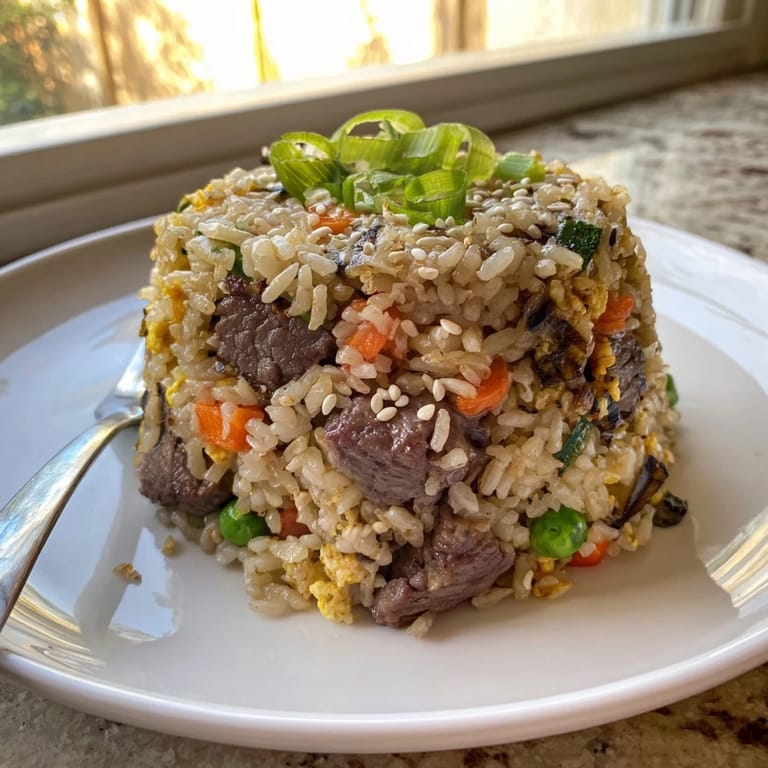
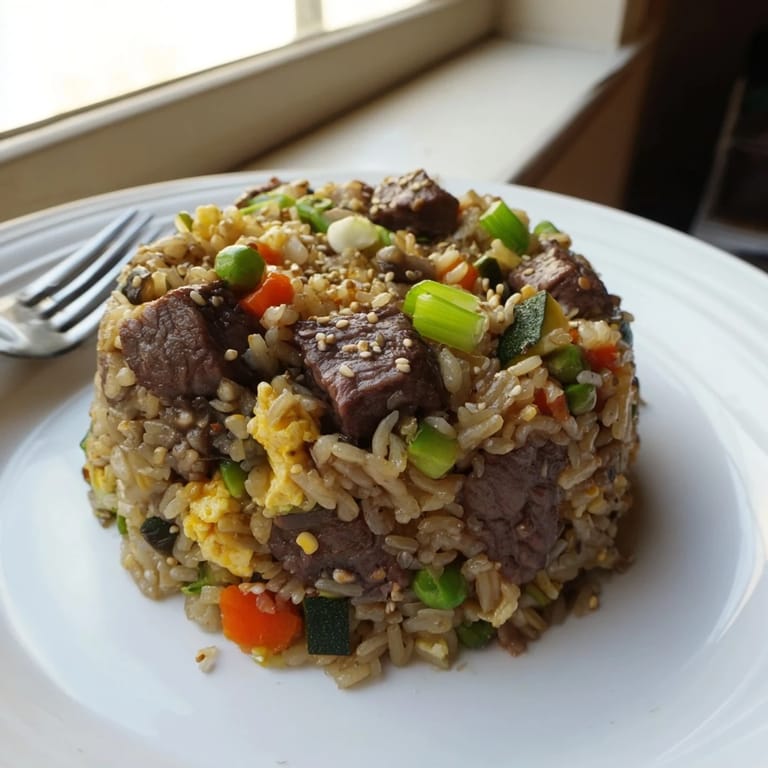
Save My tiny apartment kitchen smelled like a proper hibachi grill the first time I attempted this. The sizzle of steak hitting hot oil, that unmistakable garlic-soy perfume hitting my nose—honestly, I felt like I'd pulled off something magical without needing a flat-top grill or those theatrical knife skills they show off in restaurants.
I made this for my roommate who was skeptical about "homemade hibachi" until she took her first bite and immediately asked for seconds. Now it's our go-to Friday night ritual—cheap enough for any week, but special enough to celebrate small victories.
Ingredients
- 1 lb sirloin steak: Cut into cubes because smaller pieces soak up more marinade and cook faster
- 2 tbsp soy sauce: Low-sodium gives you control over saltiness
- 1 tbsp mirin: That subtle sweetness balances the savory soy beautifully
- 1 tbsp sesame oil: Dont skip this—it's what makes everything taste restaurant-quality
- 1 garlic clove: Fresh minced beats garlic powder every time here
- 3 cups cooked jasmine rice: Day-old rice is non-negotiable for that perfect texture
- 2 tbsp vegetable oil: High smoke point means you can get everything properly crispy
- 1 small onion, 1 cup carrots, zucchini, and mushrooms: The classic hibachi veggie mix
- 2 eggs: Scrambled right in the pan like the pros do
- 1 tbsp butter: The secret to that rich restaurant finish
- 2 green onions: Fresh finish and pop of color
Tired of Takeout? 🥡
Get 10 meals you can make faster than delivery arrives. Seriously.
One email. No spam. Unsubscribe anytime.
Instructions
- Marinate the steak:
- Toss cubes with soy sauce, mirin, sesame oil, garlic, and pepper. Let it hang out for at least 10 minutes while you chop everything else.
- Sear the steak:
- Get 1 tbsp oil ripping hot in your biggest skillet or wok. Cook steak in batches if needed—you want a good brown crust, not steamed meat. Set aside when it's still slightly underdone.
- Cook the vegetables:
- Same pan, add remaining oil. Toss in onion, carrots, zucchini, and mushrooms. You want them tender-crisp, not mushy.
- Scramble the eggs:
- Push everything to one side and pour eggs into the empty space. Scramble them until just set, then mix them through the veggies.
- Combine everything:
- Add rice, peas, and that gorgeous seared steak back in. Drizzle with soy sauce and toss like your life depends on it.
- Finish with butter:
- Stir in butter and half the green onions. Let everything get slightly crispy for 2–3 minutes before serving.
 Save
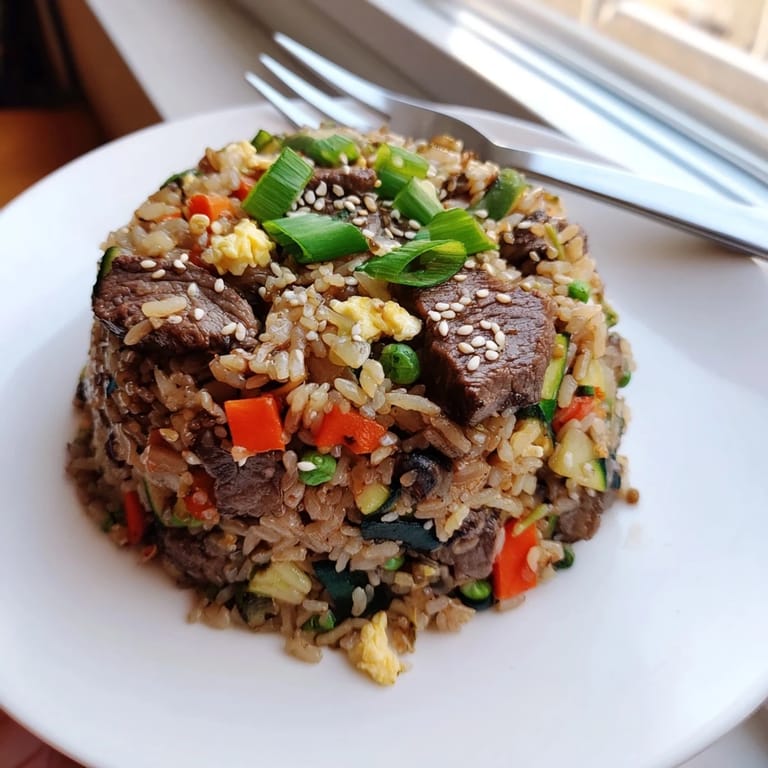
Save This recipe has become my answer to everything—celebrations, bad days, nights when cooking feels like too much effort but takeout feels like giving up. Something about that sizzle and smell makes any Tuesday dinner feel like an event.
The Rice Secret
Cold, day-old rice is non-negotiable here. Freshly cooked rice has too much moisture and turns into mush the second it hits the pan. I always make extra rice a day before or buy a container from my favorite takeout spot specifically for this purpose.
Protein Swaps
While sirloin is classic, I've used shrimp, chicken thighs, and even thinly sliced pork loin with fantastic results. Just adjust cooking times accordingly—shrimp cooks in seconds while chicken needs a few more minutes to hit safe temp.
Make It Your Own
Once you nail the base recipe, the variations are endless. Add extra veggies like diced bell peppers or baby corn. Top with spicy mayo or that famous yum yum sauce. Sometimes I toss in sriracha at the end for heat because I like things kicked up a notch.
- Double the recipe for leftovers—lunch tomorrow is even better
- Keep your pan hot enough that everything sizzles but doesn't burn
- Finish with a squeeze of fresh lime if you like bright acidity
 Save
Save The best recipes are the ones that make you feel like a kitchen wizard without actually requiring magic. This is one of those.
Kitchen Guide
- → Why use day-old rice for hibachi?
Day-old rice has dried out slightly, which prevents it from becoming mushy or gummy during stir-frying. The firmer texture allows each grain to separate and develop those coveted crispy edges when cooked over high heat. Freshly cooked rice contains too much moisture and won't achieve the authentic hibachi texture.
- → Can I use other cuts of beef?
Absolutely. While sirloin offers great flavor and tenderness, you can substitute ribeye for more marbling, flank steak for a leaner option, or even skirt steak. Just remember to cut the beef against the grain into 1-inch cubes, and adjust cooking time slightly—more marbled cuts may need a minute less, while leaner cuts benefit from a quick marinade to stay tender.
- → How do I prevent the steak from overcooking?
Cut your steak into uniform 1-inch cubes for even cooking. Cook over medium-high heat just until browned, about 2–3 minutes total. The steak will continue cooking slightly when returned to the pan with the rice, so removing it while still slightly pink ensures it stays tender. Avoid overcrowding the pan, which lowers the temperature and causes steaming instead of searing.
- → What vegetables work best in hibachi fried rice?
Traditional hibachi vegetables include onions, carrots, zucchini, and mushrooms because they hold their texture well over high heat. You can also add bean sprouts, baby corn, snap peas, or bell peppers. The key is cutting everything into small, uniform dice so they cook quickly and evenly. Frozen peas are excellent for convenience and sweetness.
- → How can I make this dish gluten-free?
Simply substitute regular soy sauce with tamari or a certified gluten-free soy sauce alternative. All other ingredients—mirin, sesame oil, vegetables, rice, and steak—are naturally gluten-free. Always check labels on pre-made sauces and marinades, as some contain hidden gluten in the form of wheat-based thickeners or additives.
- → Can I meal prep hibachi steak and fried rice?
Yes, this dish reheats beautifully. Store components separately in airtight containers for up to 4 days. When reheating, use a skillet over medium-high heat with a splash of oil to restore the crispy texture. The microwave can make rice soggy, so stovetop or oven reheating at 350°F until hot works best for maintaining quality.