 Save
Save There's a particular cold evening that comes back to me whenever I make this soup—not because it was my first time, but because I was making it in a kitchen that didn't feel like home yet. The apartment was still mostly boxes, the stove was unfamiliar, and I was attempting to impress someone with a dish I'd only read about. What struck me was how the kitchen transformed as those onions began their slow, patient caramelization. The smell alone made the bare walls feel less lonely, and by the time I poured in that wine and heard it sizzle against the bottom of the pot, I understood why this soup has lived in French bistros for centuries.
I made this for a dinner party once where the host had mentioned offhandedly that she was French and grew up eating her grandmother's version. I was nervous, honestly—what if it wasn't authentic enough? But when she tasted it, she got quiet for a moment, then told me it tasted exactly like the bistro near her old apartment in Paris. That kind of compliment sticks with you. Since then, I've understood that this soup isn't about perfection; it's about respecting the ingredients enough to let them become what they're meant to be.
Ingredients
- Yellow onions (4 large, thinly sliced): These are your foundation—yellow onions have the right balance of sweetness and depth for proper caramelization, unlike sweet onions which can become cloying.
- Leeks (2 large, white and light green parts only): They add a subtle, refined onion flavor that lifts the broth without overpowering it; always split them lengthwise and rinse between the layers where soil hides.
- Shallots (3, thinly sliced): The secret sophistication—they bring a gentle complexity that makes people wonder what they're tasting.
- Garlic (3 cloves, minced): Added near the end of caramelization to prevent burning while building depth.
- Unsalted butter and olive oil (3 tablespoons and 2 tablespoons): Butter gives richness, olive oil prevents sticking and adds its own character; use them together for the best of both worlds.
- High-quality beef broth (8 cups): This is not the moment to skimp—taste your broth before committing to it, because it becomes the soul of your soup.
- Worcestershire and soy sauce: These umami powerhouses deepen the flavor in ways people won't consciously taste but will absolutely feel.
- Dry white wine (1/2 cup): It cuts through richness and adds brightness; don't use anything you wouldn't drink yourself.
- Fresh thyme and bay leaf: Thyme is earthy and aromatic, the bay leaf adds structure to the broth's flavor; always remove the bay leaf before serving.
- Baguette (sliced 1/2-inch rounds): Crusty exterior, tender inside—it's the vehicle that holds the cheese and soup together.
- Gruyère cheese (2 cups, grated): Its nuttiness and melting quality are irreplaceable, though Emmental or Swiss work in a pinch.
- Parmesan (1/2 cup, optional): A supporting player that adds sharpness if you want it.
- Salt and black pepper: Season at the end when you can taste what you're actually seasoning.
Tired of Takeout? 🥡
Get 10 meals you can make faster than delivery arrives. Seriously.
One email. No spam. Unsubscribe anytime.
Instructions
- Gather and prepare your aromatics:
- Slice your onions, leeks, and shallots into thin, even pieces so they cook uniformly. Take your time here—uneven cuts mean uneven cooking and uneven browning, which shows.
- Begin the caramelization:
- Heat butter and olive oil in your heavy pot over medium heat until they're foaming gently. Add all your sliced alliums and stir frequently, scraping the bottom of the pot every few minutes so nothing burns—this takes 35 to 40 minutes and cannot be rushed.
- Watch for the color:
- You're looking for deep golden brown, almost mahogany in places, with a sweet aroma rising from the pot. When you think you're done, wait another five minutes—true caramelization requires patience that feels impossible until the moment it becomes obvious.
- Add garlic at the final moment:
- Once your onions are properly golden, add minced garlic and cook just 2 minutes longer, stirring constantly so it softens without browning into bitterness.
- Deglaze with wine:
- Pour in your white wine and immediately scrape the bottom of the pot with your wooden spoon, loosening all those caramelized bits that are pure flavor. The wine will sizzle and steam—let it reduce by half, about 2 to 3 minutes.
- Build the broth:
- Add your beef broth, Worcestershire sauce, soy sauce, thyme, and bay leaf. Bring everything to a simmer, then reduce heat and let it cook uncovered for 30 minutes, stirring occasionally so flavors distribute evenly.
- Taste and adjust:
- Remove the bay leaf and season with salt and pepper, tasting as you go—salt brings out sweetness in the caramelized onions and depth in the broth.
- Toast your bread:
- While the soup finishes simmering, arrange baguette slices on a baking sheet and turn on your broiler. Toast each side for 1 to 2 minutes until golden and crisp—watch closely because broilers are unpredictable.
- Assemble the bowls:
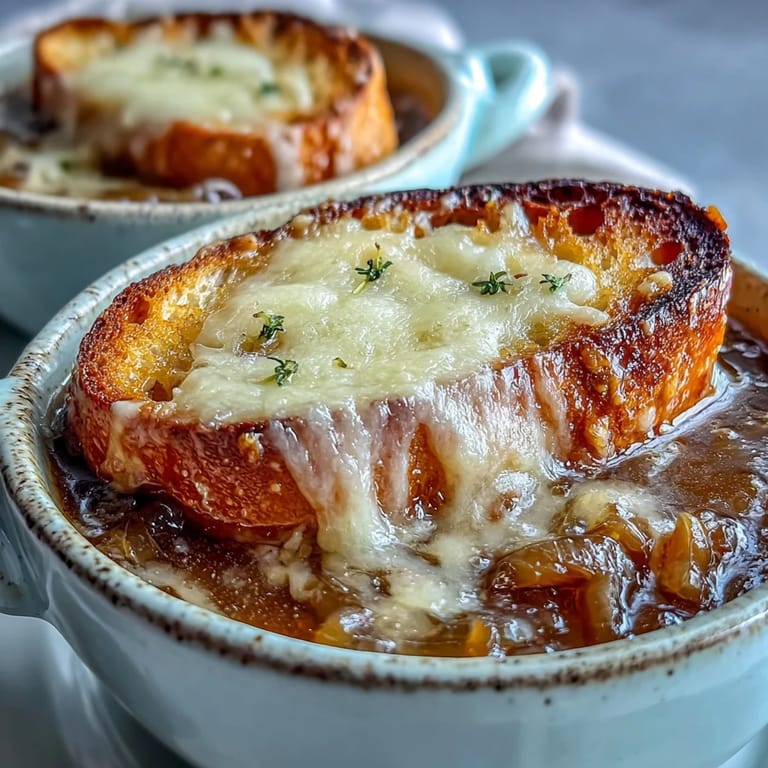
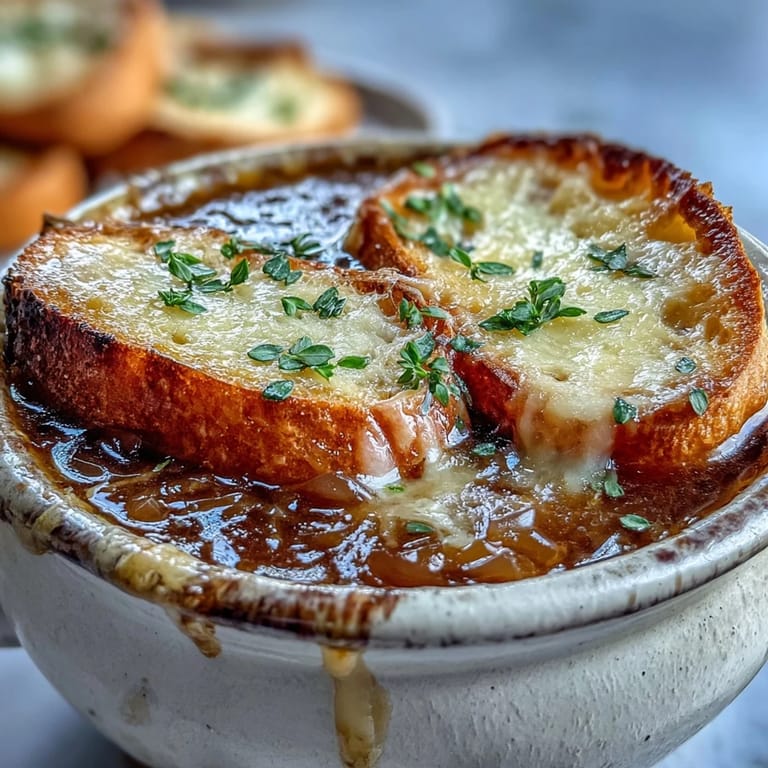
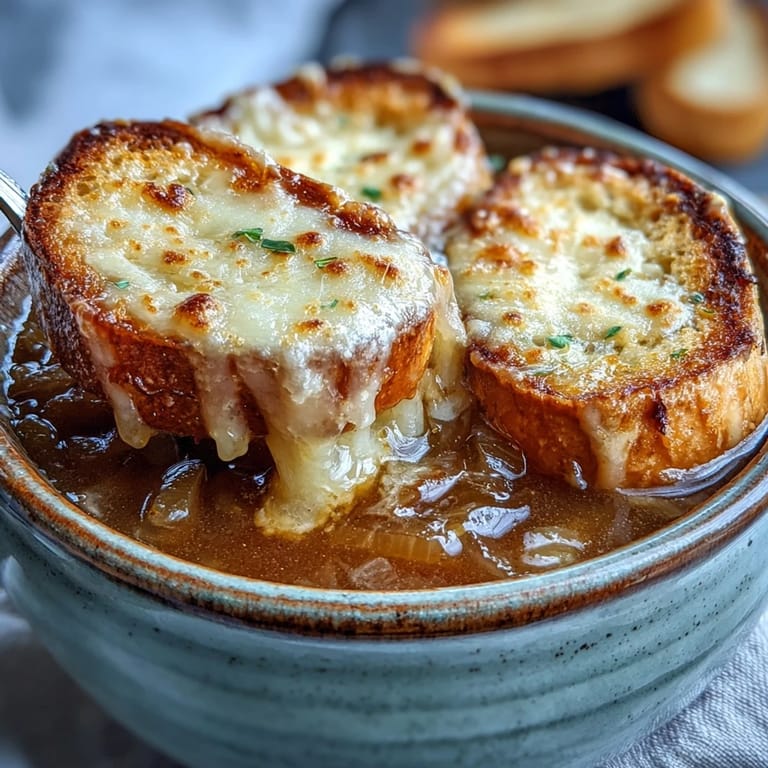
- Ladle hot soup into oven-safe bowls, top each with toasted baguette slices, then cover generously with grated Gruyère. You want enough cheese that it touches the soup and melts into it.
- Final broil and serve:
- Place your loaded bowls under the broiler for 3 to 5 minutes until the cheese is melted, bubbly, and slightly browned on top. The cheese will be extremely hot—warn people before they burn their mouths, which they absolutely will try to do anyway.
 Save
Save Someone once told me that French onion soup is what you make when you want to prove you understand how to cook, and I think they were right. There's nowhere to hide in this dish—no sauce to mask mistakes, no complexity to distract from poor technique. But that's precisely why it's so rewarding.
The Secret of Proper Caramelization
Most people underestimate how long true caramelization actually takes, and I understand why—it feels tedious, the color changes feel imperceptible in the moment, and you're tempted to turn up the heat to speed things along. Don't. The magic happens when onions slowly release their water, their natural sugars begin to brown and concentrate, and patience becomes the main ingredient. I once watched someone bring their heat up to medium-high to finish faster, and instead of sweet golden onions, they ended up with bitter, burnt ones that ruined the entire batch. Low and slow isn't just advice; it's the foundation of this whole recipe.
Why Wine and Worcestershire Matter
The wine serves a purpose beyond flavor—it deglazes the pot and lifts all those caramelized bits off the bottom, creating flavor that would otherwise be lost. The Worcestershire and soy sauce seem like odd additions to French soup, but they're umami engines that deepen the broth without adding salt or changing the fundamental character. I learned this by making a version without them once, thinking I was being more authentic, and the result tasted flat and one-dimensional by comparison. Small ingredients, enormous impact.
The Cheese Finish and Final Broiling
This is where soup becomes something ceremonial. The broiler creates a moment of transformation—the cheese bubbles, the bread soaks in soup and cheese, and everything melds into something greater than its parts. The key is using oven-safe bowls (ceramic works beautifully) and watching carefully so the top browns but doesn't char into carbon. I also learned to warn people about the heat; that first spoonful is dangerously hot, and friends will inevitably burn their mouths despite knowing better.
- If your cheese isn't melting evenly, move the bowl closer to the broiler element but stay close to prevent burning.
- The soup actually improves if made a day or two ahead—just reheat it gently before adding bread and cheese.
- Leftover soup without the cheese and bread topping keeps for up to four days in the refrigerator.
 Save
Save This soup has a way of making an ordinary evening feel less ordinary. It's humble but elegant, simple but layered, and it teaches you something about patience every time you make it.
Kitchen Guide
- → Why does proper caramelization take so long?
True caramelization requires 35-40 minutes of patient cooking over medium heat to transform onions' natural sugars into deep golden brown sweetness. Rushing this step results in softer, less complex flavor that can't replicate the signature depth of this French classic.
- → What makes the broth flavor so rich?
The combination of beef broth as the base, enhanced with Worcestershire sauce and soy sauce for concentrated umami, plus white wine for brightness and thyme for herbal notes. The long simmering time allows all these flavors to meld and concentrate beautifully.
- → Can I make this vegetarian?
Absolutely. Simply substitute vegetable broth for beef broth and use vegetarian Worcestershire sauce or omit it entirely. The result remains deeply satisfying thanks to the intense flavor from properly caramelized onions and leeks.
- → What cheese works best?
Gruyère is traditional for its excellent melting properties and nutty, complex flavor. Swiss or Emmental make suitable substitutes if Gruyère is unavailable. The Parmesan addition adds extra salty depth that balances the sweet onions perfectly.
- → How do I get the cheese perfectly melted?
Use oven-safe bowls and place them under a preheated broiler for 3-5 minutes. Watch closely—the cheese should be bubbly and lightly golden in spots. The heat creates that irresistible crispy-cheese edge while keeping the center gooey.
- → Can I make this ahead?
The soup base actually improves after a day or two in the refrigerator as flavors continue to develop. Store the soup separately from the bread and cheese. When ready to serve, reheat gently, toast fresh bread, and broil with cheese just before eating.