 Save
Save My grandmother's kitchen in Lyon smelled perpetually of caramelizing onions, and I didn't understand why she'd spend nearly an hour just stirring a pot until I tasted the soup she'd been building all along. There's something almost meditative about watching onions transform from crisp and sharp to silky and bronze, and that first spoonful of her French onion soup—the way the cheese would stretch, the bread would soften just enough—taught me that patience in the kitchen isn't a chore, it's the whole point. Now whenever I make this, I think of how she'd hum while stirring, never rushing, knowing that this particular dish rewards slowness.
I made this for my roommate on a gray January evening when neither of us had left the apartment in days, and something about ladling that golden soup into bowls and watching the cheese melt made us both sit up a little straighter. We didn't say much, just sat at the kitchen table with our bowls steaming between us, and it felt like the soup had done what food does best—turned a quiet moment into something worth remembering.
Ingredients
- Yellow onions (3 large, thinly sliced): These are your foundation, and their natural sugars are what create that deep, almost sweet caramel color—don't rush this part, and don't feel shy about the amount; they shrink dramatically as they cook.
- Unsalted butter and olive oil (1 tablespoon each): The combination gives you the richness of butter without the risk of it burning, and the olive oil keeps everything from sticking.
- Garlic (2 cloves, minced): Just a whisper of it, added after the onions are done so it stays fresh and doesn't turn bitter.
- Sugar (1 teaspoon): This accelerates caramelization and balances the savory depth, though you can skip it if you prefer.
- All-purpose flour (2 tablespoons): It thickens the soup slightly and adds a subtle nuttiness, creating body without heaviness.
- Dry white wine (1/2 cup): The acidity cuts through the richness and lifts the whole dish—don't use anything you wouldn't drink yourself.
- Beef or vegetable stock (1.2 liters): Use the best quality you can find; this is where much of your flavor lives, and a good stock makes the difference between good and unforgettable.
- Fresh thyme and bay leaf: These simmer quietly in the background, adding herbal depth that you'll taste without being able to name it.
- French baguette (4 slices, about 1 inch thick): Good bread matters here because it's going to absorb all that beautiful broth—stale bread is actually preferable.
- Gruyère cheese (120 g, grated): Its nutty flavor and melting properties are what make this soup sing, though Emmental works beautifully too.
Tired of Takeout? 🥡
Get 10 meals you can make faster than delivery arrives. Seriously.
One email. No spam. Unsubscribe anytime.
Instructions
- Start the caramelization:
- Heat your butter and olive oil together over medium heat until they're shimmering, then add all those thinly sliced onions at once—they'll seem like an overwhelming pile, but trust the process. Stir them every few minutes so they color evenly, and don't worry if it takes the full 35 to 40 minutes; you're coaxing out their natural sweetness and deep brown color, not just cooking them.
- Help them along:
- About halfway through, sprinkle in your teaspoon of sugar and salt—the sugar accelerates the browning and the salt draws out moisture, both of which speed up caramelization. The onions should smell almost caramel-like, with just the faintest hint of char at the edges.
- Build your aromatics:
- Once they're deeply golden, add your minced garlic and cook for just a minute until the kitchen smells incredible—any longer and it starts to turn bitter. Then scatter in your flour and stir constantly for about two minutes to cook out the raw flour taste.
- Deglaze with wine:
- Pour in your white wine and use a wooden spoon to scrape up all those browned bits stuck to the bottom—that's where the deepest flavor lives. The wine will sizzle and steam, releasing all those caramelized flavors into liquid form.
- Build the broth:
- Pour in your stock, add the thyme sprigs and bay leaf, then bring everything to a simmer over medium heat. Let it cook uncovered for 20 to 25 minutes so the flavors can meld and concentrate slightly, then fish out the thyme and bay leaf.
- Taste and adjust:
- Before the cheese goes on, give it a final taste—the soup should taste rich and savory and deep, with a gentle acidity from the wine. Add more salt and pepper as you like it.
- Toast the bread:
- While the soup simmers, arrange your baguette slices on a baking sheet, brush both sides lightly with olive oil, and toast them under the broiler for just a minute or two per side until they're golden and crisp. Watch them carefully because they go from perfect to burnt faster than you'd think.
- Assemble and finish:
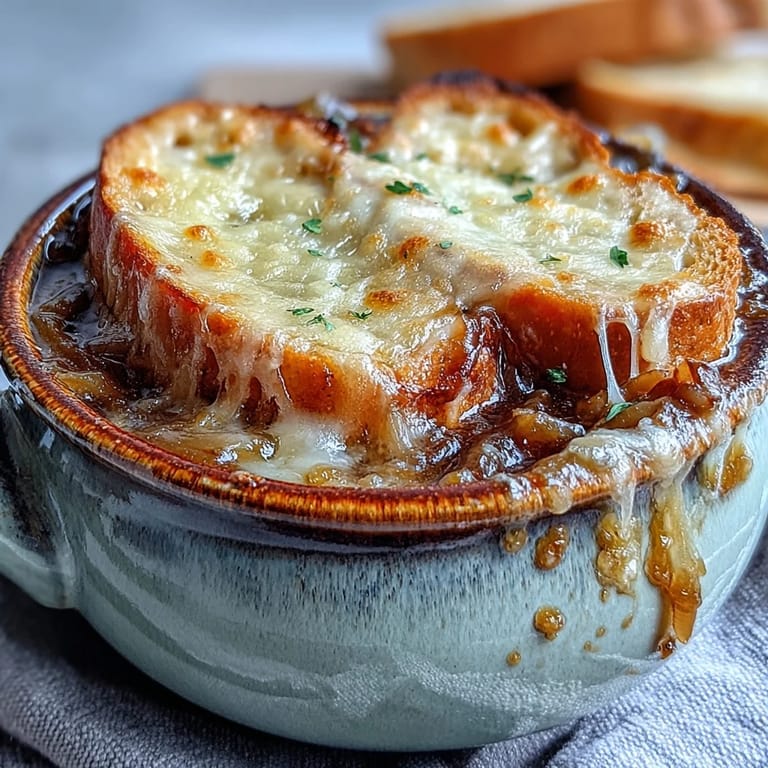
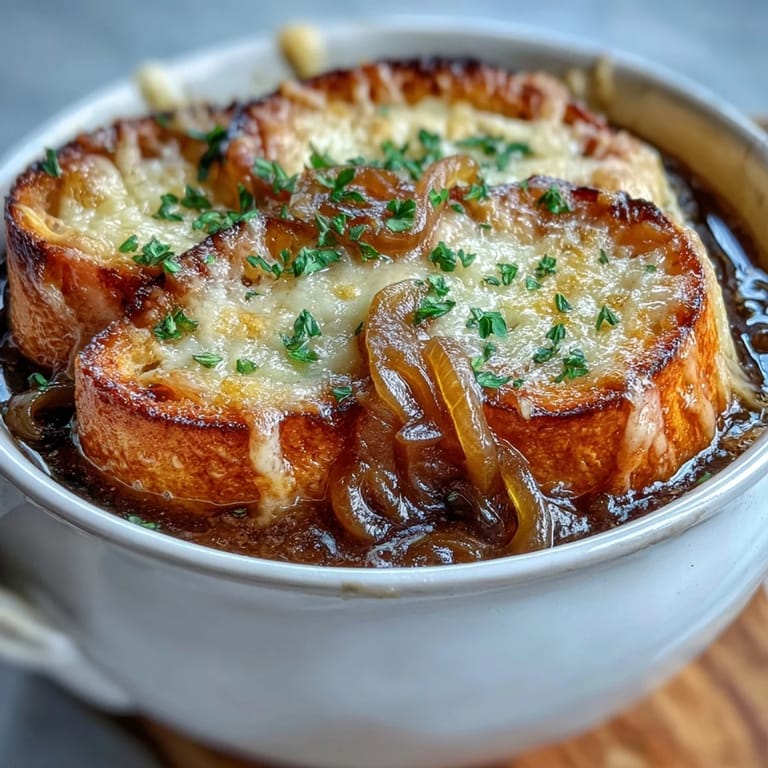
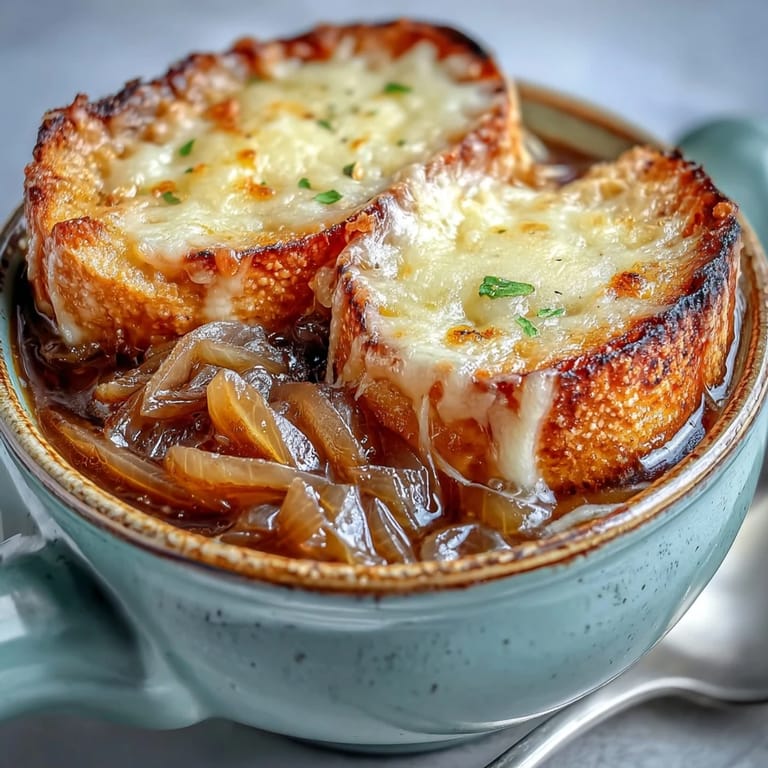
- Ladle the hot soup into oven-safe bowls, set a toasted bread slice on top of each, then pile on a generous handful of grated Gruyère—don't be shy, the cheese is what makes this sing. Place the bowls on a baking sheet and broil for 2 to 3 minutes until the cheese is melted, bubbly, and golden brown, then serve immediately while everything is still steaming.
 Save
Save There's a moment when you pull those bowls out from under the broiler and the cheese is still popping slightly, the bread is soaked through with broth but still holding its shape, and you realize this simple combination of onions and cheese has become something that feels like pure comfort. That's when you know you've gotten it right.
The Magic of Caramelization
Caramelization is a chemical reaction where the natural sugars in onions break down under heat, creating hundreds of new compounds that taste sweet, savory, and deeply complex all at once. I used to think browning onions was just about getting them to look nice, but then I made a batch where I rushed it and ended up with soup that tasted flat and one-dimensional—that's when I understood that those 35 minutes aren't optional, they're essential. The difference between onions that are merely soft and onions that are truly caramelized is the difference between a nice soup and one that makes people close their eyes when they taste it.
Wine, Stock, and Depth
The white wine does something specific here that you can't replicate with water or more stock—it adds brightness and a subtle acidity that cuts through the richness of the cheese and stops the soup from feeling heavy. I've experimented with different wines, and the ones that work best are simple and dry, nothing oakey or heavily buttered; if you're using something good enough to drink, it's good enough for the pot. The stock matters equally, and if you have the choice between grocery store stock and homemade, the homemade will give you a soup that tastes like someone spent time thinking about it.
Bread, Cheese, and Technique
The final assembly is where French onion soup becomes theatrical and personal—some people like their bread completely soft and dissolved into the broth, while others want it to stay structured and crispy underneath the cheese. I've learned that slightly stale baguette works better than fresh because it won't fall apart under the broiler, and toasting it first ensures it has some structure to stand up to both the heat and the hot broth. The cheese should be grated fresh if possible, and piled generously, because when it bubbles under the broiler it creates this gorgeous golden crust that's simultaneously crispy and melted.
- If your bowls don't fit under the broiler, you can broil the assembled soup on a baking sheet and then carefully transfer to serving bowls.
- Some people add a splash of brandy or sherry with the wine for extra depth, and that's absolutely worth trying if you're feeling adventurous.
- Leftovers keep beautifully in the fridge, but reheat gently and add fresh cheese under the broiler rather than trying to revive the old topping.
 Save
Save This soup is the kind of dish that transforms an ordinary evening into something memorable, and it asks almost nothing of you except patience and good ingredients. Make it for someone you care about, or make it for yourself on a night when you need something that tastes like home.
Kitchen Guide
- → Why does caramelizing onions take so long?
Caramelization is a slow process that breaks down onions' natural sugars, transforming them into deep, sweet flavors. Rushing this step means missing the rich, complex taste that makes this dish special. Patience yields the best results.
- → Can I make this ahead of time?
Absolutely. The flavor actually improves after a day or two in the refrigerator. Make the base up to 3 days ahead, then reheat gently, add the bread and cheese, and broil just before serving.
- → What's the best cheese to use?
Gruyère is traditional for its excellent melting properties and nutty flavor. Emmental or Comté work beautifully as alternatives. Avoid pre-shredded cheese, which doesn't melt as smoothly.
- → Why add flour to the soup?
The flour helps lightly thicken the broth, giving it a velvety texture that coats the spoon. Just two minutes of cooking removes any raw flour taste while creating a smoother, more luxurious consistency.
- → Can I freeze this soup?
Freeze the onion broth base for up to 3 months. Thaw overnight in the refrigerator, then reheat. Add the bread and cheese topping fresh—it doesn't freeze well, but the base holds up perfectly.
- → What wine works best?
A dry white wine like Sauvignon Blanc or Pinot Grigio adds brightness and depth. The wine deglazes the pot, incorporating all those flavorful browned bits into the broth for maximum taste.