 Save
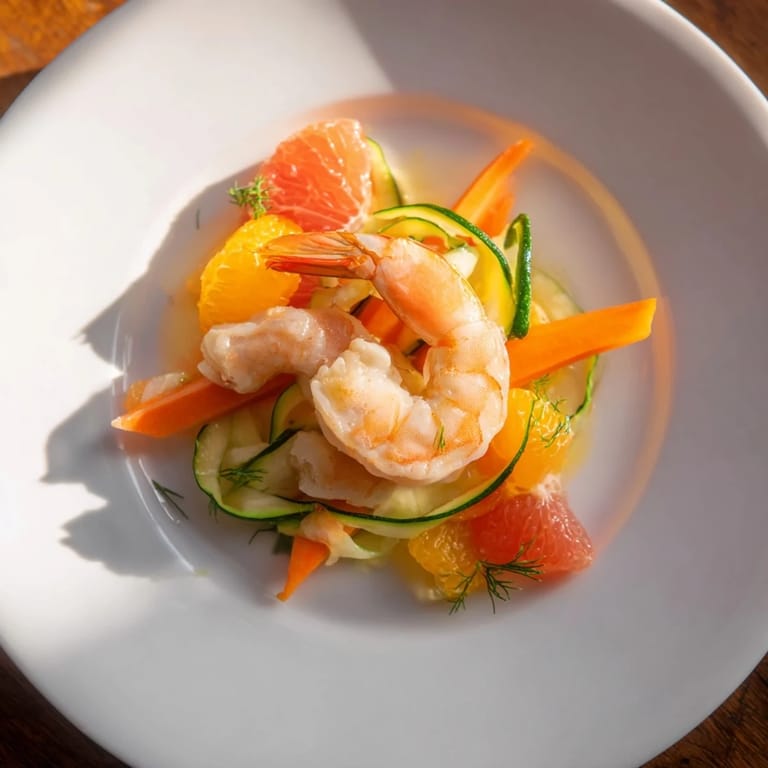
Save The first time I arranged shrimp and citrus on a platter, I wasn't thinking about coral reefs at all—I was just trying to use up a gorgeous pile of pink grapefruit and those tender shrimp from the market. But as I layered them with steamed vegetables and watched the colors come together, something clicked. The warmth of melting Gruyère, the brightness of lemon, the sweetness of the fruit—it suddenly felt like I'd captured something alive and vibrant on a plate. This dish became my answer to "what do you cook when you want something that looks as good as it tastes?"
I made this for my sister on an ordinary Tuesday when she needed something that would make her forget a difficult week. She walked into the kitchen as the cheese was bubbling under the broiler, and the smell of toasted Gruyère mixed with fresh dill stopped her mid-sentence. That's when I knew this dish had something beyond the ingredients—it had the power to shift a mood. Now whenever I make it, I remember that moment and cook it with the same intention.
Ingredients
- Large pink shrimp, peeled and deveined (500 g): Look for shrimp with a slight curve and firm texture; they'll cook more evenly and stay tender. I learned the hard way that overcooked shrimp ruins the whole dish, so don't walk away from the skillet.
- Medium oranges, segmented, plus zest (2): The brightness here is non-negotiable—choose fruit that feels heavy for its size, which means more juice and flavor.
- Small pink grapefruit, segmented (1): This adds tartness that balances the richness of the cheese and keeps the dish from feeling heavy.
- Lemon juice (1 lemon): Fresh lemon is your friend here; bottled juice tastes flat against everything else.
- Gruyère cheese, grated (120 g): The nuttiness of aged Gruyère becomes even more complex when it broils, creating those golden, crispy edges.
- Ricotta cheese (50 g): Dollops of ricotta add creaminess and visual texture that mimics actual coral.
- Small zucchini, thinly sliced into ribbons (1): Slice these as thin as you can manage—they cook in seconds and add delicate color.
- Small carrot, julienned (1): The sweetness of cooked carrot plays beautifully against citrus; don't skip this.
- Fresh chives, finely chopped (1 tbsp): Chives add a whisper of onion flavor that ties everything together without overpowering.
- Fresh dill, torn (1 tbsp): Dill belongs with seafood—it's one of those pairings that feels inevitable once you taste it.
- Olive oil (2 tbsp): Good olive oil matters here since some of it goes in raw at the end; use one you actually like.
- Salt and freshly ground black pepper: Season at every stage, not just at the end—it makes all the difference.
Tired of Takeout? 🥡
Get 10 meals you can make faster than delivery arrives. Seriously.
One email. No spam. Unsubscribe anytime.
Instructions
- Ready your stage:
- Preheat the broiler to high and have your oven-safe platter ready nearby. Everything moves quickly once the shrimp hits the pan, so prep your vegetables while the oven heats.
- Season and sear the shrimp:
- Toss your shrimp with 1 tablespoon of olive oil, lemon juice, salt, and pepper in a bowl. Heat a skillet over medium-high heat until it's almost smoking, then cook the shrimp for exactly 2 minutes per side—any longer and they'll turn rubbery, I promise you'll notice the difference.
- Brighten the citrus:
- While the shrimp cooks, gently combine your orange and grapefruit segments with the orange zest and a tiny pinch of salt in a separate bowl. This brings out the sweetness and prevents the fruit from being one-note.
- Steam the vegetables:
- In a steamer or microwave-safe bowl with a splash of water, steam the zucchini ribbons and carrot strips for just 1 to 2 minutes until they're tender but still have a slight snap. Arrange them on your platter as your base—this is where the color foundation comes in.
- Build your coral reef:
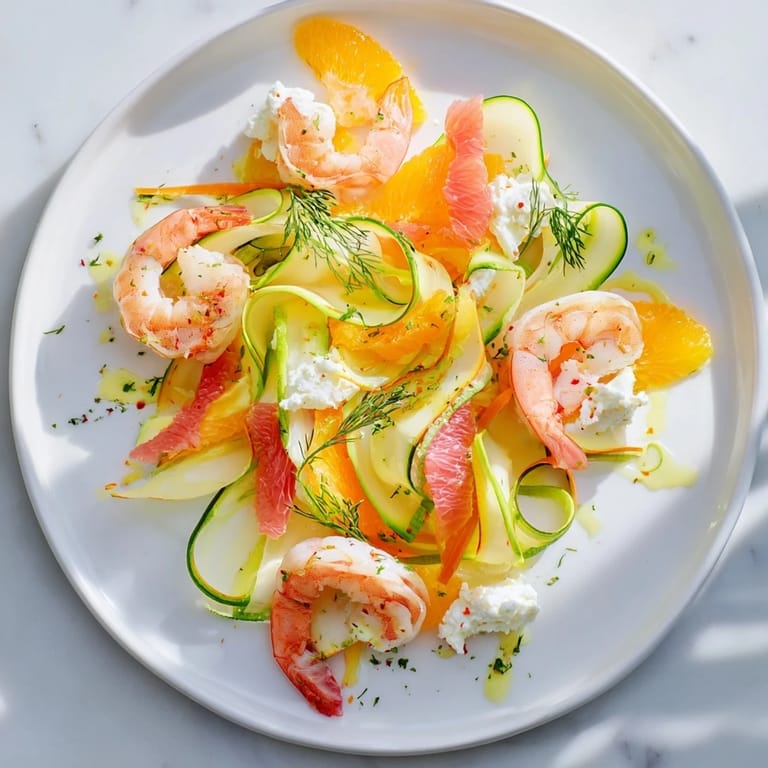
- Nestle the warm shrimp and cooled citrus segments among the vegetables, layering them for visual depth and natural color variation. Think about how a real reef would look—nothing too symmetrical, everything creating visual interest.
- Add the cheese:
- Sprinkle your grated Gruyère evenly over the entire arrangement, then dot it with small spoonfuls of ricotta cheese. The ricotta pieces will stay distinct rather than melting completely, adding texture.
- Broil until golden:
- Slide the platter under the broiler for 2 to 3 minutes, watching carefully. You want the cheese to bubble and develop golden-brown edges without the vegetables becoming limp. The moment it smells nutty and toasty, it's done.
- Finish and serve:
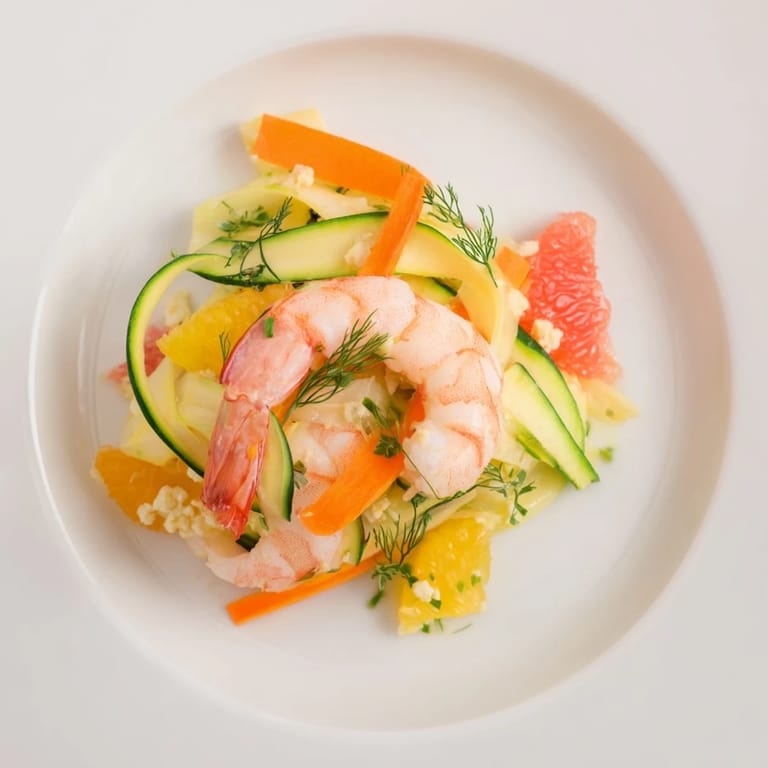
- Remove from the broiler, scatter fresh chives and torn dill over the top, and drizzle with the remaining tablespoon of olive oil. Serve immediately while the cheese is still hot and the vegetables are warm.
 Save
Save What I love most about this dish is the moment someone takes that first bite and realizes that warm, melted cheese and cold citrus actually belong together. It's one of those quiet kitchen discoveries that changes how you think about flavor combinations.
Why This Dish Works
The magic here is temperature contrast and the interplay of sweet, tart, and umami. The warm broiled cheese softens into the cool vegetables and bright fruit, while the seafood's natural saltiness anchors everything. There's a reason fine dining relies on this kind of layering—it keeps your palate engaged and makes every bite feel intentional rather than routine.
Pairing Suggestions
A crisp Sauvignon Blanc or dry rosé is the obvious choice, but don't overlook a chilled Albariño if you want something with a bit more body. If you're avoiding alcohol, a sparkling citrus water or even a good iced tea pairs beautifully with the brightness of the fruit and the richness of the cheese.
Variations and Substitutions
The structure of this dish is flexible enough to accommodate what you have and what you love. You can swap the Gruyère for Emmental or even a bubbly fresh mozzarella if you prefer something milder. For color and visual interest, thin slices of watermelon radish or pomegranate seeds add complexity without changing the essential character of the dish. Some nights, I'll add a handful of microgreens or a few edible flowers if I'm feeling it, which transforms the platter into something even more special.
- Trust your instincts about substitutions—if you like a cheese, it probably works here.
- Keep the cooking times tight; don't let anything sit too long once it's done or flavors flatten out.
- Taste as you go and adjust seasoning before the final broil, since the cheese's saltiness can surprise you.
 Save
Save This dish reminds me that cooking doesn't always have to be complicated to be memorable. Sometimes the most elegant meals are simply about choosing the best ingredients, treating them gently, and letting their natural colors and flavors speak for themselves.
Kitchen Guide
- → How do I prevent shrimp from overcooking?
Sauté shrimp for about 2 minutes per side on medium-high heat until just opaque and firm to the touch. Overcooking leads to rubbery texture.
- → Can I substitute Gruyère cheese?
Yes, use Emmental or bubbly mozzarella to achieve a similar melt and mild nutty flavor.
- → What is the best way to steam zucchini ribbons?
Steam zucchini ribbons for 1–2 minutes until tender yet slightly crisp to maintain texture and color.
- → How does the citrus enhance the dish?
Fresh segments of orange and pink grapefruit add brightness and balanced acidity that complements the richness of the shrimp and cheese.
- → What herbs work well as garnish?
Chives and dill provide fresh, herbal notes that brighten and round out the flavors of the dish.