 Save
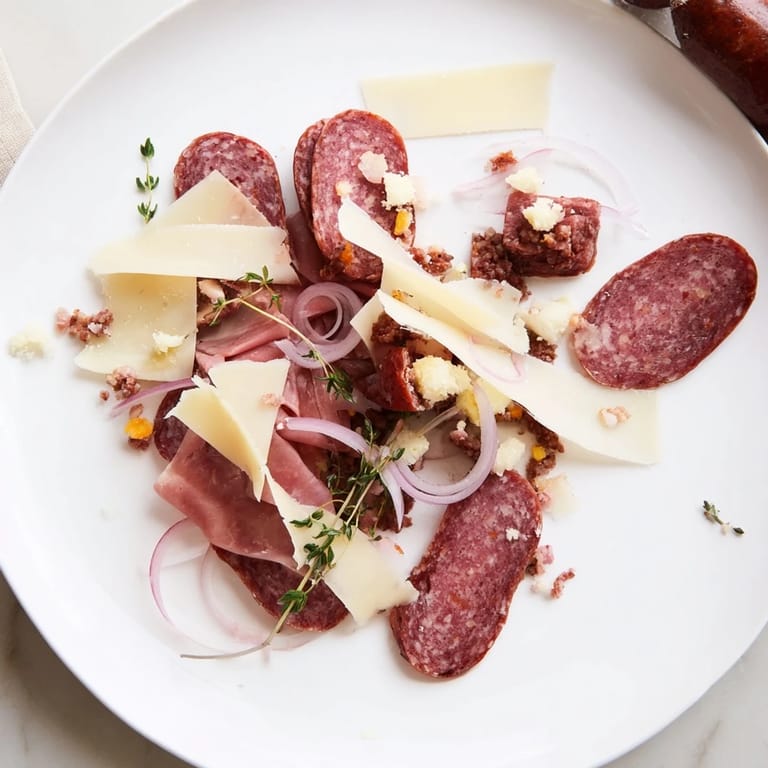
Save There's something about the contrast of rough and refined that makes a platter come alive. I learned this years ago when a friend arrived unannounced with a wedge of aged Manchego and a handful of house-cured ham, and we spent an hour arranging them on a board with nothing but a cheese knife and conversation. That simple act—tearing meat with your hands, shaving cheese into translucent ribbons, watching textures catch the light—turned an ordinary afternoon into something memorable. The Burlap & Lace is built on that exact philosophy: bold, rustic ingredients elevated by patience and presentation.
I made this for a small dinner party once, and what struck me wasn't the compliments—it was the silence. People slowed down. They reached for a shaving of cheese, then a piece of ham, then a cornichon, building little bites instead of mindlessly grazing. That's when I realized the real power of this platter: it invites people to be intentional, to taste things separately and together, to have something to do with their hands while they talk.
Ingredients
- Smoked beef, 120g: Ask your butcher to slice it thick or just hand-tear it—the rough edges catch light beautifully and taste deeper than thin-sliced versions.
- Rustic country ham, 120g: Don't buy the pre-packaged stuff; rough chop your own so you get uneven pieces that feel intentional.
- Smoked sausage, 120g: Cut into thick rounds or wedges so they don't disappear into the arrangement.
- Parmigiano Reggiano, 60g: The sharp bite of this cheese anchors the whole platter—use a cheese plane for ribbons that are almost translucent.
- Aged Manchego, 60g: Slightly nutty and buttery; shave it the same way so all three cheeses have equal visual weight.
- Gruyère, 60g: The smoothest of the trio, it acts like a bridge between the sharper Parmigiano and the earthier Manchego.
- Cornichons, one small handful: Their vinegar cuts through the richness and gives your mouth a reason to reset between bites.
- Red onion, 1 small, thinly sliced: Raw onion brings sharpness and a little bite that wakes everything up.
- Grainy mustard, 2 tbsp: A smear here and there, not a base—it's a punctuation mark, not the whole sentence.
- Fresh thyme or rosemary sprigs: These aren't just decoration; brush your hand across them and you'll understand why they're here.
- Crusty bread (optional): A vehicle if you want one, but this platter stands completely on its own.
Tired of Takeout? 🥡
Get 10 meals you can make faster than delivery arrives. Seriously.
One email. No spam. Unsubscribe anytime.
Instructions
- Build your foundation:
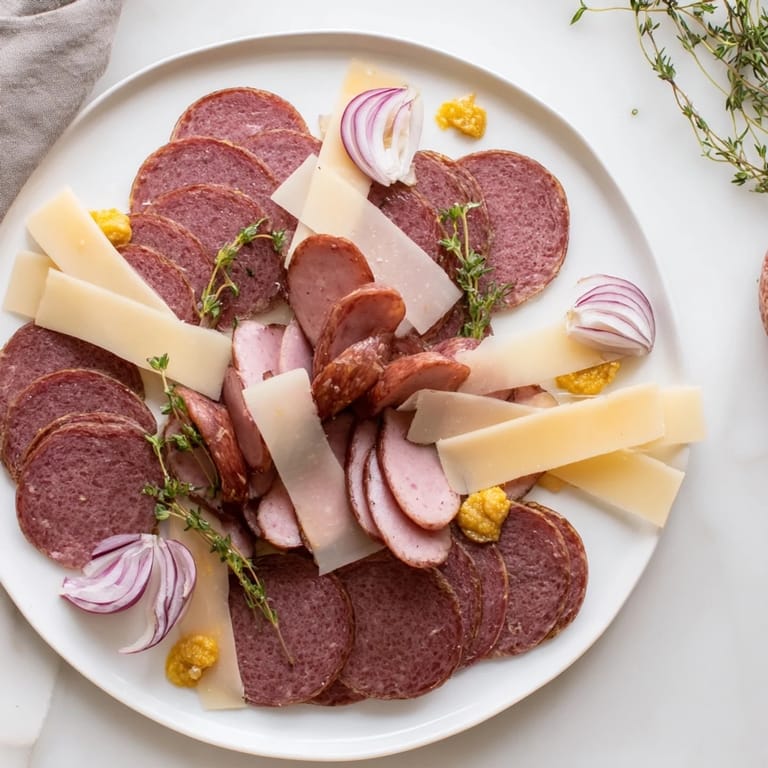
- Arrange the meats in overlapping layers or casual mounds across your board—think landscape, not grid. There should be empty space; you're not trying to cover every inch.
- Shave the cheeses:
- Hold your cheese plane at a shallow angle and pull toward you, letting the blade catch the edge of each block. You want ribbons so thin you can nearly see through them; they should drape like fabric, not pile like shavings.
- Scatter and accent:
- Nestle cornichons into the gaps, scatter raw onion slices across the board, and add small dollops of mustard—think of them as jewels, not coverage.
- Finish with fragrance:
- Lay thyme or rosemary sprigs across the top, letting them break up the lines and add aroma to the visual story you're telling.
- Serve right away:
- A charcuterie board is a moment, not something that improves with time; bring it to the table while everything is at its best.
 Save
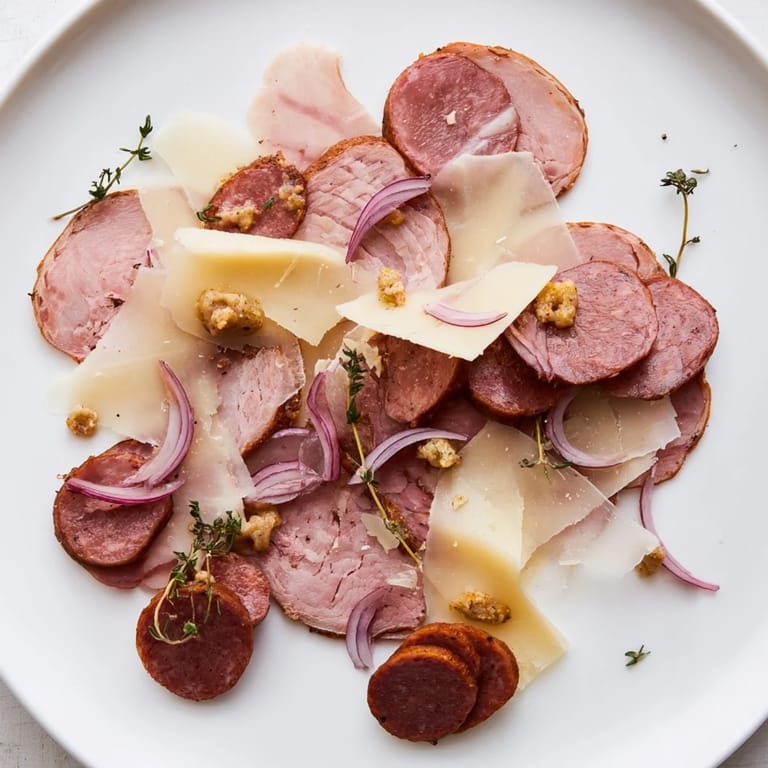
Save The first time I truly understood the point of serving food this way was when my neighbor's elderly mother picked up a piece of ham, studied it like it was a small piece of art, and said, "You can taste the care in this." That one sentence taught me that simplicity isn't about being lazy; it's about respecting what's already good enough.
Choosing Your Players
Everything on this board should be something you'd actually want to eat alone. If you wouldn't eat that ham on its own, shaved into a quiet moment, it doesn't belong here. I learned this by experimenting with cheaper cuts and generic cheeses, and every time the platter fell flat. Splurge on the good stuff—not excessive amounts, just quality. A board with four ounces of truly excellent Parmigiano beats eight ounces of mediocre cheese every time.
The Art of Arrangement
There's no right way to arrange this platter, but there are principles. Group similar colors and textures so they create rhythm and contrast. Let some areas feel busy and others breathe. The rough, dark meats need the delicate, translucent cheese nearby so they play off each other. I've made this platter a dozen ways, and the ones people remember aren't the most symmetrical—they're the ones that look like someone cared about every piece individually.
Pairing and Variations
This platter is a conversation starter, and once you understand the framework, you can play within it endlessly. Add toasted walnuts for crunch, scatter dried apricots or figs for sweetness, toss in green olives for brine. The combinations matter less than understanding the balance: something rich, something sharp, something textural, something that makes you pause. Serve it with a bold red wine to echo the meat's depth, or a crisp white to lighten the whole thing.
- Nuts and dried fruits double the platter's interest without doubling the effort.
- Aged cheddar or Comté are excellent substitutes if your favorite cheeses aren't available.
- Smoked fish or prosciutto can replace any of the meats depending on what you love.
 Save
Save This platter is proof that sometimes the best meals aren't the ones where you cook, but the ones where you simply choose well and present with intention. It's a small act of generosity that takes almost no time at all.
Kitchen Guide
- → What meats are used in this platter?
It features smoked beef, rustic country ham, and smoked sausage, all prepared in hearty, rough-cut styles.
- → Which cheeses complement the meats here?
Thinly shaved Parmigiano Reggiano, aged Manchego, and Gruyère enhance the platter with delicate textures and flavors.
- → How should the cheeses be prepared for serving?
Use a vegetable peeler or cheese plane to create thin, translucent ribbons that drape beautifully over the meats.
- → What garnishes add flavor to the platter?
Cornichons, thinly sliced red onion, grainy mustard, and fresh thyme or rosemary sprigs provide aroma and complementary tastes.
- → Can this dish accommodate dietary restrictions?
It's gluten-free if bread is omitted and low carb, but contains milk and mustard allergens.