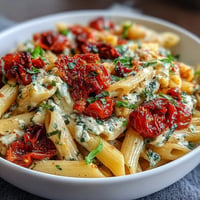
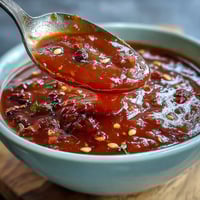
 Save
Save The first time I made this dish, I wasn't trying to recreate a viral sensation—I was just hungry on a Tuesday night with limited funds and a pantry full of canned tomatoes. My roommate had texted asking what was for dinner, and somehow, creamy chicken pasta sounded like the most luxurious thing I could promise. What surprised me was how the simple combination of drained canned tomatoes, chicken broth, and a splash of cream transformed into something so utterly elegant that my guest actually asked for the recipe. That's when I realized this wasn't budget cooking—it was just honest cooking.
I made this for my sister when she came home from a brutal week at work, and watching her take that first bite—the way her shoulders actually relaxed—reminded me that food isn't just fuel. It's how we say 'I see you, and I'm taking care of you' without needing the words. She's made it three times since then, and now it's our shorthand for 'I need comfort tonight.'
Ingredients
- Chicken breasts: Cut yours into bite-sized pieces rather than leaving them whole—they cook faster and meld into the sauce beautifully instead of sitting on top like islands.
- Penne or rigatoni: The tubes catch the sauce in ways spaghetti can only dream of; trust me on this one.
- Olive oil: Two tablespoons isn't much, but it's enough to get everything golden without making the sauce greasy.
- Garlic: Fresh minced, not from a jar—the difference in aroma is worth the thirty seconds it takes to mince it.
- Dried Italian herbs: This is your secret weapon; one teaspoon blooms into a whole flavor profile when you toast it in oil first.
- Red pepper flakes: Optional, but I leave them in—just a whisper of heat that makes people say 'there's something special in here.'
- Canned diced tomatoes: The drained ones, because the liquid would make your sauce soupy and nobody came here for soup.
- Chicken broth: Half a cup is the right amount to keep things silky without diluting the tomato flavor.
- Heavy cream: The real transformation happens here; it softens everything and makes the sauce coat like silk.
- Parmesan cheese: Freshly grated if you have time, pre-grated if you don't—both work, though fresh melts more elegantly.
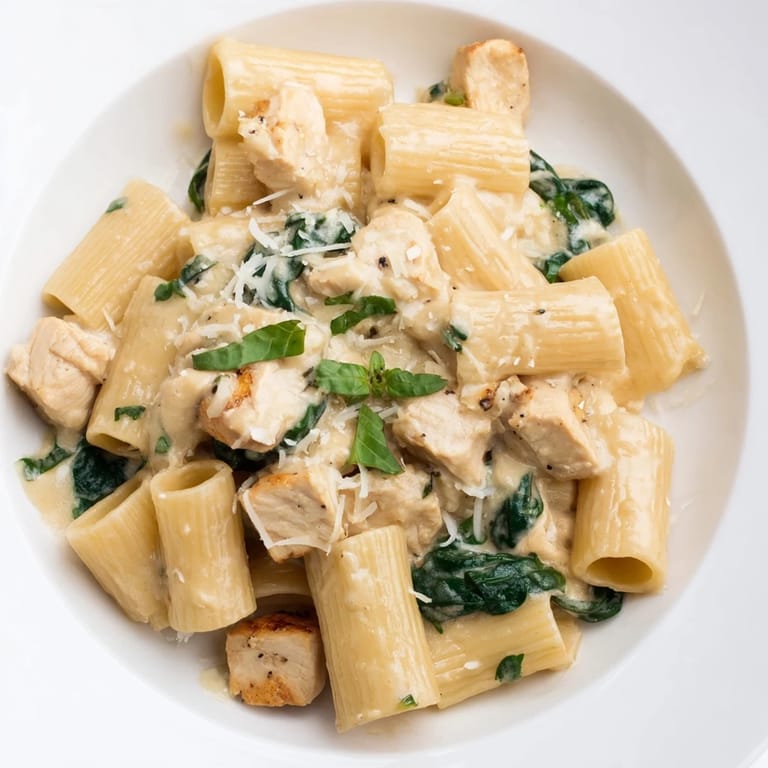
- Fresh spinach: Optional but recommended; it adds color, nutrients, and a subtle earthiness that rounds out the richness.
- Fresh basil: Chop it just before serving so it stays bright and doesn't bruise into bitterness.
Tired of Takeout? 🥡
Get 10 meals you can make faster than delivery arrives. Seriously.
One email. No spam. Unsubscribe anytime.
Instructions
- Get your pasta going:
- Bring a large pot of salted water to a rolling boil—it should taste like the sea. Cook your pasta according to package instructions until it's just tender but still has a tiny bit of resistance when you bite it. Before draining, reserve about half a cup of that starchy water; it's your secret weapon for adjusting the sauce later.
- Sear the chicken:
- Heat olive oil in a large skillet over medium-high heat until it shimmers, then add your chicken pieces. Season them generously with salt and pepper, then let them sit undisturbed for a minute so they develop a golden crust. Stir occasionally until they're cooked through, about five to six minutes total. You'll know they're done when there's no pink inside and they've turned a beautiful golden color.
- Build the flavor base:
- Remove the chicken to a plate and reduce the heat to medium. Add your minced garlic, dried herbs, and red pepper flakes, stirring constantly for about one minute—your whole kitchen will suddenly smell incredible. This is the moment where you're waking up all those dried spices and letting them bloom into aromatic magic.
- Simmer the tomatoes:
- Pour in your drained canned tomatoes and chicken broth, scraping up any golden bits stuck to the bottom of the pan. Let this bubble gently for three to four minutes, just enough time for the flavors to get friendly with each other.
- Bring it together:
- Stir in the heavy cream and Parmesan cheese, letting the heat gently melt the cheese into the sauce. Keep the heat low and simmer for two to three minutes—you're not looking for a boil, just a gentle blip of bubbles at the edges. The sauce should thicken slightly and coat the back of a spoon.
- Finish strong:
- Return your cooked chicken (and any juices) to the skillet, then add the fresh spinach if you're using it. Stir everything together and cook for just a minute until the spinach wilts into green ribbons. Add your cooked pasta and toss everything together, adding splashes of reserved pasta water if the sauce seems too thick.
- Taste and serve:
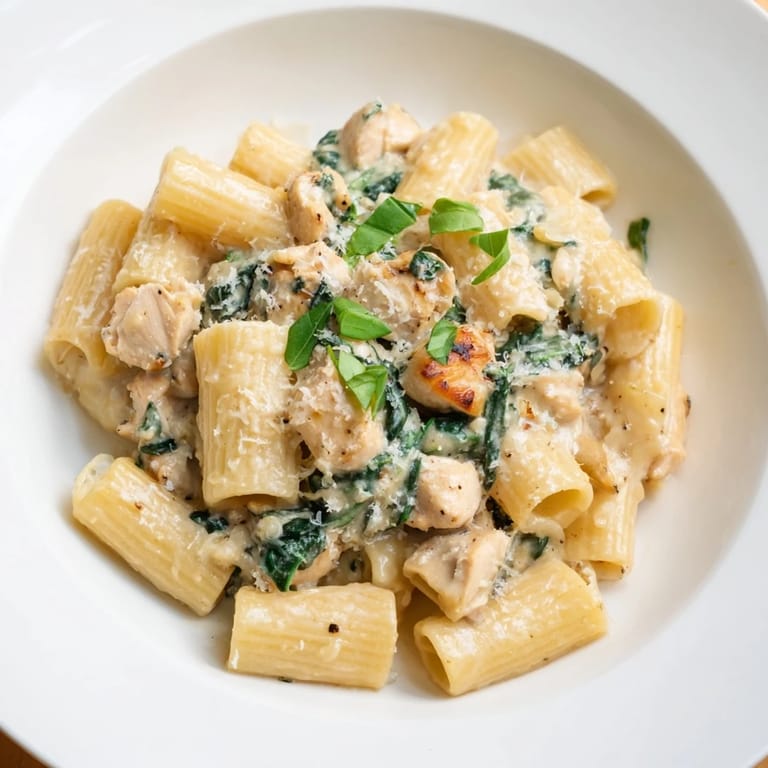
- Taste for seasoning and adjust with more salt and pepper if needed. Serve immediately while it's hot, scattered with fresh basil.
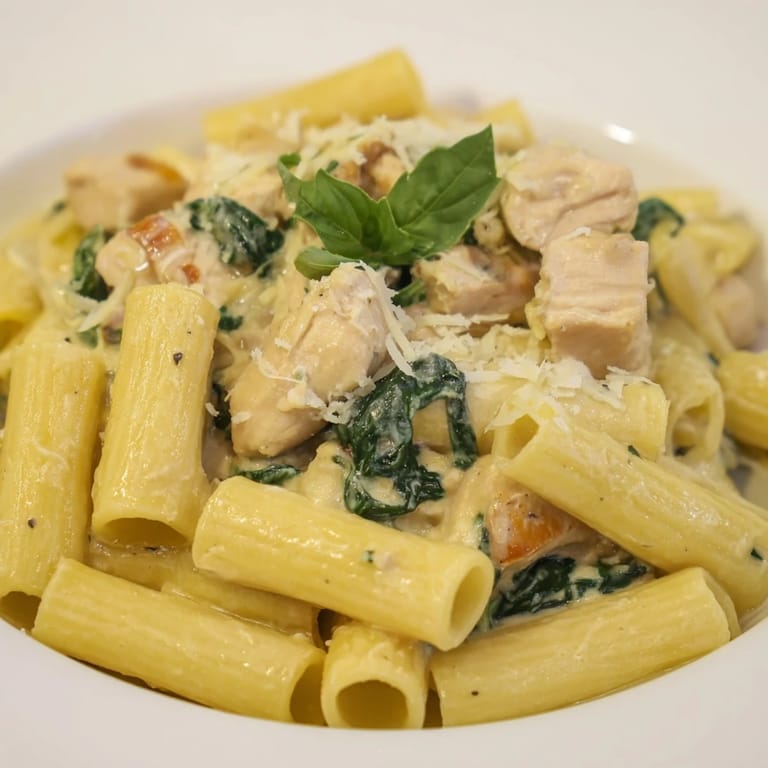
 Save
Save There's this moment every time I make this when the cream swirls into the tomato sauce and the whole thing transforms from separate ingredients into something unified and rich. It's a small thing, but it never stops feeling like a minor kitchen miracle, like I've somehow tricked everyone into thinking I spent hours on this when I actually had dinner ready in forty minutes.
Why This Works as a Weeknight Favorite
The genius of this recipe is that it doesn't pretend to be something it's not—it's straightforward and honest. You're not performing complicated techniques or waiting for things to braise for hours. Instead, you're working with the natural flavors of simple ingredients and letting them speak for themselves. The beauty emerges from the combination, not from complexity.
Customizing It to Your Taste
Once you've made this once, you'll start seeing it as a base rather than a rigid formula. I've added sun-dried tomatoes on nights when I wanted extra depth, swapped arugula for spinach when I wanted something peppery, and even used chicken thighs instead of breasts when I wanted the dish to be juicier and more forgiving. The skeleton of the recipe holds strong no matter what you do to it, which is the hallmark of a truly reliable dish.
Pairing and Serving Thoughts
I always serve this with something crisp on the side—garlic bread, a simple green salad, or just crusty bread for soaking up the sauce. A cold glass of Pinot Grigio or Sauvignon Blanc cuts through the richness beautifully and makes the whole meal feel a little more intentional than a random Tuesday. The fresh basil scattered on top at the very end is essential; it adds brightness that the cooked herbs in the sauce can't quite provide, and it's your visual signal that this is restaurant-worthy, not just a quick dinner.
- Make extra sauce and freeze it separately from the pasta so you can reheat without the noodles getting mushy.
- If you're cooking for someone you're trying to impress, use freshly grated Parmesan instead of the pre-grated kind—the melting difference is noticeable.
- Taste the sauce before adding the pasta; this is your last chance to adjust the seasoning without it being hidden under noodles.
 Save
Save This dish has become my answer to 'what should I cook tonight when I want to feel cared for?' It's proof that you don't need expensive ingredients or hours of time to create something that tastes like love. It's just good, honest food that happens to be affordable.
Kitchen Guide
- → Can I use chicken thighs instead of breasts?
Yes, chicken thighs provide a juicier texture and can be substituted for a richer flavor.
- → What type of pasta works best with this dish?
Penne or rigatoni hold the sauce well, but any pasta that can trap sauce will work nicely.
- → How can I make the sauce creamier or lighter?
Use half-and-half instead of heavy cream for a lighter texture or add more cream for extra richness.
- → Is fresh spinach necessary for this dish?
Spinach adds color and nutrition but can be omitted or replaced with arugula for a different flavor.
- → Can I prepare this meal ahead of time?
It’s best enjoyed fresh, but leftovers can be stored refrigerated and reheated gently to maintain texture.