 Save
Save There's something almost meditative about the simplicity of this dish—I discovered it on a quiet afternoon when I wanted to serve something beautiful without fussing over a hot stove. I'd spent the morning arranging flowers and felt drawn to that same minimalist energy in the kitchen. The act of cutting vegetables into perfect, parallel sticks felt like a small meditation, and watching guests pause to admire the platter before eating made me realize that sometimes the most elegant meals are the ones that let their ingredients speak for themselves.
I remember bringing a version of this to a potluck where everyone else had brought heavy, complicated dishes. My platter sat there looking almost austere by comparison, but people kept coming back to it between bites of everything else, as if they needed that clean, refreshing pause. One friend asked what the secret was, and I realized it wasn't a secret at all—it was just respect for the vegetables themselves.
Ingredients
- Cucumbers (2 large): Choose ones that are firm and straight; they'll cut into more elegant sticks and stay crisp longer.
- Celery stalks (4 large): Pick the palest, most tender stalks from the center of the bunch for the best texture and mildest flavor.
- Toasted sesame seeds (1 tablespoon): Toast them yourself if you can—the nutty aroma changes everything about this dish.
- Light soy sauce or tamari (1 tablespoon): This becomes your dipping sauce, so choose one you'd actually want to taste on its own.
- Rice vinegar (1 teaspoon): Just a whisper of it in the dipping sauce brightens the whole experience.
- Fresh mint or basil leaves: Tear them gently by hand rather than chopping; it releases the oils more naturally and looks more intentional.
Tired of Takeout? 🥡
Get 10 meals you can make faster than delivery arrives. Seriously.
One email. No spam. Unsubscribe anytime.
Instructions
- Wash and prepare:
- Run your cucumbers and celery under cool water, letting your hands feel for any rough spots. Trim the ends carefully—these vegetables deserve clean, confident cuts.
- Cut into sticks:
- Slice your cucumbers and celery into 4- to 5-inch sticks, aiming for consistency so each piece feels intentional on the platter. The rhythm of cutting becomes part of the meditation.
- Arrange with intention:
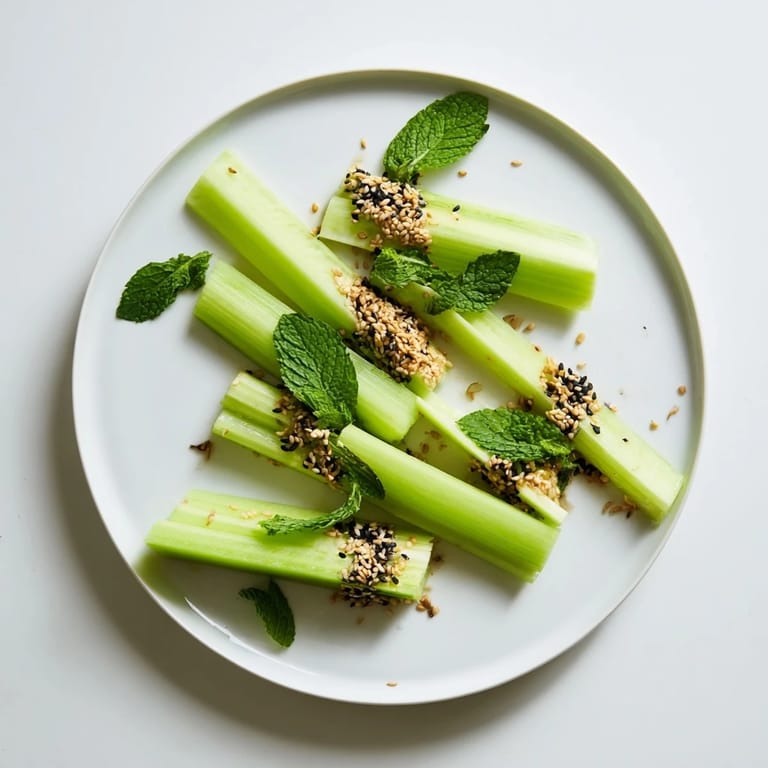
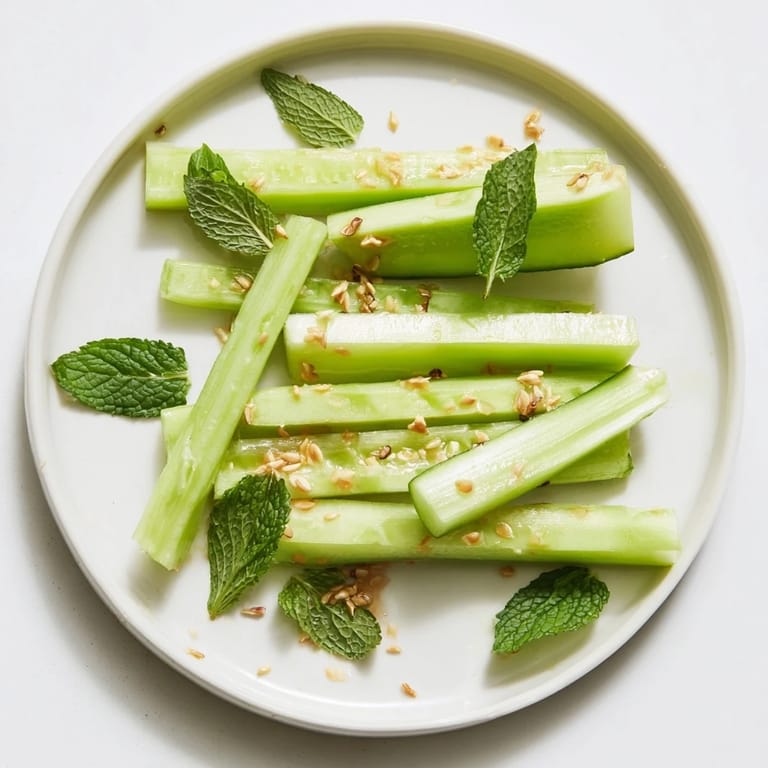
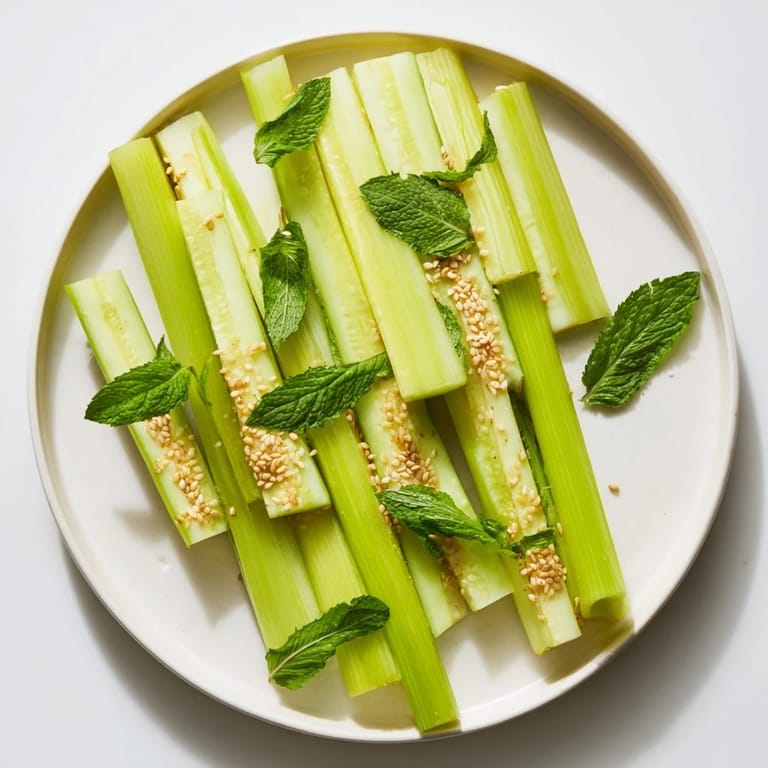
- Stand some sticks upright and lay others horizontally across your serving platter, creating a composition that feels balanced and calm. This isn't random—think of it as building a small landscape.
- Garnish and chill:
- Scatter your toasted sesame seeds across the arrangement and tuck fresh mint or basil leaves between the sticks. Let everything sit in the cold for a few minutes so the flavors settle into each other.
- Make the dipping sauce:
- Stir together your soy sauce and rice vinegar in a small bowl, letting them marry into something more complex than either would be alone.
- Serve:
- Bring the platter to the table while everything is still cold and crisp, letting people discover the simplicity for themselves.
 Save
Save I'll never forget the quiet moment when my usually loud dinner table became still, everyone reaching for these vegetable sticks and that dipping sauce, and for once nobody was talking. That's when I knew this wasn't just about being easy or impressive—it was about giving people permission to slow down.
Why Less Is More Here
This dish thrives on restraint in a way that took me a while to understand. When you're not fighting a complicated recipe or a crowded plate of competing flavors, something shifts. The sweetness in a fresh cucumber becomes noticeable. The celery develops a gentle bitterness that's almost herbaceous. The sesame seeds don't just add crunch—they add a whisper of earthiness that makes you taste everything more carefully. I've learned that the simplest dishes demand the most thoughtful ingredient selection, because there's nowhere for quality to hide.
The Art of Arrangement
The presentation matters here not because we're being fussy, but because it slows down the eating experience. When each stick is placed with intention, when the colors are balanced and the composition feels balanced, guests become more conscious of what they're eating. I started paying attention to how sushi bars arrange their ingredients with such care, and realized it wasn't decoration—it was communication. You're telling people that you respect both the food and the moment they're about to spend with it. Think of it less as plating and more as an invitation.
Make It Your Own
The beauty of this recipe is that it's a framework rather than a rule. Some days I add paper-thin daikon sticks for peppery heat, or carrot batons for sweetness and color. I've experimented with different dipping sauces—a touch of ginger, a whisper of garlic, even a tiny drizzle of chili oil for those who want it. The vegetables stay the same, but the mood shifts with each addition. Start with the pure version and then trust yourself to play with it.
- Try adding thinly sliced daikon or rainbow carrots to introduce different textures and subtle flavor notes.
- Make your dipping sauce ahead and let it rest—the flavors deepen and marry together more beautifully.
- If you're serving this for a crowd, prep everything except the final arrangement a few hours ahead, then compose it just before people arrive.
 Save
Save This dish taught me that hospitality doesn't always mean effort or complexity—sometimes it means listening to what your guests actually need and giving them permission to rest. A plate of cold, crisp vegetables and a quiet moment might be exactly what someone came to the table hoping for.
Kitchen Guide
- → What vegetables are featured in the Bamboo Zen?
Long sticks of crisp celery and cucumber form the base, highlighting their refreshing crunch.
- → How is the dish arranged for serving?
The vegetable sticks are placed vertically and horizontally to resemble minimalist bamboo structures, creating a striking visual.
- → Are there any suggested garnishes?
Optional toasted sesame seeds and fresh mint or basil leaves enhance aroma and add subtle flavors.
- → What dipping sauce complements this dish?
A light mix of soy sauce or tamari with rice vinegar serves as a tangy, umami-rich dip.
- → Can this be prepared ahead of time?
Yes, soaking the sticks in ice water before serving retains extra crunch and freshness.