 Save
Save I still remember the first time I attempted an elaborate charcuterie board at a dinner party—it was supposed to impress my in-laws, and I nearly abandoned ship halfway through. But there's something magical about taking the time to arrange cured meats with intention, sculpting cheese into delicate roses, and creating a landscape of flavors and colors that people gather around. That board became the centerpiece of an evening filled with laughter and connection. This Advanced Artisan Array is my love letter to that moment, refined through countless kitchen experiments and the realization that a truly luxurious grazing experience is less about the ingredients and more about the care you pour into presenting them.
The moment that truly changed my approach to charcuterie was when I stopped thinking of it as a simple cheese plate and started treating it like edible art. I was hosting a late-summer gathering when a friend brought her own artistic eye to my chaotic arrangement, showing me how deliberate placement and thoughtful color blocking could transform a board from nice into unforgettable. From that evening onward, every board I created became an opportunity to practice a small craft, and the Advanced Artisan Array represents everything I learned about intention, balance, and the surprising power of presentation.
Ingredients
- Prosciutto (100 g, thinly sliced): The silky standard-bearer of any charcuterie board—its delicate texture and salt-forward flavor profile create an elegant foundation. Buy it sliced at the counter for maximum control, and keep it cool until the last moment so it doesn't dry out.
- Soppressata (100 g, thinly sliced): This Italian pressed salami brings a subtle garlic note and firm texture that contrasts beautifully with softer meats. It's one of the few cured meats that holds its shape when folded into artistic arrangements.
- Capicola (100 g, thinly sliced): Sweet, spiced, and luxuriously marbled—capicola is the meat that makes people pause and take a second slice. Its vibrant pink color adds visual drama to any arrangement.
- Chorizo (100 g, sliced): A bolder statement than its cured cousins, chorizo brings smokiness and spice. Slice it into coins or quarter-moons to add visual interest without overwhelming the board's delicate balance.
- Mortadella (100 g, sliced): The luxe ingredient that whispers sophistication—studded with fat and spices, mortadella is like the velvet glove of the meat world. Its pale color provides visual contrast and its richness is unforgettable.
- Brie (150 g, chilled): Keep it cold until serving for the best presentation. A brie that's too warm will slump; one that's perfectly chilled will hold its shape and offer that buttery, spreadable texture that converts skeptics.
- Manchego (150 g): Spanish sheep's milk cheese with a crystalline texture and slightly sweet, nutty flavor. Its pale golden color and firm texture make it ideal for cutting into varied shapes that catch light beautifully.
- Aged Cheddar (150 g): Choose a sharp aged cheddar, not mild—you want the complexity and crumbly texture that adds depth to the board. The ivory-to-golden color provides warm contrast against softer cheeses.
- Goat Cheese (150 g): A creamy, tangy accent that bridges sweet and savory. Present it in a small bowl or thin smears so people discover its subtle brightness rather than overwhelm with too much at once.
- Gouda (150 g): The sweet, caramel-noted bridge between sharp and mild cheeses. Gouda's golden color and smooth texture provide visual and textural balance amid more assertive flavors.
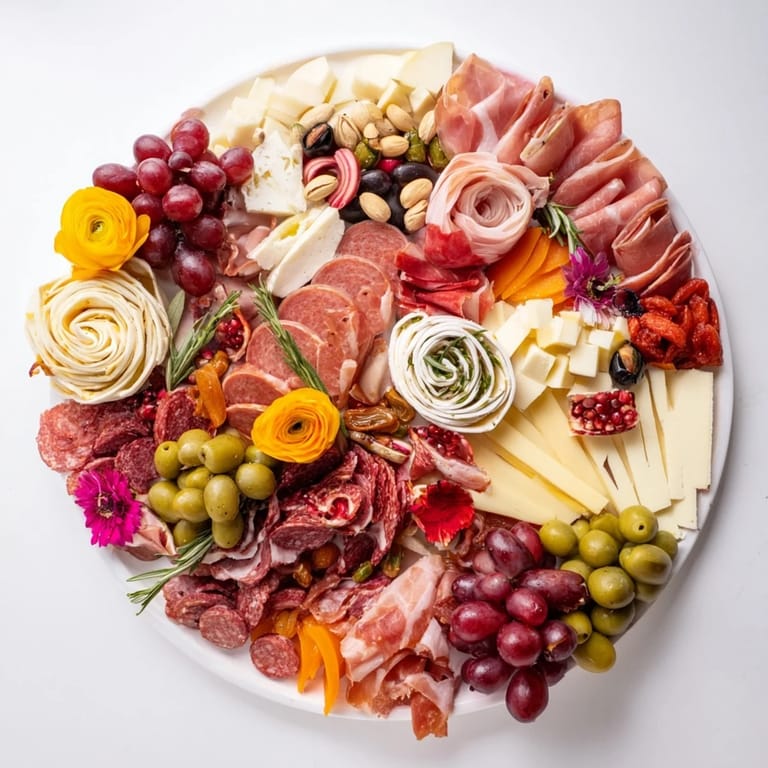
- Provolone (100 g, for sculpting): This is your rose-sculpting champion—pliable enough to fold into tight spirals without cracking, yet firm enough to hold a shape. Choose younger provolone over aged for maximum malleability.
- Red Grapes (1 bunch): Their glossy, jewel-like appearance and natural sweetness provide bright pops of color and palate-cleansing crispness between savory bites.
- Green Grapes (1 bunch): A visual counterpoint to the reds and slightly more subtle in flavor, allowing the grapes to act as color-coding without competing for attention.
- Figs (2, quartered): Fresh figs are a luxury—their deep purple interiors and subtle earthiness connect the board's fresh and dried fruit elements while adding sophisticated visual impact.
- Pomegranate (1, seeded): Jewel-like arils add crunch and brightness. The labor of seeding is worth it for the visual drama and the slight tartness that cuts through rich meats and creamy cheeses.
- Apple (1, thinly sliced): A crisp, slightly tart fruit that pairs beautifully with aged cheeses. Slice just before serving and toss lightly with lemon juice to prevent browning and preserve that just-picked freshness.
- Pear (1, thinly sliced): Sweeter than apple and softer in texture, pear bridges the gap between fresh and dried fruits. Its pale color contrasts nicely with darker elements on the board.
- Dried Apricots (50 g): Concentrated sweet-tart flavor and chewy texture that pairs exceptionally well with aged cheddar and gouda. The burnt-orange color adds warmth to the arrangement.
- Dried Cherries (50 g): Deep burgundy gems that add both color and subtle tannin notes without overwhelming. They're the bridge between savory and sweet, pairing well with sharp cheeses and cured meats.
- Dried Figs (50 g, halved): More concentrated in flavor than fresh figs, these provide earthiness and natural sweetness. They complement soft cheeses like brie and goat cheese beautifully.
- Marcona Almonds (75 g): Butter-roasted Spanish almonds that taste almost candy-like in their richness. They're the luxury nut on any board and worth the premium price for their buttery texture.
- Pistachios (75 g): Their natural color and slightly salty, mineral flavor add sophistication. Unsalted or lightly salted works best so they don't compete with already-salty cured meats.
- Cornichons (75 g): Tiny pickled cucumbers that refresh the palate and cut through fat beautifully. Their bright green color provides visual sparkle, and their acidity is essential for balance.
- Mixed Olives (75 g): Choose a variety—Castelvetrano, Kalamata, and Moroccan olives together create complexity and visual interest. The variety of colors and sizes adds organic movement to the board.
- Roasted Red Peppers (50 g, sliced): Sweet, tender, and deeply colored—roasted red peppers add visual drama and a subtle sweetness that bridges savory and sweet elements on the board.
- Artichoke Hearts (50 g, quartered): Their tender, slightly earthy flavor and pale color provide textural contrast. Arrange them in small clusters to add architectural interest to flatter elements like cheese slices.
- Whole Grain Mustard (100 g jar): The essential condiment that brings everything together with its tangy, slightly grainy warmth. Offer it in its own small bowl so people can choose their proportion.
- Fig Jam (100 g jar): Sweet, concentrated fig flavor that's essential for pairing with aged cheddar and sharp cheeses. It's also the unexpected bridge between dessert and savory that will have guests curious about every pairing.
- Honey (100 g jar): Raw or pasteurized honey drizzled over aged cheeses or served alongside is the final indulgence. Its natural sweetness and luxurious mouthfeel elevate the entire experience.
- Baguette (1, sliced): Use a crispy, crusty baguette sliced diagonally—it's the vehicle for spreading soft cheeses and catching every drop of condiment. Toast it lightly if made ahead to prevent sogginess.
- Assorted Crackers (150 g): Water crackers, seeded crackers, and herb crackers provide variety without overwhelming delicate cheeses. Choose quality over quantity—fewer excellent crackers beat a pile of mediocre ones.
- Grissini (100 g, breadsticks): Slim Italian breadsticks add height and architectural interest to the board. Their crispy texture and subtle sesame or rosemary notes complement the softer elements around them.
- Fresh Rosemary Sprigs: Beyond their culinary function, rosemary sprigs are natural sculpture—their spiky texture and green color add dimension and movement to the board's landscape.
- Fresh Thyme: Delicate thyme sprigs fill gaps and add a whisper of herbal fragrance without competing for attention. They're the finishing touch that says someone cared about every detail.
- Edible Flowers (pansies, nasturtiums): The ultimate luxury garnish that transforms a board from impressive into gallery-worthy. Their jewel-like colors and delicate petals signal maximum intention and effort.
- Microgreens: Their peppery crunch and vibrant colors are the final layer of sophistication. Use them sparingly in small nests to create visual focal points throughout the arrangement.
- Radish Roses: These carved garnishes are the technical challenge that rewards effort—their pink and white striped petals add organic, almost whimsical beauty to geometric cheese arrangements.
Tired of Takeout? 🥡
Get 10 meals you can make faster than delivery arrives. Seriously.
One email. No spam. Unsubscribe anytime.
Instructions
- Create Your Canvas:
- Start with a clean, dry board—I prefer marble for its cool surface and elegant look, though wood works beautifully too. If using wood, wipe it with a barely damp cloth and let it dry completely. Place small bowls for your condiments (mustard, fig jam, honey) in spots that feel natural to your eye, leaving space around them so they become visual anchors rather than clutter. This is where the choreography of the board begins.
- Sculpt Your Cheese Roses:
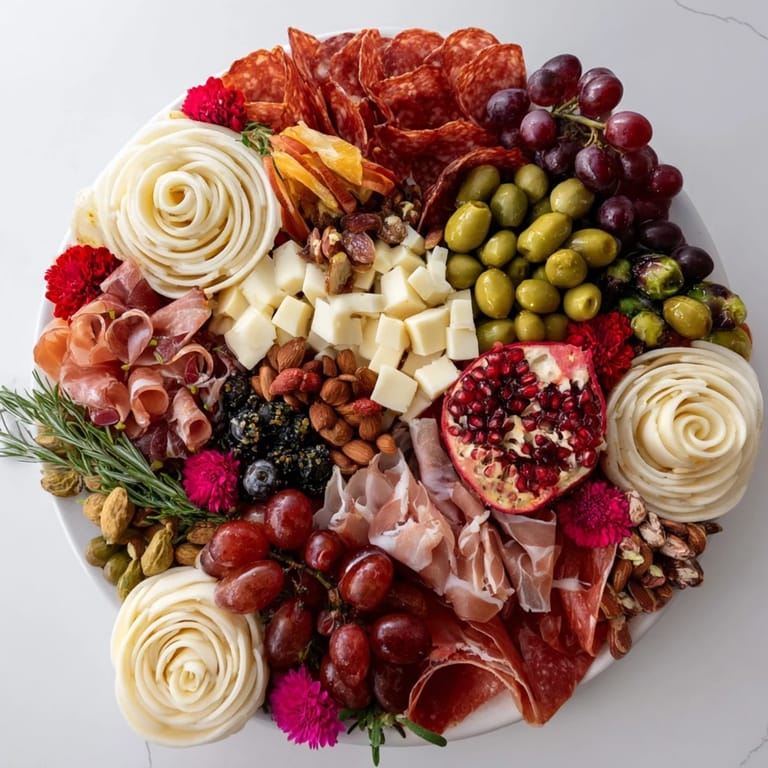
- This is the moment that separates a good board from one that makes people stop mid-conversation. Take a thin slice of provolone and, working gently, roll it into a tight spiral starting from one end. Once you have a snug coil, carefully fan out the outer edges to create petal-like layers. Place these roses on a cool part of your board—if they start to soften, refrigerate the board briefly to reset them. Create at least three or four roses for visual impact. If provolone feels too delicate, manchego works beautifully too. This technique seems intimidating until your second rose, then it becomes meditative.
- Arrange the Cured Meats with Intention:
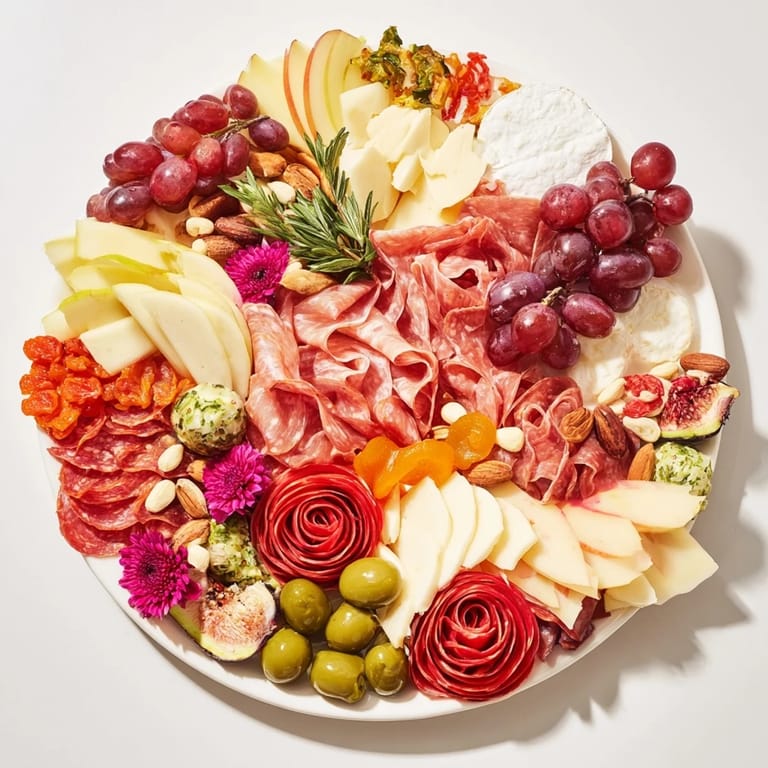
- This is where you become the artist. Rather than laying meats flat and boring, fold them into loose ribbons and ruffles. Think of how fabric drapes—create valleys and peaks. Layer different meats so their colors create visual conversation: the deep pink of soppressata against the pale blush of prosciutto, the spiced red of chorizo nestled beside the fat-studded beauty of mortadella. Let some meats overlap, creating shadows and depth. Fill larger gaps with these meat arrangements, creating a lush, crowded effect that says abundance and care.
- Cut and Position the Cheeses:
- Variety in cut creates visual interest that's harder to achieve than you'd expect. Slice some cheeses into thin wedges, cube others, shatter aged cheddar into irregular shards. Position your cheese roses as focal points, then arrange the other pieces around them like you're building a landscape. Hard cheeses can go almost anywhere; place soft cheeses (brie, goat cheese) in spots where they won't be crushed by arrangement. Leave some breathing room—a board that looks slightly sparse during assembly will feel perfectly full once fruits and nuts are scattered.
- Cluster the Fruits with Color Strategy:
- Grapes work best in small groups of five to seven—they're your punctuation marks, not your sentences. Arrange fresh and dried fruits in loose clusters that create visual rhythm across the board. Red grapes near one corner, then dried apricots in another, then pomegranate arils in a third. This scattered approach feels more organic than evenly distributing everything. Fresh figs and quartered pears create elegant pauses. Slice apples and pears just before the final presentation or toss them lightly with lemon juice so they stay bright and fresh-looking.
- Scatter Nuts and Create Textural Pockets:
- Marcona almonds and pistachios should feel almost accidentally placed, as if you dropped handfuls of jewels across the board. Small bowls for olives and cornichons create functional beauty—they're where people naturally gather as they graze. Artichoke hearts, roasted red peppers, and pickles go into small clustered groups rather than being evenly spread. These elements add texture and freshness that balance the richness of meats and cheeses.
- Fan and Position Your Breads:
- Toasted baguette slices should overlap slightly in one section, creating an almost architectural gesture. Crackers fill the gaps between fuller elements, standing upright when possible so they're visible and accessible. Grissini (breadsticks) can be bundled loosely or fanned like flowers. These are the final structural elements that fill remaining spaces and invite people to build their own bites.
- The Garnish Transformation:
- This is the moment your board transcends into something special. Fresh rosemary and thyme sprigs tuck into gaps and create green highlights that draw the eye. Edible flowers—pansies and nasturtiums—get placed individually where they'll be noticed and admired. Microgreens create small, peppery nests. Radish roses are your grand finale, placed where they'll catch light and make people ask, 'Did you carve those?' The garnishes should feel like a celebration, not an afterthought.
- The Final Assessment and Refrigeration:
- Step back and look at your board as if you're seeing it for the first time as a guest. Are there color clusters that feel too heavy in one area? Can you see different textures throughout? Does it feel abundant but not chaotic? Make small adjustments—shift a group of grapes, add one more cheese rose, tuck an herb spray into a gap. Once you're satisfied, cover the board loosely with plastic wrap and refrigerate until serving time. This keeps everything fresh while allowing the flavors to remain at their peak.
 Save
Save There was an evening when my carefully arranged board became the unexpected hero of a dinner party that wasn't going quite as planned. Conversation had stalled, people felt a bit formal and distant. Then someone reached for a fig and a wedge of aged cheddar, discovered they were magic together, and suddenly everyone was leaning in, asking questions, building combinations, sharing discoveries. What I realized in that moment was that a beautiful board doesn't just feed people—it creates a shared experience and gives them permission to play, explore, and enjoy without pressure. It became the conversation, and that's when I understood why I'd spent an hour sculpting cheese roses.
The Art of Presentation
A charcuterie board is ultimately a canvas for storytelling through flavor and color. The arrangement matters not because of pretension, but because thoughtful presentation shows respect for both the ingredients and the people gathering around them. When I started approaching boards with intentional color placement—keeping warm tones in conversation with cool ones, clustering similar shapes, creating visual rhythm—everything changed. The board became easier to navigate, more visually cohesive, and honestly, more memorable. This is where technical skill meets genuine care, and where you'll discover that presentation amplifies flavor by setting expectations and guiding discovery.
Building the Perfect Bite
One of the great joys of grazing boards is that each person creates their own experience. What pairs beautifully for one person might be unexpected for another, and that's exactly the point. The combination of a Marcona almond, a sliver of aged cheddar, and a dried apricot creates entirely different notes than prosciutto, brie, and a cornichon. By offering variety, you're not just serving food—you're inviting people to be creative. I've watched sophisticated diners turn into kids in a candy store, carefully building combinations, sometimes discovering pairings even the chef hadn't imagined. This is where the board transcends being about ingredients and becomes about joy.
Timing and Logistics
The beauty of a charcuterie board is that it's almost entirely make-ahead. You can arrange everything hours in advance, cover it loosely with plastic wrap, and refrigerate until your guests arrive. The only elements that need last-minute attention are sliced fresh fruits (which brown quickly) and delicate garnishes like edible flowers and microgreens (which can wilt). I usually do a final garnish pass thirty minutes before people arrive, giving myself a buffer for any tweaks while keeping everything fresh. When you're serving a board, you're freed from last-minute cooking stress, which means you can actually be present with your guests instead of being chained to the kitchen.
- Slice fresh fruits just before serving or toss with lemon juice to prevent browning and maintain that just-picked appeal
- Cheese roses can be made up to four hours ahead—they actually firm up beautifully when refrigerated, holding their shape more elegantly than room-temperature versions
- If your board will sit longer than two hours, cover it loosely with plastic wrap to prevent items from drying out while keeping it refrigerated
 Save
Save Creating an Advanced Artisan Array is less about following rules and more about understanding that your care and intention shine through every thoughtful placement. Each time you make one, you'll discover new pairings and arrangements that feel more natural to you. That's the real luxury—not the ingredients, but the relationship you develop with the craft of presentation.
Kitchen Guide
- → How do I create cheese roses?
Use pliable cheeses like provolone sliced thinly. Roll slices tightly into spirals, then fan out the edges to mimic petals.
- → What meats work best for intricate folds?
Thinly sliced cured meats such as prosciutto, soppressata, capicola, and chorizo fold easily and create elegant layered ribbons.
- → How can I keep the board fresh if not serving immediately?
Cover the assembled board tightly and refrigerate. Serve chilled or slightly softened for best texture.
- → What garnishes enhance the board's appearance?
Fresh rosemary, thyme, edible flowers, microgreens, and radish roses add color, aroma, and visual depth.
- → Can I substitute gluten-free options for bread and crackers?
Yes, gluten-free crackers or breads can be used without affecting the overall presentation or taste profile.