 Save
Save There's something magical about discovering that the simplest ingredients can transform into something unexpectedly luxurious. Last summer, while waiting for a friend to arrive at my kitchen, I found myself staring at three overripe mangoes on the counter and a can of coconut milk I'd been saving for an experiment. What started as an improvised attempt to cool down turned into a dessert that made my friend ask for the recipe before she'd even finished her first spoonful. The combination of creamy, tropical ice cream with that satisfying crunch of toasted oats felt like summer captured in a bowl.
I made this for a potluck on an unexpectedly hot afternoon, and watching people's faces light up when they tasted the tropical creaminess mixed with that buttery oat crunch told me everything. Someone actually said it tasted like a dessert from a fancy restaurant, which made me laugh because it came together in about fifteen minutes of active work. That moment solidified it for me—simple doesn't mean forgettable.
Ingredients
- Ripe mangoes (3 large, about 3 cups diced): The sweetness of your mangoes determines whether you need extra syrup, so taste as you blend and adjust to your preference.
- Full-fat coconut milk (1 can, 400 ml): Don't skip the shaking step—the cream separation is exactly what you want for that luxurious texture, and skipping it results in a thinner base.
- Maple syrup (2 tbsp): This rounds out the tropical flavor without adding processed taste; agave works just as well if that's what you have on hand.
- Vanilla extract (1 tsp pure): Pure vanilla makes a noticeable difference here because it plays against the coconut rather than competing with it.
- Salt (pinch): This tiny addition brightens the mango flavor and prevents the dessert from tasting flat or one-note.
- Rolled oats (1/2 cup, certified gluten-free if needed): Don't use instant or steel-cut oats here—rolled oats toast evenly and stay crispy rather than turning to mush.
- Unsweetened shredded coconut (2 tbsp): The unsweetened version is key because the coconut oil and maple syrup provide enough sweetness, and it lets the coconut flavor shine without being cloying.
- Coconut oil (1 tbsp): This helps the oats toast evenly and adds a subtle richness that makes the topping feel restaurant-quality.
- Cinnamon (pinch): A whisper of warmth against the cool, tropical base—don't overdo it or it will overpower.
- Fresh mango slices and mint (for serving): These add color and a fresh brightness that prevents the bowl from feeling too heavy.
Tired of Takeout? 🥡
Get 10 meals you can make faster than delivery arrives. Seriously.
One email. No spam. Unsubscribe anytime.
Instructions
- Blend your tropical base:
- Combine your diced mango, shaken coconut milk, maple syrup, vanilla, and salt in the blender and go until it's completely smooth with no visible mango pieces. If you're using a regular blender rather than a high-powered one, you might need to work in batches so everything actually breaks down properly.
- Freeze with intention:
- Pour the mixture into a shallow freezer-safe container where it'll freeze faster than in something deep, then set a timer to stir every hour for the first four hours. This stirring breaks up ice crystals and gives you that creamy texture that feels like actual ice cream rather than a frozen block—or if you have an ice cream maker, follow its directions and skip the stirring entirely.
- Toast your oat topping:
- Warm coconut oil in a nonstick skillet over medium heat until it's shimmering, then add oats and coconut and stir constantly so nothing browns unevenly or burns. After about four to five minutes when everything smells toasty and golden, drizzle the maple syrup and sprinkle cinnamon and salt, then cook another minute or two until it's crispy and fragrant.
- Cool before serving:
- Let the toasted oat mixture cool completely on a plate or cutting board—it will crisp up as it cools and stays crunchy rather than getting soggy. This step makes the textural contrast work, so don't skip it even though you're eager to eat.
- Assemble and serve:
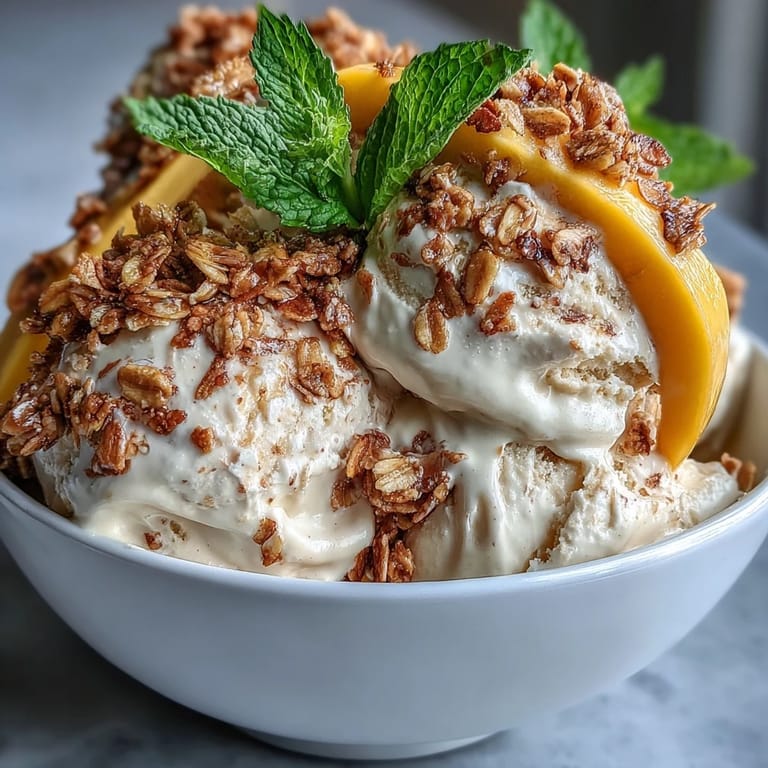
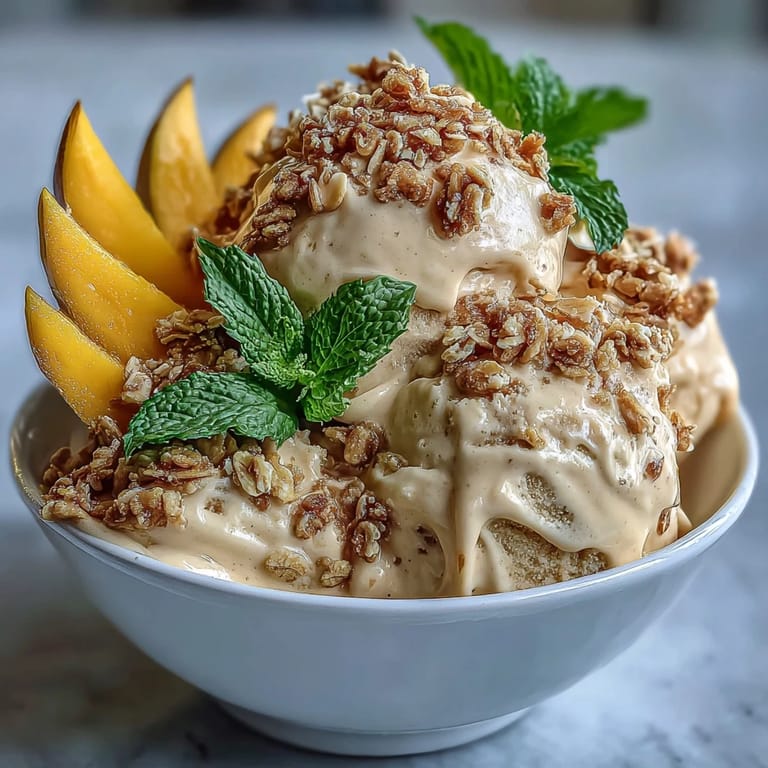
- Scoop the frozen mango coconut mixture into bowls, pile on the toasted oats generously, add fresh mango slices and mint if you're using it, and eat immediately before the ice cream starts to melt too much. The temperature contrast between the frozen base and the room-temperature oats is part of what makes this special.
 Save
Save What struck me most was realizing that this dessert works because it respects each element—the mango isn't trying to be complicated, the coconut knows its place, and the oats are there to surprise you with that contrast. That simplicity is actually what makes it feel elegant.
Why Toasted Oats Matter More Than You'd Think
The first time I made this without the oat topping, it was fine—tropical, creamy, refreshing. But it lacked something, and I couldn't figure out what until I added those golden, cinnamon-dusted oats and suddenly the whole experience changed. The crunch against the smooth ice cream, the nuttiness of toasted grains against the bright tropical flavor—it transformed from a nice frozen treat into something you actually want to sit with and savor. That textural contrast is what separates this from just pureeing fruit and freezing it.
The Freezing Timeline and What to Expect
The first two hours of freezing will look like almost nothing has happened, and you'll start to doubt yourself while standing in front of the freezer. By hour three, you'll see the edges firming up while the center stays soft, which is exactly what you want because it means uneven freezing is happening in a way that creates that scoop-able consistency rather than a solid block. The fourth hour is when patience pays off—the mixture sets enough to hold a shape, but it's still creamy enough that you don't need a jackhammer to serve it.
Variations and Seasonal Swaps
I've made this with peaches in late summer when mangoes disappeared, and it was equally wonderful—the toasted oats worked just as well with that stone fruit sweetness. You can experiment with berries too, though berries tend to be more tart so you might need an extra half tablespoon of maple syrup to balance them. The coconut base is flexible enough to shine with almost any fruit you have on hand, which makes this recipe feel like permission to use whatever's ripe.
- Frozen mango chunks added to the blender instead of fresh will give you an even creamier texture without the long stirring process.
- Swapping the rolled oats for chopped nuts would work if you need to avoid grains, though the texture won't be quite the same.
- If you want extra coconut richness, you can use coconut yogurt mixed into the base, though reduce the maple syrup slightly to prevent overwhelming sweetness.
 Save
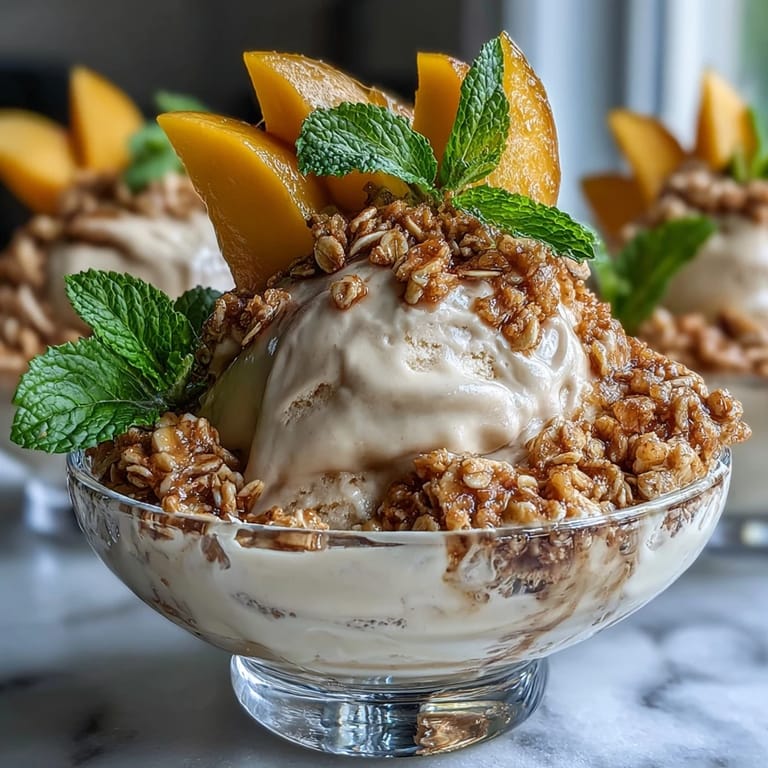
Save This is the kind of dessert that makes people think you spent way more time and effort than you actually did, which is perhaps the best kind of recipe to have in your back pocket. Serve it with confidence and watch what happens.
Kitchen Guide
- → How do I achieve a smooth, creamy texture?
Blend ripe mangoes thoroughly with coconut milk and sweeteners until completely smooth. Stir occasionally during freezing to enhance creaminess.
- → Can I substitute maple syrup with another sweetener?
Agave syrup works well as an alternative, providing a mild sweetness without altering texture significantly.
- → What’s the best way to toast the oats?
Use a nonstick skillet over medium heat, adding coconut oil first, then oats and shredded coconut. Stir frequently until golden and fragrant.
- → Can I prepare this in advance?
Yes, prepare and freeze the mango coconut mixture ahead of time. Toast oats closer to serving for maximum crunch.
- → Are there any allergy considerations?
Ensure oats are certified gluten-free if needed. Coconut is a tree nut allergen for some individuals, so check accordingly.