 Save
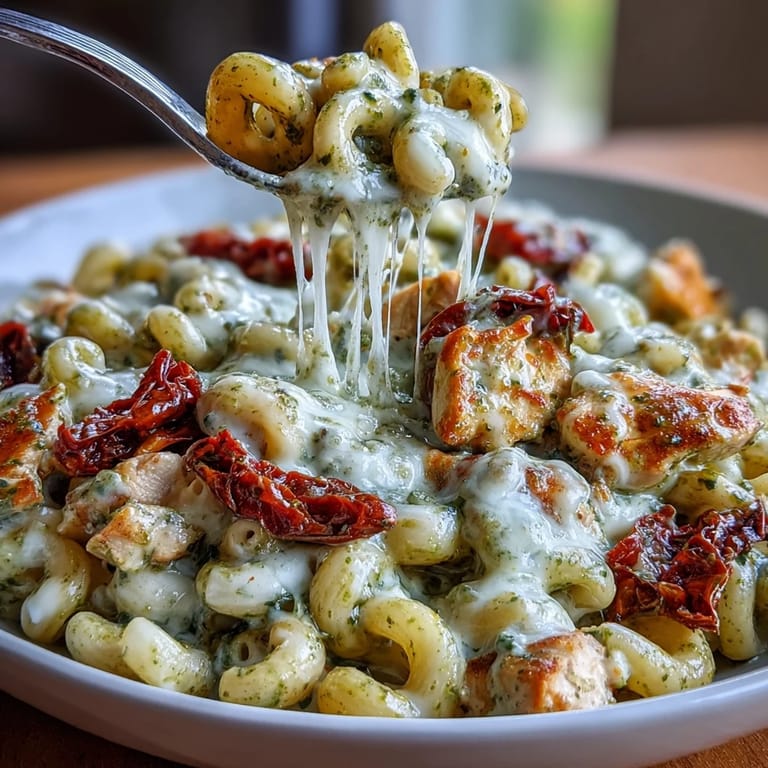
Save My neighbor showed up one Tuesday evening with a jar of homemade pesto and a confused look, asking if I could help her use it before it went bad. I had chicken thawing and a box of elbow macaroni in the pantry, so I started improvising. What came together that night was nothing short of magic—a warm, cheesy pot of comfort that tasted like someone had merged an Italian kitchen with a cozy chili night. My family asked for seconds before I'd even finished plating, and I knew this had to become a regular in our rotation.
I made this for a friend who had just moved into her first apartment and wanted to impress someone over dinner. She was terrified of cooking, convinced she'd mess it up somehow, but watching her stir that pesto into the bubbling pot and see the kitchen fill with that green, herbaceous aroma—she relaxed. When her guest took that first bite and genuinely smiled, the look on her face was worth more than any perfect plating could ever be.
Ingredients
- Boneless, skinless chicken breast or thighs (1 lb): Thighs stay juicier and more forgiving if you're not watching the clock, though breasts work beautifully too—just don't overcook them.
- Elbow macaroni (8 oz): Short pasta shapes hold onto the creamy pesto sauce better than long noodles ever could.
- Yellow onion (1 medium), diced: This is your flavor foundation, so take a breath and let it soften completely before moving forward.
- Garlic (2 cloves), minced: Fresh garlic makes all the difference here; jarred will make you regret it after the first bite.
- Sun-dried tomatoes (1/2 cup), drained and chopped: These add a concentrated tang and slight chewiness that regular tomatoes just can't match.
- Diced tomatoes (1 can, 15 oz), with juices: Don't drain these—their liquid becomes part of your broth and keeps everything from drying out.
- Shredded mozzarella cheese (1 cup): Use whole milk mozzarella if you can; it melts creamier than the low-moisture stuff.
- Grated Parmesan cheese (1/4 cup): This adds a sharp, nutty note that balances the sweet basil perfectly.
- Basil pesto (1/3 cup): Store-bought works, but homemade pesto you made yourself tastes like a tiny victory every time you stir it in.
- Chicken broth (2 cups): Use the good kind if you have it; it's the backbone holding everything together.
- Dried oregano (1/2 tsp): This ties the Italian flavors together without overpowering anything.
- Crushed red pepper flakes (1/4 tsp), optional: Add them if you like a gentle heat that builds rather than shocks.
- Salt and freshly ground black pepper, to taste: Taste as you go—this is your final say on flavor.
- Olive oil (2 tbsp): Good enough to cook with, not so fancy it makes you nervous to heat it.
Tired of Takeout? 🥡
Get 10 meals you can make faster than delivery arrives. Seriously.
One email. No spam. Unsubscribe anytime.
Instructions
- Get your chicken golden:
- Heat olive oil in your pot over medium heat until it shimmers slightly, then add chicken pieces. Let them sit undisturbed for a couple minutes so they develop a light golden crust—resist the urge to poke at them constantly. Once they're browned on the outside, transfer to a plate while you build the rest.
- Soften your aromatics:
- In the same pot, add diced onion and let it cook down for a few minutes until it starts turning translucent and sweet. You'll know it's ready when the raw bite is completely gone and you can smell nothing but caramelizing onion.
- Wake up the sun-dried tomatoes:
- Stir in minced garlic and chopped sun-dried tomatoes, letting them warm through for just a minute. This is where your kitchen starts smelling like an Italian trattoria, and you'll know you're on the right track.
- Build your broth:
- Return the chicken to the pot, then pour in the canned tomatoes with all their juices, chicken broth, oregano, red pepper flakes, and a pinch of salt and pepper. Stir everything together so it's evenly distributed, then bring it to a gentle boil.
- Cook the pasta together:
- Stir in your pasta, reduce heat to a simmer, cover the pot, and let it bubble away for 10 to 12 minutes. Stir it every few minutes so nothing sticks to the bottom and the pasta cooks evenly—this is not a set-and-forget situation.
- Finish with pesto and cheese:
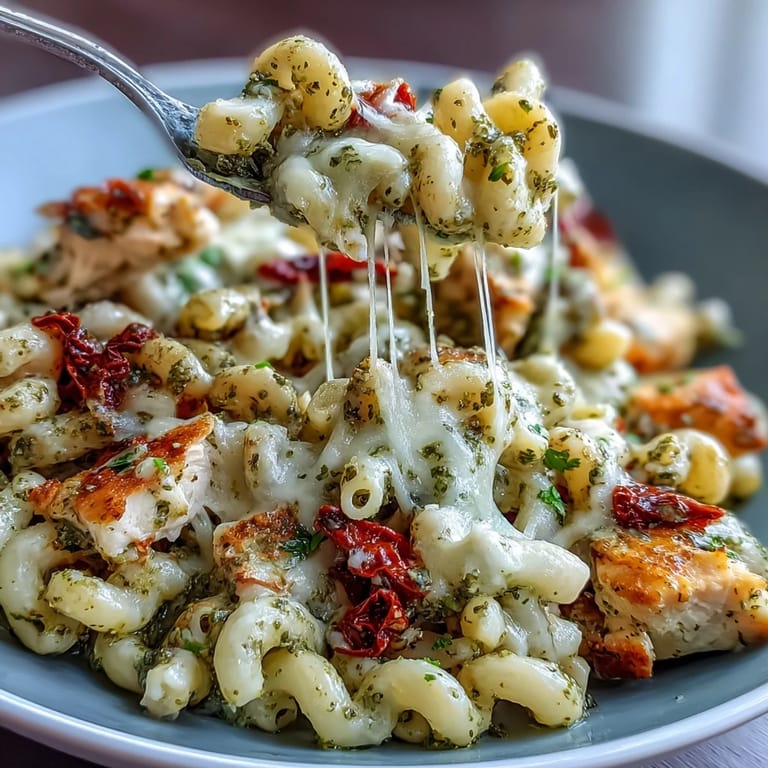
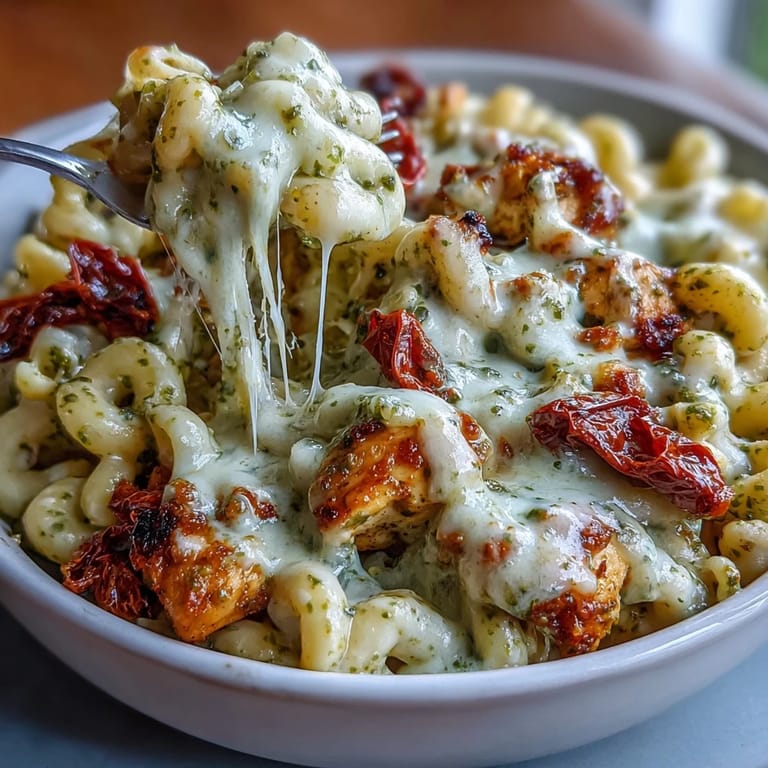
- When the pasta is tender and the chicken is fully cooked through, remove from heat and stir in the pesto first so it distributes evenly. Then add mozzarella and Parmesan, stirring gently until the cheese melts into a creamy, luxurious sauce that coats every piece of pasta.
- Taste and adjust:
- Take a spoon and actually taste it. Does it need more salt, more pepper, or maybe a touch more pesto? This final adjustment is what separates good from memorable.
 Save
Save There's something about watching people's faces when they realize this casual weeknight dinner tastes like you've been working on it all afternoon. That moment when someone asks for the recipe and you get to write it down for them feels like you've just shared a little piece of your kitchen with theirs.
Why This Works as One-Pot Magic
The genius of cooking everything in one pot is that the pasta absorbs all the flavors simmering around it—the oregano, the garlic, the richness of the pesto. Nothing gets diluted or separated; it all comes together in one place. When the mozzarella melts into that warm broth and pasta, it creates a sauce that feels like you made stock from scratch, even though you didn't.
The Pesto Question: Store-Bought vs. Homemade
I'll be honest—store-bought pesto saves enormous amounts of time and tastes genuinely good. But if you've got fifteen minutes and a food processor, making your own pesto is a different kind of satisfying. The chlorophyll is brighter, the basil flavor more pronounced, and you get to feel that quiet pride knowing you made something from actual leaves.
Variations and Personal Touches
This dish is forgiving enough to adapt to whatever you have on hand and whatever you're craving. I've made it with ground turkey when I didn't have chicken, thrown in handfuls of fresh spinach right at the end, and even swapped half the mozzarella for fontina once because that's what was in my fridge. The skeleton stays the same, but the details are yours to play with.
- Swap in ground chicken or turkey if you want something with a different texture that cooks even faster.
- Add fresh spinach or kale just before stirring in the pesto so it wilts into the heat without getting tough.
- Use gluten-free pasta if that matters to your table, and the dish tastes just as good—nobody will know the difference.
 Save
Save This recipe has quietly become the thing I make when I want comfort but don't want to spend hours in the kitchen. It proves that simple ingredients, when they know each other well, make something worth remembering.
Kitchen Guide
- → Can I substitute ground chicken for diced chicken?
Yes, ground chicken or turkey can be swapped for diced chicken for a slightly different texture without affecting the overall flavor.
- → Is it possible to make a gluten-free version?
Absolutely, using gluten-free pasta ensures this dish remains safe for gluten-sensitive individuals while keeping the intended texture.
- → What type of pesto works best in this dish?
Both store-bought and homemade basil pesto provide the signature herbal richness, but choosing a fresh, high-quality pesto enhances flavor depth.
- → How can I add more vegetables to this meal?
Incorporating spinach or kale near the end of cooking adds extra greens and nutrition without overpowering the dish.
- → What wines pair well with this meal?
Crisp white wines like Pinot Grigio complement the creamy, herbaceous flavors and balance the richness.