 Save
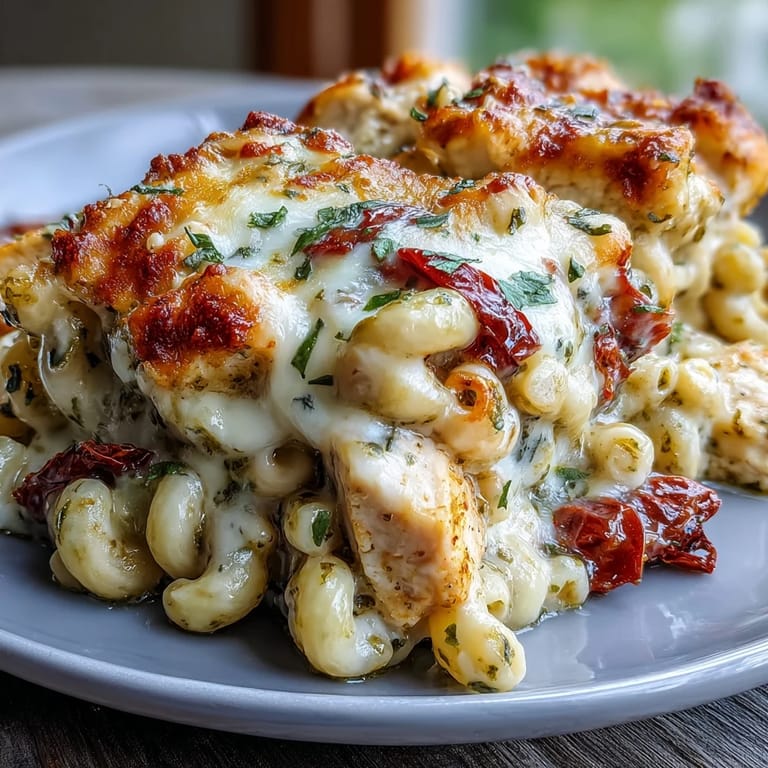
Save My neighbor brought over a jar of homemade pesto one late summer evening, and I had no idea what to do with it beyond the usual pasta. That night, staring at chicken thawing on the counter and leftover sun-dried tomatoes in the pantry, I got curious. What if I combined everything into one pot instead of overthinking it? The result was this warm, creamy, utterly satisfying bowl that somehow felt both Italian and comfortingly American at the same time. Now it's become my go-to when I want something hearty but still feel a little fancy.
I made this for friends who were skeptical about my experiment, and watching them go back for seconds while barely pausing for breath told me everything I needed to know. Someone even asked if I'd been holding out on them this whole time. That's when I realized this wasn't just a recipe I'd invented on a whim—it was actually something special, the kind of dish that brings people together without requiring you to spend all evening in the kitchen.
Ingredients
- Elbow macaroni or small pasta shells, 340 g (12 oz): The smaller shapes catch the pesto and sauce beautifully, so skip the long thin pastas and go for something that cradles the flavors.
- Boneless, skinless chicken breast, 450 g (1 lb), diced: Cut yours into bite-sized pieces so they cook evenly and don't steal the show—they're the supporting player here.
- Yellow onion, 1 medium, diced: The sweet foundation that makes everything else taste like home.
- Garlic cloves, 3, minced: Don't skip mincing these fresh; jarred garlic just doesn't have the same punch.
- Red bell pepper, 1, diced: Adds color and a gentle sweetness that balances the tang of tomatoes.
- Oil-packed sun-dried tomatoes, 120 g (½ cup), drained and chopped: These are the hidden depth charge—they bring concentrated tomato flavor and a slight chewiness that transforms the whole dish.
- Canned diced tomatoes, 400 g (14 oz), undrained: Use the juice too; it's flavor you'd otherwise waste.
- Shredded mozzarella cheese, 180 g (1½ cups): This is your creamy finish, so don't skimp on quality—good mozzarella melts into silky ribbons.
- Grated Parmesan cheese, 60 g (¼ cup): A sharp counterpoint to all that richness; it's the voice that keeps everything from being too heavy.
- Prepared basil pesto, 120 g (½ cup): Your choice here—store-bought is fine, but homemade pesto tastes like actual sunshine.
- Low-sodium chicken broth, 720 ml (3 cups): Low-sodium lets you control the salt and taste what's really happening in the pot.
- Olive oil, 2 tbsp: Use something you don't hate the taste of, because you'll taste it.
- Italian seasoning, 1½ tsp: The glue that holds the Italian-American fusion together.
- Crushed red pepper flakes, ½ tsp (optional): A whisper of heat if you like things spicy; leave it out if you don't.
- Salt and freshly ground black pepper, to taste: Taste as you go and trust your palate over any instruction.
Tired of Takeout? 🥡
Get 10 meals you can make faster than delivery arrives. Seriously.
One email. No spam. Unsubscribe anytime.
Instructions
- Get Your Pasta Started:
- Bring a large pot of salted water to a rolling boil—make it taste like the sea. Drop in your pasta and cook it until it's just shy of tender, about a minute or two before the package says it's done, because it's going to finish cooking in the sauce later.
- Sear the Chicken Golden:
- While the water's heating, warm olive oil in your Dutch oven or deep skillet over medium-high heat until it shimmers. Add your diced chicken, season it generously, and let it sit undisturbed for a minute so it gets color instead of steaming itself. Once it's golden on the outside and cooked through, move it to a waiting plate.
- Build the Flavor Base:
- In the same pot, add your diced onion and bell pepper, stirring occasionally until they soften and start releasing their sweetness. This takes about four minutes, and you'll know it's right when the onion turns translucent.
- Wake Everything Up:
- Add your minced garlic and let it toast for just a minute—any longer and it turns bitter. Then stir in the sun-dried tomatoes, Italian seasoning, and red pepper flakes if you're using them, cooking for another minute until the whole pot smells incredible.
- Bring It All Together:
- Pour in your canned tomatoes with all their juice and the chicken broth, stirring to combine. Bring this to a gentle simmer and return your cooked chicken to the pot.
- Marry the Pasta and Sauce:
- Drain your pasta and add it to the pot along with your pesto, stirring gently so everything gets coated. Let it simmer for three to four minutes so the flavors actually get to know each other. Taste and adjust your seasoning—be honest with yourself about what it needs.
- Make It Creamy:
- Remove from heat and stir in both cheeses until they melt into a silky, luxurious sauce. If it looks too thick, add a splash of broth; if it's too thin, just let it sit for a minute and it'll come together.
 Save
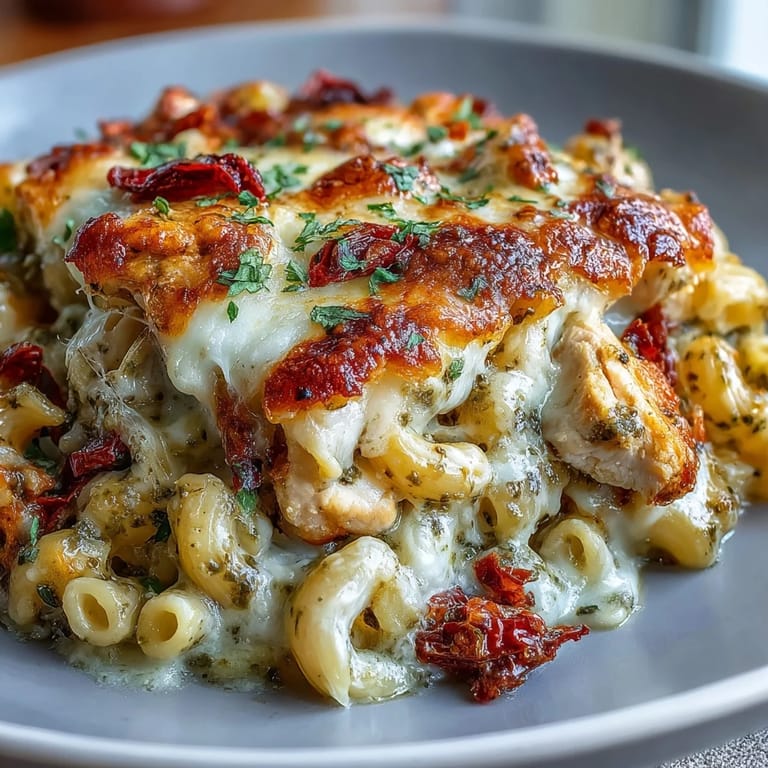
Save There's something almost magical about the moment when pesto hits hot sauce and creates this gorgeous green swirl through the red. It's not just a dish at that point; it's proof that sometimes the best things happen when you stop following rules and just cook what makes you happy.
The Pesto Question
Store-bought pesto works perfectly fine here, but if you ever get the chance to make your own, even just once, you'll understand why people become pesto snobs. Fresh basil, good olive oil, garlic, pine nuts if you want them, Parmesan, lemon juice—blended together in five minutes—tastes like bottled sunshine compared to most jarred versions. That said, life is busy, and a good quality store-bought pesto that you actually like is infinitely better than homemade pesto made with resentment. Use what makes you smile.
Stretching It and Making It Your Own
This recipe is built to be flexible, which is honestly my favorite kind of recipe to cook from. Some nights I stir in a handful of baby spinach right at the end—it wilts from the residual heat and adds a bright color and subtle earthiness. If I've got fresh basil, I'll tear some over the top just before serving so it doesn't get cooked away. And if I'm feeling fancy, a squeeze of fresh lemon juice right before eating cuts through the richness and makes everything taste more alive.
Timing and Temperature Tips
The whole magic of this dish is that it comes together quickly without feeling rushed or careless. Keep your heat at a gentle simmer once you've added the broth—aggressive boiling will break down your pasta and turn everything mushy. Watch the pot, taste as you go, and remember that seasoning is personal. What tastes perfect to me might need more salt or pepper for you, and that's completely fine.
- Set a timer for the pasta so you don't walk away and forget it—al dente waits for no one.
- Stir the pot every minute or so during the final simmer to make sure nothing's sticking to the bottom.
- If you're making this ahead, store it in the fridge and reheat gently with a splash of broth to bring back the creamy texture.
 Save
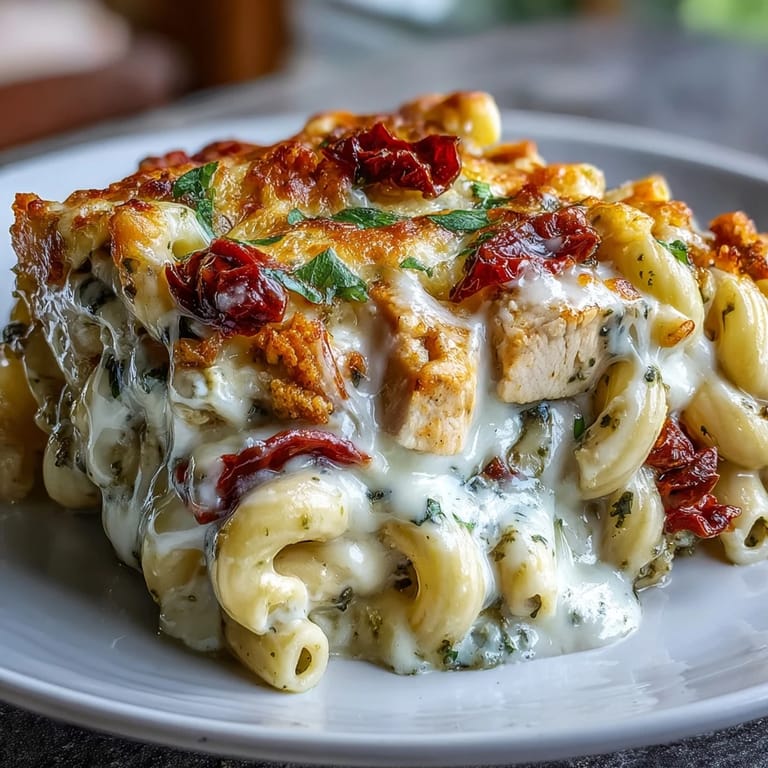
Save This is the kind of dish that feels like you spent all day cooking when really you've been from start to finish in less than an hour. It's warm, it's satisfying, and it reminds you why home cooking is worth the effort.
Kitchen Guide
- → Can I make this ahead of time?
Yes, this dish reheats beautifully. Store in an airtight container in the refrigerator for up to 3 days. The pasta will absorb more liquid as it sits, so add a splash of chicken broth when reheating to restore creaminess.
- → What pasta shapes work best?
Elbow macaroni and small pasta shells are ideal because they hold the sauce well in their curves. Other short pasta like penne, rotini, or fusilli also work. Avoid long strands like spaghetti as they don't capture the chunky sauce effectively.
- → Can I use rotisserie chicken?
Absolutely. A store-bought rotisserie chicken works perfectly and reduces prep time. Simply shred or dice about 3 cups of meat and add it during step 6 when combining ingredients, skipping the initial chicken cooking step.
- → Is this freezer-friendly?
Yes, freeze in portioned containers for up to 2 months. Thaw overnight in the refrigerator before reheating. Note that the pasta texture may soften slightly after freezing, but the flavors remain excellent.
- → What can I substitute for pesto?
If avoiding nuts or basil, try a sun-dried tomato paste mixed with olive oil and garlic, or a drizzle of high-quality olive oil with extra Italian seasoning. For a dairy-free version, use nutritional yeast instead of Parmesan.
- → How do I adjust the spice level?
The red pepper flakes provide adjustable heat. Start with ¼ teaspoon for mild warmth, or omit entirely. For more spice, increase to 1 teaspoon. Adding a pinch of cayenne pepper offers a different heat profile.