 Save
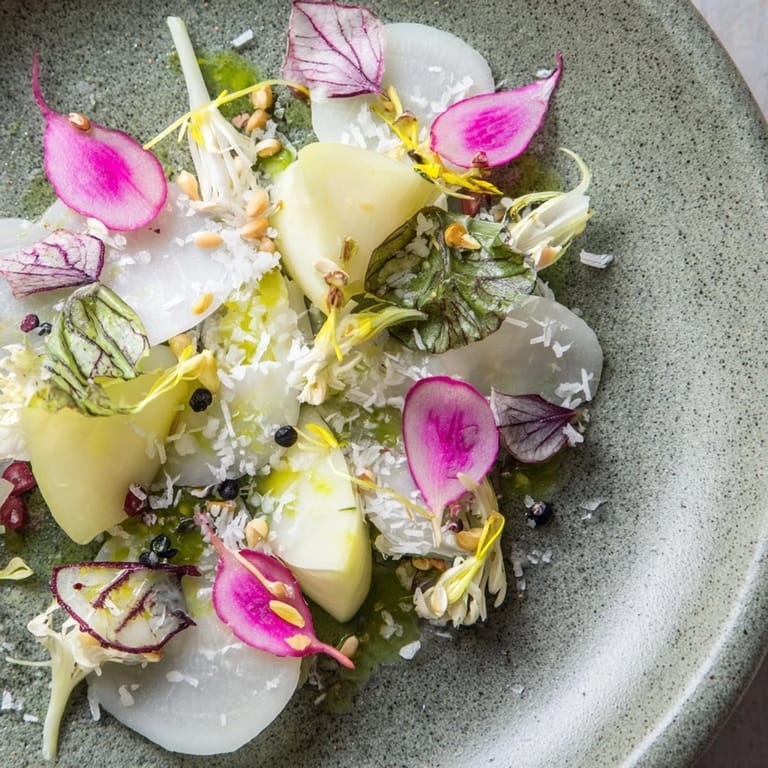
Save I discovered this dish on a gray afternoon when I was staring at my vegetable drawer, overwhelmed by the pale winter roots that seemed to mock my indecision. Then something clicked—the idea of arranging them not as food, but as a landscape, scattered and deliberate like frost patterns on glass. The first time I plated it on a cold stone, I realized I wasn't just making a salad; I was creating a moment of stillness on the plate.
My sister arrived unexpected on a winter evening, and I had nothing but time and scattered ingredients. I pulled that stone from the freezer, and as I arranged the pale vegetables in silence, she sat at the counter watching without speaking. When I finally drizzled the dressing, she said it looked like something from a gallery—and then she tasted it and laughed because it was so simple, so refreshing, that it felt like a secret I'd been keeping.
Ingredients
- Daikon radish: Slice it paper-thin on a mandoline if you have one; the sweetness and crunch anchor the entire dish and keep the cold stone's temperature alive longer than thicker vegetables.
- Kohlrabi: Often overlooked, this pale bulb has a delicate, almost cabbage-like texture that's essential to the visual landscape you're building.
- Belgian endive: Use the leaves whole; they're elegant, slightly bitter, and provide structure as you scatter them across the stone.
- Cauliflower florets: Chop these finely into tiny pieces; they mimic frozen tundra flowers and add earthiness without overpowering the delicate white palette.
- Unsweetened coconut flakes: These bring a subtle sweetness and interesting texture that echoes the sparse beauty of arctic vegetation.
- White and black sesame seeds: Toast the white ones lightly to unlock their nutty flavor; use black seeds for visual contrast and depth.
- Microgreens: Pea shoots or radish sprouts add a final burst of freshness and living green against the pale frozen tones.
- Flaky sea salt: This is your last layer, sprinkled just before serving to catch the light and season to taste.
- Extra-virgin olive oil: A quality oil matters here because it's barely cooked and carries the entire dressing's character.
- Fresh lemon juice and white wine vinegar: Together they create a bright, clean acidity that doesn't overpower the delicate vegetables.
- White pepper: Use this instead of black; it's milder and keeps the monochromatic aesthetic intact while still warming the palate.
Tired of Takeout? 🥡
Get 10 meals you can make faster than delivery arrives. Seriously.
One email. No spam. Unsubscribe anytime.
Instructions
- Chill your canvas:
- Place a large, clean stone or marble platter in the freezer for 15 minutes. This isn't just about temperature—a cold surface keeps every vegetable crisp longer and creates a dramatic contrast when the dressing hits it.
- Mix the dressing:
- Whisk together olive oil, lemon juice, white wine vinegar, and white pepper in a small bowl. The dressing should smell bright and lemony, not aggressive; if it tastes too sharp, add a tiny splash more oil to round it out.
- Scatter the foundation:
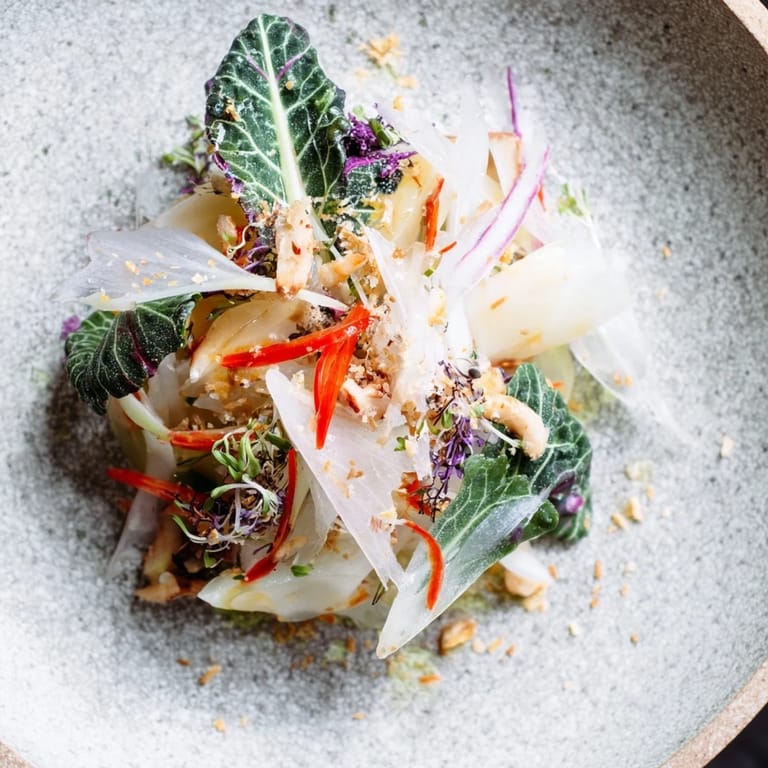
- Arrange daikon, kohlrabi, and endive leaves across the chilled stone in a loose, almost careless pattern. Think windswept, not organized—leave gaps, let leaves overlap, make it feel discovered rather than designed.
- Layer the textures:
- Sprinkle cauliflower florets, toasted coconut flakes, and both sesame seeds across the arrangement in random clusters. Step back and look at it; you're creating visual rhythm, not even coverage.
- Dress lightly:
- Drizzle the dressing in a thin stream over the vegetables, focusing on the pale centers and letting some gather in the gaps. Too much and the crispness surrenders; too little and the flavors stay distant.
- Finish and serve:
- Top with microgreens and a pinch of flaky sea salt just before bringing it to the table. The salt catches light and season brings everything into focus at the last moment.
 Save
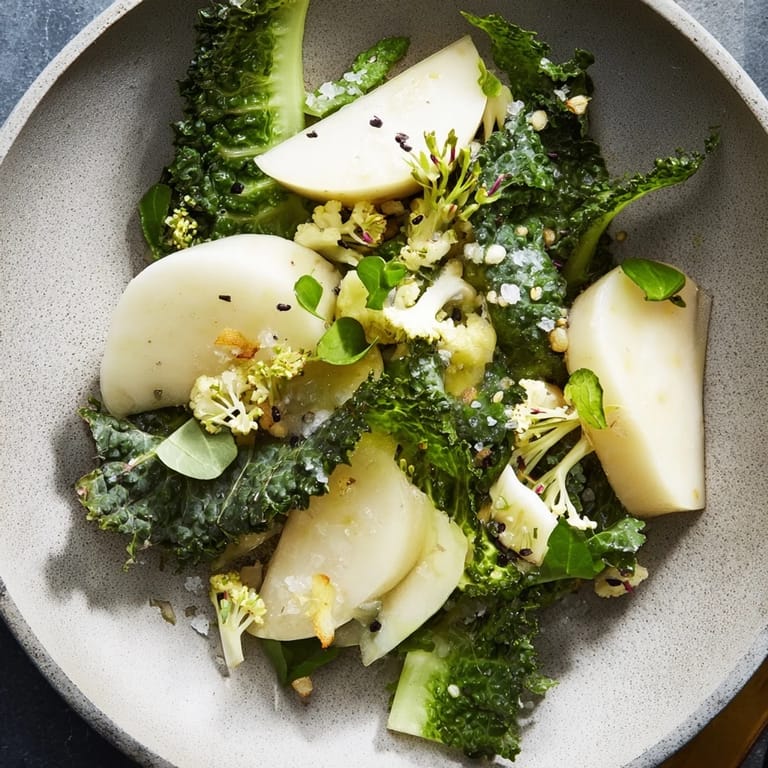
Save The magic of this dish happens in the silence between plating and serving. I watched someone pick up a single daikon slice, look at how it caught the light on the cold stone, and smile before eating it. That's when I understood—this dish asks people to pause and really see their food.
The Art of Minimalist Plating
There's a discipline to scattering vegetables on a stone without it looking chaotic. The key is negative space—let the cold surface show through, let the eye rest on empty areas between clusters. When you're arranging, trust your instinct more than your planning. Symmetry feels false here; asymmetry feels alive.
Variations and Additions
This recipe is a frame waiting for your ingredients. In spring, add crisp radish roses and tender spring pea shoots; in autumn, introduce thin slices of raw apple or pear for sweetness. For protein, scatter chilled poached shrimp or smoked whitefish across the top just before serving. If you want deeper complexity, swap the white wine vinegar for yuzu juice or rice vinegar—each shifts the entire mood of the dish without changing its skeleton.
Serving and Pairing
Serve this immediately after assembly on a cold stone that still holds the chill from the freezer. The temperature is as much a part of the eating experience as the flavors. Pair it with chilled aquavit or a crisp dry white wine—something Nordic and cool that echoes the landscape you've built on the plate. This is the kind of dish that makes people slow down and really taste.
- If your stone warms during service, refresh it in the freezer for 5 minutes between servings.
- Prep all vegetables separately and keep them in cold water until assembly to maintain their crispness.
- Let guests serve themselves directly from the stone platter to preserve the composed aesthetic as long as possible.
 Save
Save This dish taught me that sometimes the most elegant food isn't about complexity—it's about clarity and temperature and the way light plays across a cold surface. Make it when you want to slow down and really see what you're eating.
Kitchen Guide
- → What vegetables are used in the Tundra Trek?
Thinly sliced daikon radish, kohlrabi, Belgian endive leaves, and finely chopped cauliflower florets provide crispness and subtle flavors.
- → How is the dish plated to evoke the tundra?
Vegetables are sparsely arranged over a chilled stone or marble platter to resemble scattered tundra flora, enhanced by random sprinkling of garnishes.
- → What ingredients provide texture in this dish?
Toasted white and black sesame seeds, unsweetened coconut flakes, and microgreens add crunch and layered textures.
- → What dressing complements the flavors?
A light dressing made from extra-virgin olive oil, fresh lemon juice, white wine vinegar, and white pepper balances and brightens the salad.
- → Can this dish accommodate dietary restrictions?
Yes, it is naturally vegetarian and gluten-free, but contains sesame and coconut, which may be allergens for some.
- → Are there suggested variations or pairings?
For added depth, consider smoked whitefish or chilled shrimp. Pair with chilled aquavit or dry white wine for Nordic inspiration.