 Save
Save My kitchen always seems brightest on the mornings I decide to make a lemon curd tart. It’s not just about the sunlight catching the glossy surface, but the lively zing of lemon zest fills every corner—and my cat usually decides this is the best time to perch on the windowsill and keep me company. There’s a special sort of focus required to whisk curd to the right consistency, one I find both grounding and exhilarating. Once, the clink of my rolling pin startled a songbird outside, and for a moment, I felt like the whole spring day was helping me bake. And there’s something quietly triumphant about capping it all with edible flowers—almost as if I’d persuaded the season itself onto my plate.
Last year, a friend brought over a bouquet of fresh pansies, and we spent the afternoon baking this tart to celebrate the first really warm Sunday of spring. We decorated the finished dessert together, both of us fussing over flower placement far longer than necessary, laughing as our fingers grew sticky with lemon and sugar.
Ingredients
- All-purpose flour: Choose a fresh, unbleached variety for the best flavor and structure—I’ve found chilling it slightly helps with forming a tender, shortbread-like crust.
- Unsalted butter: Use very cold butter and cut it into cubes; working quickly with it preserves those pockets of flakiness in the tart base.
- Powdered sugar: I sift it to avoid lumps for a more delicate crumb in the shell.
- Egg yolk: This enriches the dough, giving you that golden, melt-in-your-mouth bite — just separate cold eggs for easier handling.
- Cold water: Add sparingly until the dough just comes together; it's tempting to add more, but less means crisper pastry.
- Salt: Don’t skip the salt—even a pinch makes the crust’s flavors sing.
- Eggs: Room temperature eggs for the curd blend more easily and thicken more evenly.
- Granulated sugar: Fine sugar dissolves smoothly into the curd—don’t use caster sugar, which can be too fine for controlling texture.
- Lemon zest: I zest straight over the bowl to catch all those fragrant oils; only the yellow, never the bitter white pith.
- Fresh lemon juice: Fresh-squeezed makes all the difference—bottled lemon juice just doesn’t sparkle in the same way.
- Unsalted butter (for curd): Add in cold cubes at the end, whisking to create that signature silkiness.
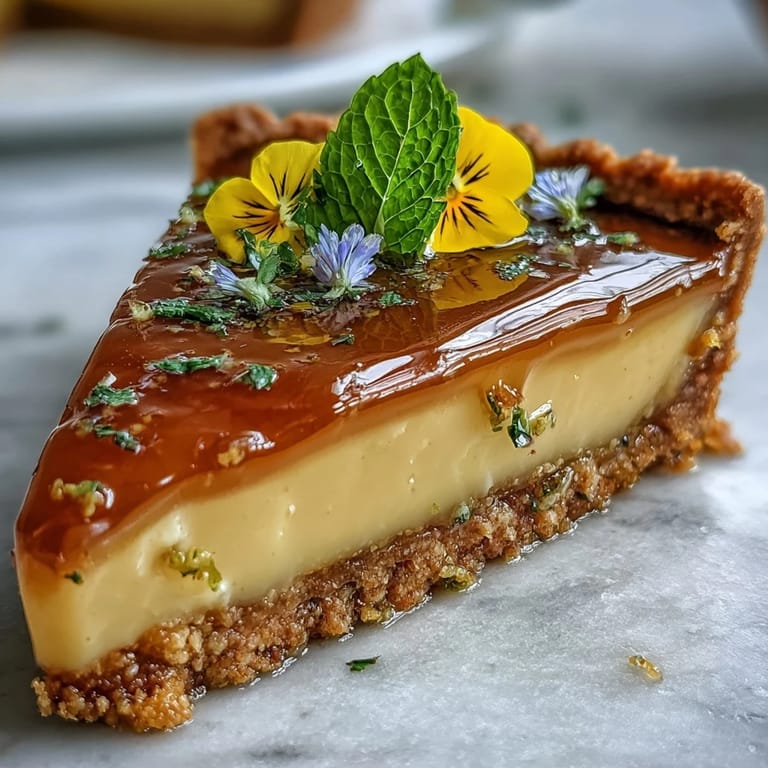
- Edible flowers: Choose organic blooms meant for eating—rinse gently and pat dry to avoid bruising petals.
- Fresh mint leaves (optional): A sprig or two brings color and a cool aroma that pairs beautifully with the tart citrus.
Tired of Takeout? 🥡
Get 10 meals you can make faster than delivery arrives. Seriously.
One email. No spam. Unsubscribe anytime.
Instructions
- Start the pastry:
- We’ll pulse the flour, powdered sugar, and salt in your food processor—pause to enjoy the gentle floury scent—then add in the cold butter, watching it transform to sandy crumbs before you tip in the yolk and a splash of cold water.
- Bring the dough together:
- Press it into a disk with lightly floured hands and wrap it up snugly, then set it to rest in the fridge while you imagine how lovely that golden crust will taste.
- Roll and parbake:
- After chilling, roll the dough on a floured surface and drape it into your tart pan—press gently, patching up cracks as you go, then chill again briefly so everything holds its shape in the oven.
- Blind bake:
- Line the shell with parchment and fill with pie weights, baking until it turns blonde with just a bit of edge color; when you pull it out for the final bake, take a moment to admire its crispness.
- Make the lemon curd:
- In your saucepan, whisk the eggs, sugar, lemon zest, and juice, feeling the mixture loosen and thicken with every pass; patience pays off here, as it quietly transforms to a glossy, pudding-like curd.
- Emulsify and strain:
- Take the pot off the heat and briskly whisk in cold butter cubes, then press the curd through a sieve so only pure silk makes it to your tart.
- Fill and chill:
- With the shell cooled, pour in the lemon curd, smoothing it out carefully—pop the whole thing into the fridge and let anticipation build for an hour or more.
- Decorate and serve:
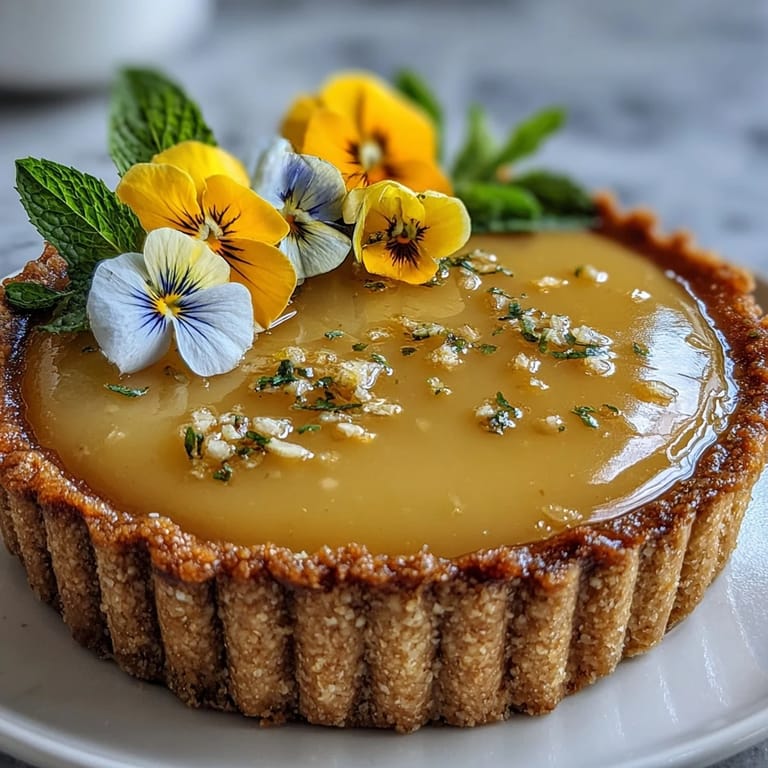
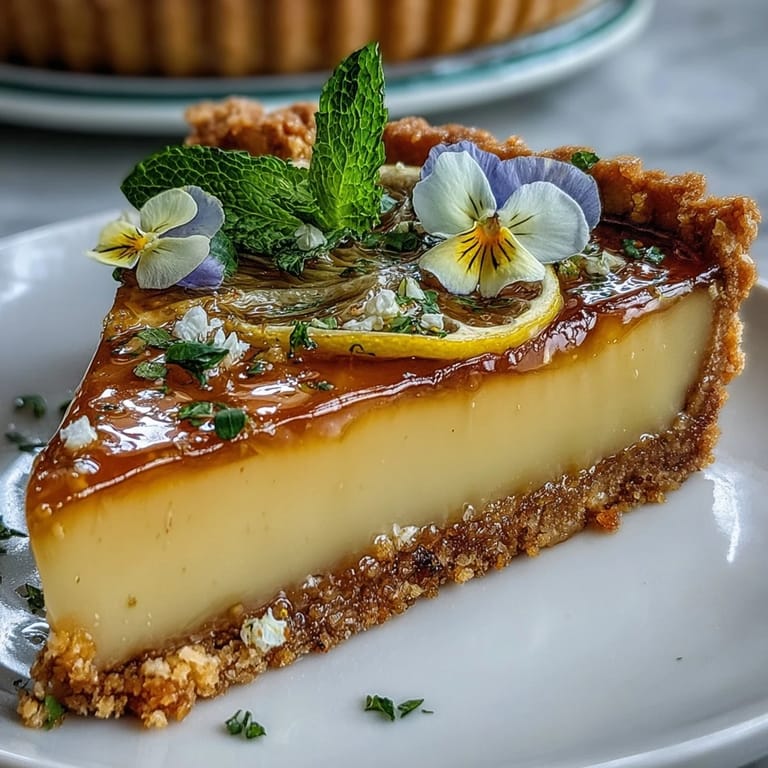
- Just before serving, arrange edible flowers and mint leaves over the set curd as if composing a little garden; slice generously and let everyone marvel at the sunny filling within.
 Save
Save The first time I brought this tart to a potluck, a neighbor who normally skips dessert ended up going back for seconds and shyly asked how I managed that bright, not-too-sweet lemon layer. That unexpectedly proud moment made all the careful whisking worth it.
Choosing and Preparing Edible Flowers
The secret to the tart looking truly springlike is the flowers: I give mine a gentle rinse and let them air dry on a kitchen towel, then trim the stems so only the petals and a bit of green remain. It’s a fun excuse to visit the farmers’ market or raid my patio pots—sometimes I even add a few tiny violas straight from the garden.
Making the Tart Ahead of Time
The tart shell and lemon curd both keep beautifully if you want to split the work—a real blessing when hosting brunch or just hoping for a more relaxed start to your dinner party prep. I store the shell tightly wrapped on the counter, and the curd in the fridge; last-minute assembly keeps everything crisp and fresh.
Serving Suggestions and Final Touches
When it’s finally time for dessert, I keep flavors simple: sometimes just a dusting of powdered sugar over the flowers, or a spoonful of barely sweetened whipped cream off to the side. The tart makes an elegant finish to any spring meal, but secretly, I think a slice is best enjoyed with nothing more than a quiet cup of tea near an open window.
- Wait to add the flowers until just before serving so they stay vivid and perky.
- A thin knife dipped in hot water slices the tart cleanly.
- Leftovers (if you have any) keep nicely in the fridge for up to two days.
 Save
Save I hope this tart brings as much color and brightness to your table as it has to mine, whether you’re sharing it on a special day or just celebrating the sunlight. Spring is never far away with a bite of lemon curd and a few edible flowers.
Kitchen Guide
- → How do I stop the curd from curdling or scrambling?
Cook over medium-low heat and whisk constantly until the mixture thickly coats a spoon. Remove from heat just as it begins to thicken, then whisk in butter off the heat and strain to remove any bits.
- → What’s the best way to blind-bake the tart shell?
Chill the lined shell for 10 minutes, then bake with parchment and weights at 350°F (175°C) for about 15 minutes. Remove weights and bake another 10–12 minutes until golden. Prick the base lightly before baking to prevent bubbling.
- → Can the lemon curd be made ahead?
Yes. Cool and refrigerate the curd in an airtight container for up to 3 days. Bring to room temperature slightly before pouring into the shell, or chill the filled tart until set.
- → How should I store leftover tart?
Keep the tart covered in the refrigerator for up to 2–3 days. For best slices, chill thoroughly before slicing and avoid long periods at room temperature to preserve texture.
- → Any tips for a gluten-free shell?
Use a tested gluten-free flour blend and chill the dough well before rolling. Blind-bake with extra care—some gluten-free blends brown faster, so watch for a golden edge.
- → Which edible flowers work best for decoration?
Violets, pansies and nasturtiums offer color and mild flavor. Ensure flowers are pesticide-free and intended for consumption; rinsing gently and patting dry helps keep the topping neat.