 Save
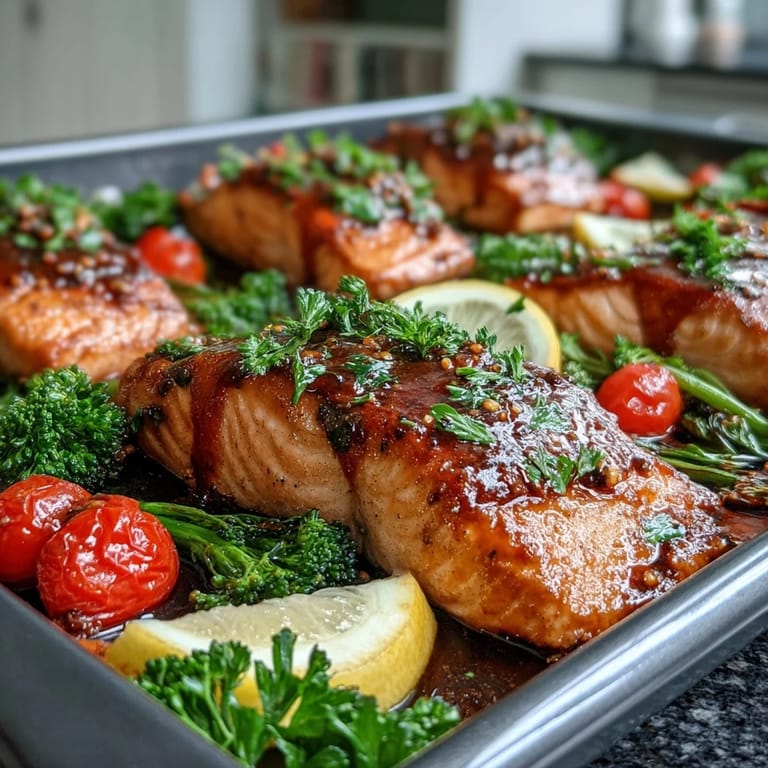
Save There's something almost magical about pulling a sheet pan from the oven and finding perfectly roasted salmon nestled among caramelized vegetables, all bronzed and glistening. My first attempt at this dinner came on a Wednesday when I had exactly 40 minutes and absolutely no energy for fussing, so I threw everything onto one pan with a quick Dijon glaze and hoped for the best. The kitchen smelled incredible halfway through, and when I sliced into that first fillet, it was flaky perfection—tender enough that it practically melted. Since then, this has become my go-to when I want to feel like I've made something special without the stress of juggling multiple pots and pans.
I made this for my neighbor one evening when she mentioned being overwhelmed with work deadlines, and watching her face light up when she tasted it reminded me that some of the best meals aren't complicated masterpieces—they're just honest, flavorful food prepared with care. She actually asked for the recipe on the spot, and now whenever I make it, I think of that moment and how a simple dinner can feel like a gift.
Ingredients
- Salmon fillets (4 pieces, about 170g each): Look for fillets that smell fresh and have firm, vibrant flesh with no dull spots—the quality of your salmon makes all the difference here.
- Dijon mustard (2 tablespoons): This is the secret weapon that gives the whole dish its personality, so don't skip it or swap it for yellow mustard unless you want something completely different.
- Olive oil (3 tablespoons total): Use a decent quality oil you actually like tasting, since it's a main flavor player and not hidden in a sauce.
- Lemon juice (1 tablespoon): Fresh is always better than bottled here—a real lemon takes two seconds to squeeze and brightens everything.
- Honey (1 teaspoon): Just a touch to balance the mustard's tanginess and help create that gorgeous glaze.
- Garlic clove (1, minced): Mince it fine so it distributes evenly in the glaze instead of leaving sharp chunks.
- Salt and black pepper: Season generously at each stage rather than relying on one final pinch.
- Broccoli florets (2 cups): Cut them roughly the same size so they roast evenly without some turning to ash while others stay raw.
- Cherry tomatoes (2 cups, halved): Halving them prevents them from rolling around and helps them caramelize beautifully.
- Red bell pepper (1 large, sliced): Slice them into strips about a finger's width thick so they soften perfectly by the time the salmon is done.
- Red onion (1 medium, cut into wedges): Keep the layers loosely attached so the wedges hold together and get those charred, sweet edges.
- Dried Italian herbs or herbes de Provence (1 teaspoon): These dried blends are your shortcut to depth without needing a dozen fresh herbs on hand.
- Lemon wedges and fresh parsley: Fresh parsley at the end adds a pop of color and a grassy note that lifts everything, though it's optional if you're short on time.
Tired of Takeout? 🥡
Get 10 meals you can make faster than delivery arrives. Seriously.
One email. No spam. Unsubscribe anytime.
Instructions
- Get your pan and oven ready:
- Preheat your oven to 220°C (425°F) and line a large sheet pan with parchment paper or give it a light grease. A lined pan means less scrubbing afterward, which is honestly half the appeal of sheet pan cooking.
- Make the mustard glaze:
- In a small bowl, whisk together the Dijon mustard, olive oil, lemon juice, honey, minced garlic, salt, and pepper until smooth and glossy. This is your golden ticket—a simple glaze that tastes sophisticated but takes literally one minute to make.
- Toss the vegetables:
- Spread all your cut vegetables across the sheet pan, drizzle with the olive oil, sprinkle with herbs, salt, and pepper, then toss everything together with your hands until every piece is coated. Leave a little space in the middle or off to one side for the salmon fillets to nestle in.
- Add the salmon and glaze:
- Place salmon fillets skin side down (if using skin-on) among the vegetables, then brush each fillet generously with that gorgeous mustard glaze, making sure every surface gets coated. The glaze is where all the flavor happens, so don't be stingy.
- Roast until everything is perfect:
- Slide the pan into your hot oven for 20 to 25 minutes—you're looking for salmon that's opaque throughout and flakes easily when you press a fork into it, plus vegetables that are tender with caramelized, slightly charred edges. Start checking around the 20-minute mark because oven temperatures vary and you want to catch it at that perfect moment before anything dries out.
- Finish and serve:
- Pull the pan out, squeeze fresh lemon over everything if you'd like an extra bright note, scatter parsley on top if you have it, and serve immediately while the salmon is still warm and flaky. There's really no holding this—it's best enjoyed hot off the pan.
 Save
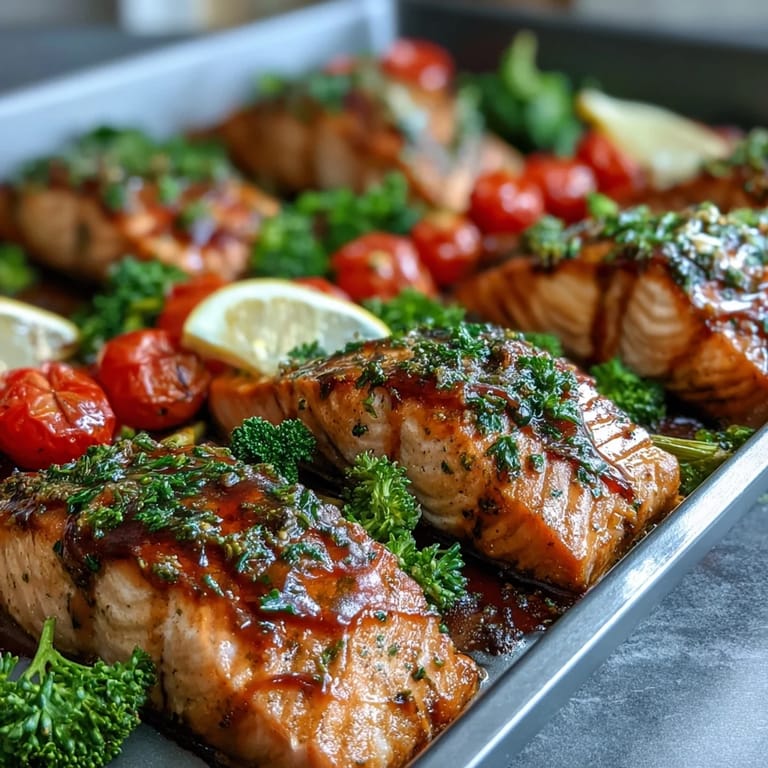
Save My family actually requested this for my birthday dinner last month, which felt like the highest compliment—not because it's fancy, but because it's the kind of meal that feels special while still being genuinely easy enough that I wasn't stuck in the kitchen the whole time. That's when I realized this recipe had somehow become one of those dishes that just works, every single time.
Why One Pan Changes Everything
There's a reason sheet pan meals have taken over home cooking, and it's not just laziness (though that's part of it). When proteins and vegetables roast together, the salmon releases oils and juices that mingle with the charred bits from the vegetables, creating a kind of built-in sauce that tastes like you've been cooking all afternoon. Plus, everything finishes at the same time, which means no cold sides waiting while salmon cooks, and no salmon sitting around getting dry while you finish the vegetables.
Making It Your Own
The beauty of this recipe is that it's flexible enough to work with whatever's in your fridge or whatever you're craving that week. I've swapped the broccoli for asparagus when someone had a preference, used yellow bell peppers instead of red, even thrown in some thinly sliced fennel because I had it on hand and wanted something with a little anise note. The core of the recipe—the salmon, the Dijon glaze, the roasting method—stays the same, but the vegetables can absolutely bend to your mood or market finds.
Small Secrets That Make a Difference
After making this dozens of times, I've picked up a few tricks that elevate it from weeknight dinner to something you'd order at a restaurant. The honey in the glaze is tiny but essential—it keeps the mustard from being too sharp and helps create those gorgeous caramelized edges. A light grating of fresh lemon zest over the salmon just before roasting adds brightness that bottled juice can't quite capture. And if you can, use skin-on salmon fillets because that skin becomes crispy and almost bacon-like while protecting the delicate flesh underneath.
- Pat the salmon dry before glazing so the coating sticks instead of sliding around on moisture.
- Cut your vegetables to roughly similar sizes so they roast evenly and nothing burns while something else is still raw.
- Arrange the pan so the salmon isn't directly next to anything too wet, which can cause steaming instead of roasting.
 Save
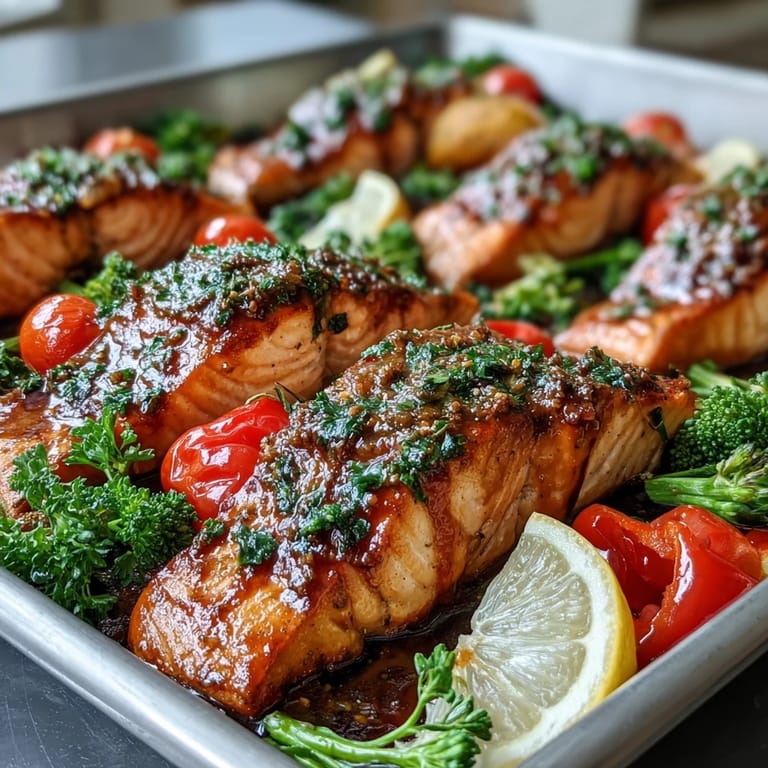
Save This is the kind of dinner that quietly became a staple without much fanfare—no complicated techniques, no impossible ingredients, just honest food that tastes good and gets on the table when you need it. I hope it becomes one for you too.
Kitchen Guide
- → What vegetables work best for this sheet pan dinner?
Broccoli, cherry tomatoes, red bell peppers, and red onions roast beautifully together. You can substitute asparagus, green beans, or zucchini depending on seasonality and preference.
- → How do I know when the salmon is done?
The salmon is ready when it's opaque throughout and flakes easily with a fork. This typically takes 20-25 minutes at 220°C (425°F). The internal temperature should reach 63°C (145°F).
- → Can I prepare the glaze ahead of time?
Yes, whisk the Dijon mustard, olive oil, lemon juice, honey, garlic, salt, and pepper together up to a day in advance. Store in an airtight container in the refrigerator.
- → Is this suitable for meal prep?
Absolutely. Cooked salmon and vegetables store well for 3-4 days in the refrigerator. Reheat gently in the oven or microwave, though the salmon is best enjoyed freshly roasted.
- → What wine pairs well with this dish?
A crisp Sauvignon Blanc or unoaked Chardonnay complements the tangy Dijon glaze beautifully. The acidity cuts through the rich salmon while enhancing the roasted vegetables.
- → Can I use skinless salmon fillets?
Yes, both skin-on and skinless fillets work perfectly. Skin-on helps retain moisture during roasting, but skinless is convenient if you prefer not to remove the skin before serving.